
HappyHorse Community Theater Cast Photo Animation Prompts
Animate an authorized cast photo with restrained group motion while preserving every identity, costume, prop, staging position, and consent boundary.
Quick answer
Obtain permission covering every identifiable cast member, the photographer, production artwork, costumes, set, and intended channel. Ask for only tiny breathing, one or two natural blinks, or a slight existing fabric movement. Lock every face, apparent age, row position, hand, costume, prop, set piece, title area, and stage light. Do not invent dialogue, choreography, applause, romantic contact, character behavior, or a moment that never occurred.
Who this guide is for
Community theaters, school or youth productions with guardian controls, drama clubs, photographers, archives, and families creating a restrained keepsake from an authorized cast portrait.
Recommended model
| Use case | Recommended model | Why |
|---|---|---|
| This workflow | HappyHorse for subtle portrait-led group motion | The safest use is a short micro-motion treatment that preserves the original cast arrangement rather than simulating a new performance. |
AIBase is an independent creative platform. Model names are shown only to identify supported underlying technologies and workflow choices.
Prompt template
Animate the uploaded authorized cast photograph as the exact first frame. Preserve every person's identity, apparent age, face, expression, gaze, hairstyle, makeup, body proportions, row and seat position, pose, hands, fingers, costume silhouette and details, footwear, jewelry, microphone, prop count and placement, set, curtain, furniture, title area, floor, shadows, camera, crop, light, grain, and source damage. Motion only: subtle breathing across the group, up to [two named positions] make one natural blink, and one already loose fabric edge moves slightly. Locked camera, [3-5 seconds], stable ending. No speech, lip-sync, smile change, wave, bow, choreography, touch, role change, extra person, costume change, prop movement, applause, music, title, logo, text, restoration, or watermark.
Step-by-step workflow
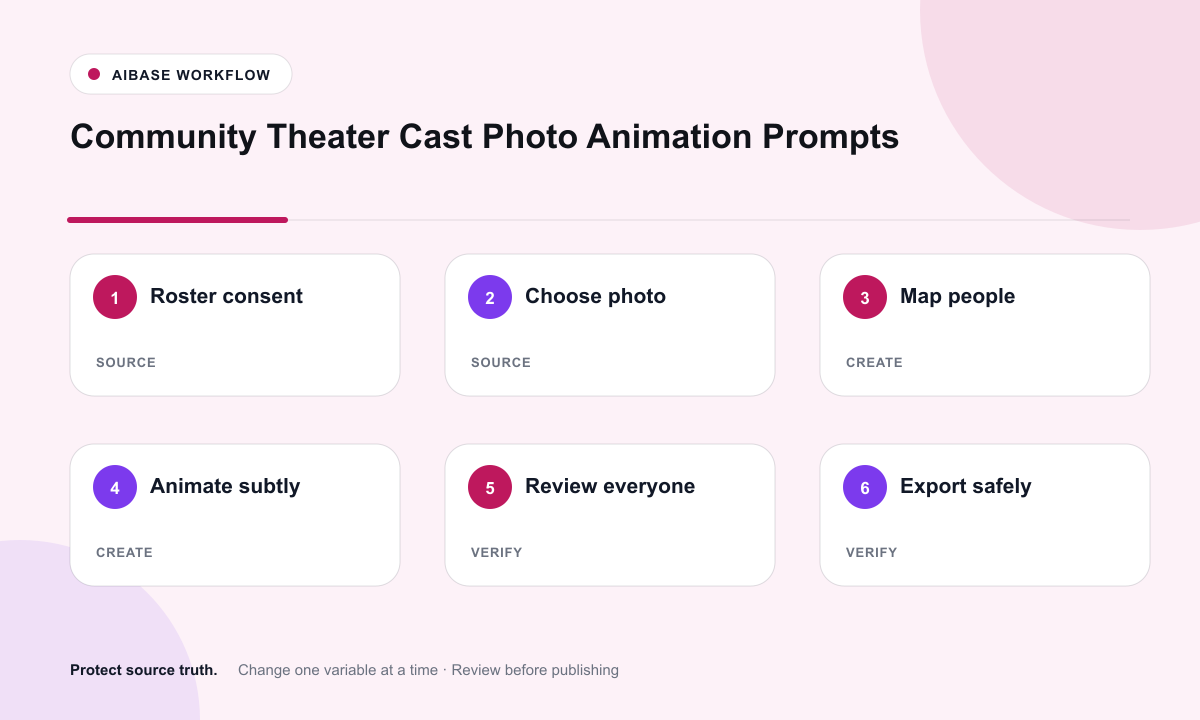
- Create a person-by-person consent roster covering subject or guardian, photographer, theater, costume or set rights, intended channel, paid use, retention, and removal contact.
- Choose a sharp group photo with visible faces and hands, limited overlap, stable lighting, and no unauthorized audience or backstage information.
- Map each person by row and position, then record protected costumes, props, title zones, set pieces, background people, and any sensitive role context.
- Request only group breathing plus no more than two specific blinks or one loose-fabric movement; keep the camera locked.
- Review every frame person by person for identity, age, expression, hands, overlap, costume exposure, prop count, set, title artifacts, and unintended interaction.
- Export only approved sizes, remove location metadata, add real production credit and accessibility copy in post, and honor expiry or removal requests.
Example prompt variants
- Four-second eight-person lobby portrait: subtle breathing and one blink from the front-center adult only; preserve every face, row, costume, prop, poster area, and locked camera.
- Three-second historical cast photo: tiny breathing and slight existing curtain movement, preserve monochrome tone, identities, apparent ages, clothing, furniture, paper grain, damage, and no restoration.
- Four-second youth-production portrait only with complete guardian consent: two named back-row blinks, preserve uniforms, badges, hands, props, school marks, set, and no speech or body movement.
Quality checklist
- Every identifiable person or guardian, photographer, theater, and relevant production-rights owner approved the specific destination and duration.
- Identity, apparent age, expression, gaze, row, pose, hands, costume, props, set, title area, light, crop, grain, and damage remain stable.
- Motion is limited to approved breathing, named blinks, or a tiny existing fabric movement and ends close to the source.
- No dialogue, choreography, relationship, performance quality, award, role, title, or historical event is invented or implied.
- Consent roster, source, prompt, person-by-person review, output, credits, retention, expiry, and removal path remain traceable.
Mistakes to avoid
- Assuming the theater or photographer can authorize every cast member’s likeness for animation and advertising.
- Animating everyone to wave, bow, sing, or speak and causing faces, hands, costumes, and rows to drift.
- Creating new contact, romance, comedy, fear, applause, or character behavior that changes the original context.
- Publishing minors, school identifiers, backstage details, or sensitive production context without the required consent and privacy review.
Related AIBase pages
Practical next step
Open the most relevant AIBase generator, run one narrow prompt first, and save the best result before adding more constraints. The fastest way to improve output quality is to compare one variable at a time: subject, camera, background, lighting, then final polish.