
HappyHorse Neighborhood Association Group Photo Animation Prompts
Animate authorized neighborhood association portraits with restrained motion while protecting consent, identity, addresses, signs, minors, property context, and civic neutrality.
Quick answer
Obtain specific synthetic-animation permission from every identifiable participant, guardian where needed, and the photographer for the exact channel and duration. Audit the source for house numbers, street signs, vehicle plates, access codes, name tags, attendance lists, contact details, private notices, minors, bystanders, protest or campaign material, accessibility aids, and property-security details. Ask HappyHorse for subtle breathing and one or two precisely named blinks only. Do not invent speech, voting, agreement, endorsement, leadership, residency, ownership, relationships, turnout, conflict, or civic outcomes.
Who this guide is for
Resident groups, neighborhood associations, tenant organizations, block clubs, community centers, local newsletters, photographers, and communications teams sharing an approved group portrait.
Recommended model
| Use case | Recommended model | Why |
|---|---|---|
| This workflow | HappyHorse for restrained consented neighborhood group portrait micro-motion | Identity-led micro-motion can add a gentle sense of presence while strict locks protect people, private location details, property context, and neutral event meaning. |
AIBase is an independent creative platform. Model names are shown only to identify supported underlying technologies and workflow choices.
Prompt template
Animate the uploaded authorized neighborhood association photo as the exact first frame. Preserve every person's identity, apparent age, face, expression, gaze, hair, glasses, body proportions, row and position, pose, hands, fingers, clothing, accessibility aids, chair, table, document, sign shape and redacted zones, building, fence, plant, vehicle, background person, crop, camera, light, shadows, blur, grain, and existing privacy masks. Motion only: subtle breathing across the group and one natural blink from [named row and position], [3-5 seconds], locked camera, stable ending. No mouth movement, speech, wave, vote, raised hand, touch, sign change, person added or removed, face beautification, background reveal, camera move, word, voice, music, or watermark.
Step-by-step workflow
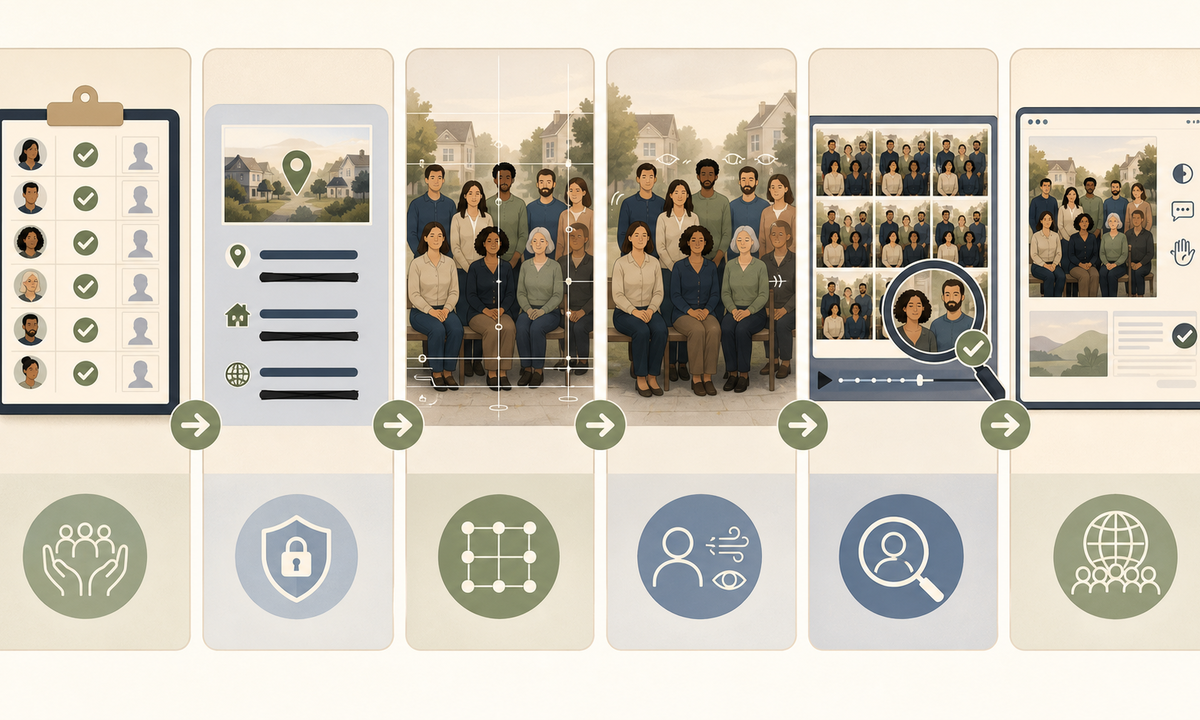
- Create a consent and rights roster for each participant, guardian, photographer, organizer, venue or property owner, displayed material, channel, duration, reuse, correction, and withdrawal contact.
- Audit the source for minors, bystanders, addresses, house numbers, street signs, plates, keys, access systems, contact lists, badges, notices, ballots, campaign material, disputes, security details, and vulnerable residents.
- Redact or crop unapproved private details before generation, then map every person by row and position plus faces, hands, clothing, aids, chairs, documents, signs, architecture, vehicles, plants, and background people.
- Request subtle breathing and no more than one or two named blinks while mouths, hands, papers, signs, accessibility aids, property details, other people, and camera remain still.
- Inspect each frame person by person and region by region for identity, age, gaze, hands, overlap, address or plate reveal, sign mutation, property drift, and invented interaction.
- Publish only verified event name, date, location granularity, organizer, photographer, and activity context with captions, disclosure, accessibility, correction, removal, and expiry.
Example prompt variants
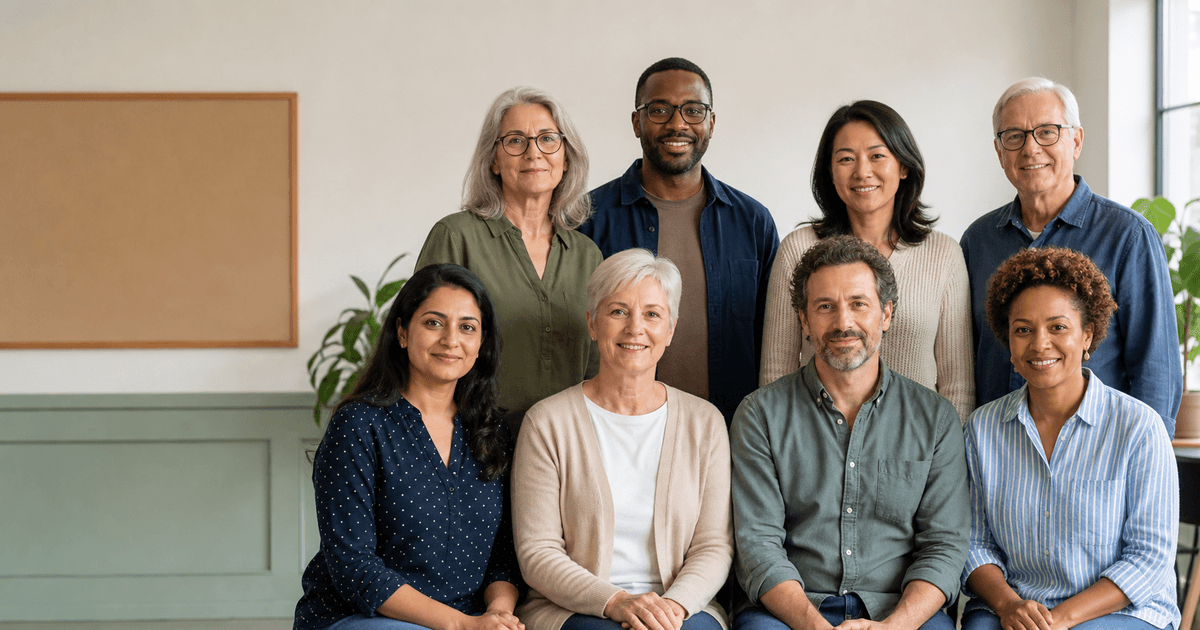
- Four-second eight-person community-room portrait: subtle breathing and one blink from the seated front-left adult, preserve identities, hands, chairs, blank notice-board zones and locked camera.
- Three-second outdoor block-group photo: breathing only, preserve two rows, clothing, mobility aid, fence, trees and existing address redactions; no mouth, hand, sign, vehicle or camera motion.
- Five-second association anniversary portrait: two precisely named back-row blinks, preserve apparent ages, positions, table, documents, room signs and no gesture, speech, vote or endorsement.
Quality checklist
- Every identifiable person or guardian, photographer, organizer, venue or property owner, displayed material, channel, reuse, and duration has approved synthetic animation.
- Identity, apparent age, expression, gaze, rows, poses, hands, clothing, aids, documents, chairs, signs, buildings, vehicles, objects, background, and crop remain stable.
- Addresses, house numbers, plates, keys, access details, lists, contacts, badges, ballots, campaign material, minors, bystanders, and sensitive disputes are absent, redacted, or approved.
- Motion stays within breathing and named blinks and does not imply speech, vote, agreement, office, endorsement, residency, ownership, relationship, attendance, turnout, or outcome.
- Consent roster, privacy review, source map, prompt, inspection, approvals, publication, expiry, correction, removal, and withdrawal remain traceable.
Mistakes to avoid
- Assuming a community-event release covers synthetic animation, future campaigns, public social channels, and every participant.
- Animating mouths, raised hands, signs, documents, votes, or shared glances and inventing a political or organizational position.
- Revealing house numbers, plates, access systems, contact lists, minors, bystanders, private disputes, or vulnerable residents through motion drift.
- Using the portrait to imply leadership, unanimous support, residency, ownership, endorsement, turnout, partnership, or a successful civic outcome.
Related AIBase pages
Practical next step
Open the most relevant AIBase generator, run one narrow prompt first, and save the best result before adding more constraints. The fastest way to improve output quality is to compare one variable at a time: subject, camera, background, lighting, then final polish.