
HappyHorse Dance Recital Photo Animation Prompts with Consent Controls
Animate authorized recital portraits with subtle motion while preserving identity, costume, pose, stage context, minors' privacy, and respectful sharing boundaries.
Quick answer
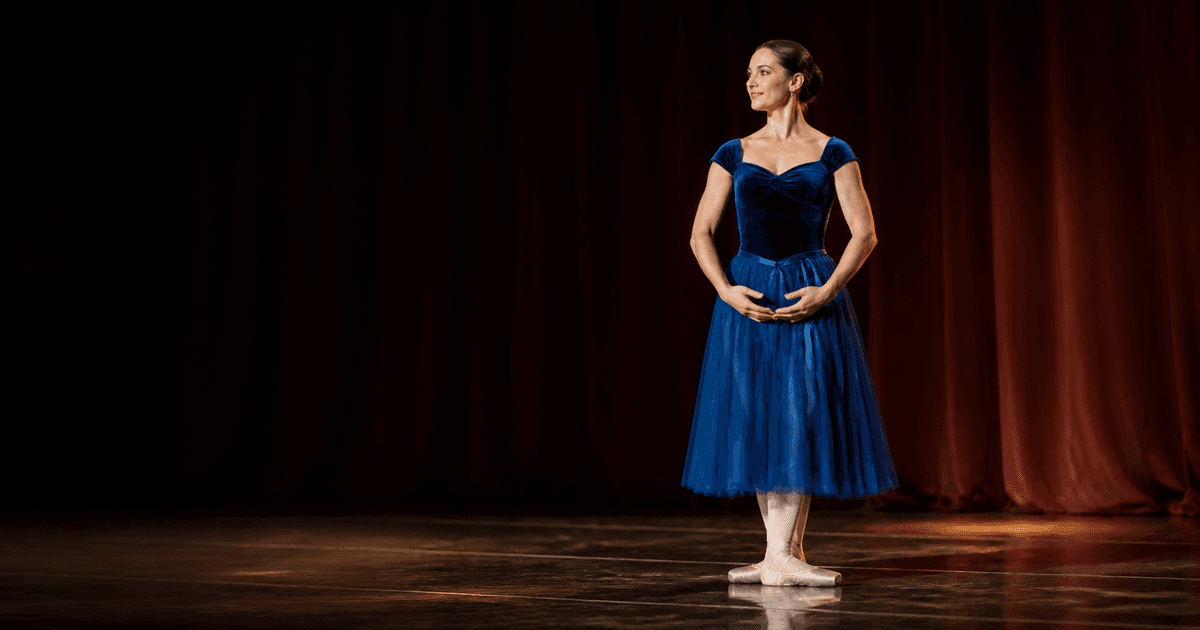
Treat the recital photo as the complete truth of the dancer, age, expression, pose, costume, footwear, hands, stage, and event. With the dancer’s explicit consent—and guardian authorization plus the organization’s safeguarding rules when a minor is involved—add only subtle breathing, one blink, or tiny movement in already loose fabric. Do not invent dance steps, speech, applause, music, awards, skill level, body changes, group relationships, or a performance that did not occur. Review privately with the dancer or guardian before any sharing.
Who this guide is for
Dancers, families, studios, schools, event photographers, recital organizers, and archival teams creating private keepsakes or approved event recaps from owned images. Public posts involving minors need particularly narrow audiences, download and tagging controls, retention limits, and an easy removal route.
Recommended model
| Use case | Recommended model | Why |
|---|---|---|
| This workflow | HappyHorse for restrained motion from an authorized recital portrait | A portrait-centered reference workflow can add gentle presence to a still, but identity, body, costume, choreography, child safety, consent, music, event facts, and publication scope must remain human-controlled. |
AIBase is an independent creative platform. Model names are shown only to identify supported underlying technologies and workflow choices.
Prompt template
Animate this authorized dance recital photo as the exact first frame. Preserve dancer identity, apparent age, face shape, eyes, expression, gaze, hair, makeup, body proportions, pose, hands, fingers, legs, feet, footwear, costume silhouette, neckline, hem, seams, tights, accessories, stage, props, curtains, floor, background people, lighting, grain, camera, and crop. Motion: subtle breathing and [one natural blink/tiny movement in an already loose ribbon or skirt edge] only. Locked camera, [3-5 seconds], return close to source pose. No new dance step, jump, turn, extension, body reshaping, beautification, costume shift, exposure, extra limb, speech, applause, music, award, title, school logo, text, or watermark.
Step-by-step workflow
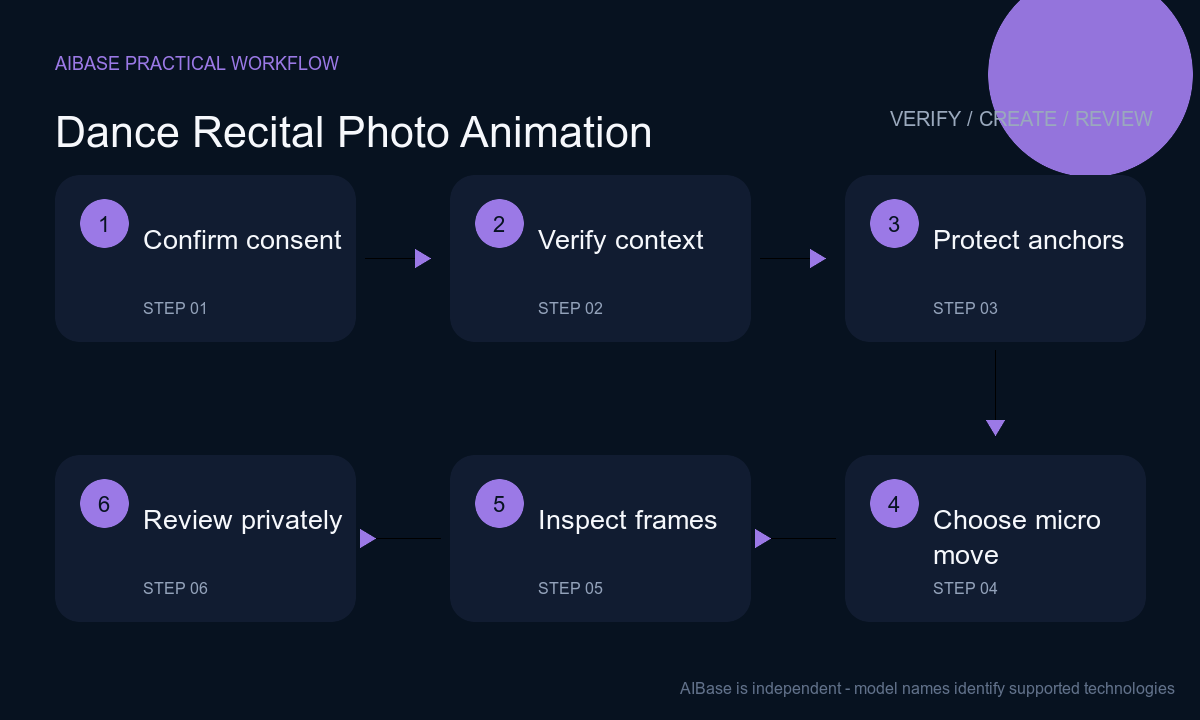
- Document dancer consent, guardian authorization where applicable, photographer and event rights, studio or school safeguarding policy, purpose, audience, platform, paid use, downloads, tagging, face recognition, retention, disclosure, veto, and removal contact.
- Verify event, date, performer identification, costume and choreography context, group relationships, awards, program copy, music rights, and any embargo. Do not infer names or identities from faces, uniforms, stage signs, or metadata.
- Map identity, apparent age, expression, gaze, hair, makeup, body, pose, hands, fingers, legs, feet, costume, footwear, props, floor, curtains, background performers, crop, light, blur, and grain as protected anchors.
- Choose one micro-motion that does not invent choreography or change the pose. Keep the camera locked; use real video if the goal is to show turns, jumps, partnering, applause, bows, spoken introductions, or an actual performance sequence.
- Inspect every frame for face drift, age change, new teeth, body reshaping, hand and foot errors, costume transparency, altered neckline or hem, unstable pointe or floor contact, moving background children, changed stage marks, and invented text.
- Preview privately with the dancer or guardian and designated safeguarding owner. Add verified name, event, credit, disclosure, captions, licensed music, and message in editable layers, then publish only within the approved scope and honor withdrawal promptly.
Example prompt variants
- Four-second authorized solo recital portrait, one natural blink and subtle breathing only, preserve exact child identity, age, calm expression, bun, blue costume, sleeves, tights, ballet shoes, first-position pose, hands, stage curtain and warm spotlight, locked camera, no step, smile change, music, title or logo.
- Three-second authorized adult contemporary-dance still, tiny movement only in an already loose sleeve edge, preserve identity, grounded crouched pose, fingers, bare feet, costume coverage, black stage, floor reflection and side light, no rise, turn, body reshape, new expression, audience, text or sound.
- Five-second authorized group recital photo, subtle synchronized breathing only with all faces, ages, spacing, joined hands, costumes, footwear, floor marks and backdrop locked, no individual blink if stability fails, no moving child, rank, award, choreography, camera move, school name or watermark.
Quality checklist
- Dancer and guardian consent, photographer and event rights, safeguarding rules, purpose, audience, downloads, tagging, recognition, retention, disclosure, veto, and removal route are documented.
- Identity, age, expression, gaze, skin, hair, makeup, body, pose, hands, fingers, legs, feet, footwear, costume, props, stage, crop, light, blur, and grain remain source-faithful.
- Motion is limited to the approved blink, breathing, or loose fabric detail with no invented choreography, body capability, performance, award, emotion, relationship, sound, or event.
- No costume opening, neckline or hem change, transparency, body sexualization, beautification, weight cue, unsafe foot position, unstable floor contact, or background-minor animation appears.
- Consent, source, prompt, output, private review, factual overlays, music license, export, audience controls, publication, retention, withdrawal, and deletion remain traceable.
Mistakes to avoid
- Assuming a studio, school, photographer, parent, or public recital post automatically grants permission to animate a dancer’s face and body or redistribute the result broadly.
- Prompting a still dancer to leap, spin, bow, partner, smile, speak, accept an award, or perform choreography and thereby inventing ability, emotion, event history, or consented performance.
- Accepting altered body proportions, feet, hands, costume coverage, makeup, age, expression, floor contact, group spacing, background children, stage logos, or suggestive framing.
- Publishing a minor’s animated portrait with public downloads, precise location, schedule, full name, face tagging, persistent retention, targeted promotion, or no practical takedown path.
Related AIBase pages
Practical next step
Open the most relevant AIBase generator, run one narrow prompt first, and save the best result before adding more constraints. The fastest way to improve output quality is to compare one variable at a time: subject, camera, background, lighting, then final polish.