
Nano Banana Pro Door Hardware Campaign Product Photo Prompts
Build reference-led door hardware campaign scenes that preserve exact lever, rose, escutcheon, latch, finish, handing, installation, scale, and compatibility boundaries.
Quick answer
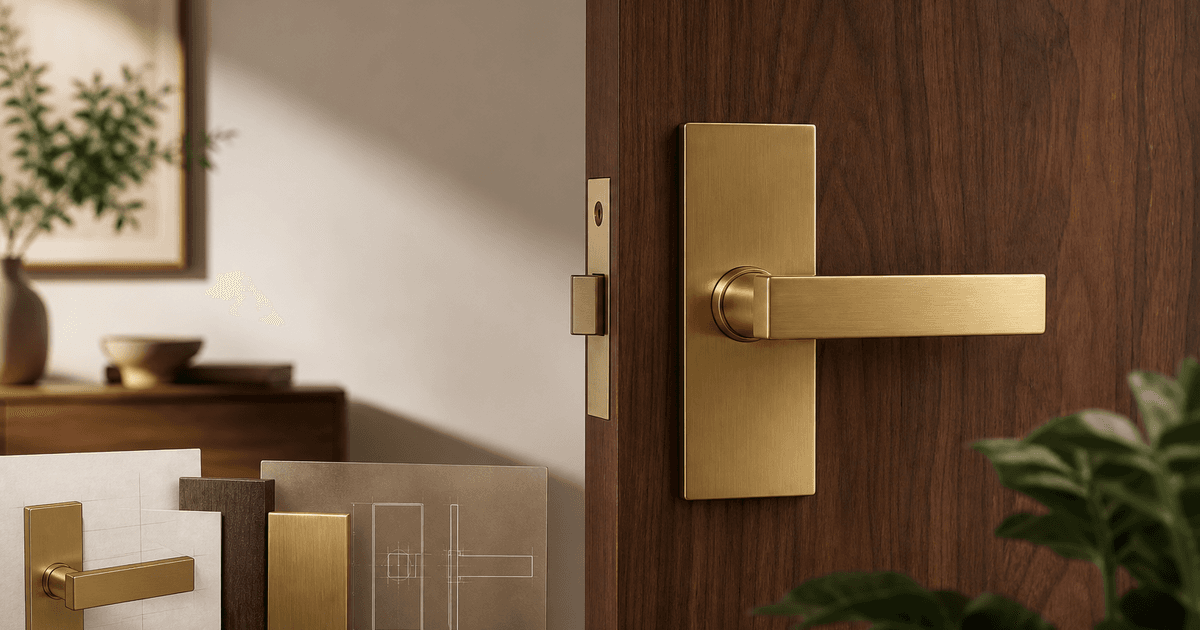
Provide front, side, backplate, latch, strike, finish, and installed reference views for one exact SKU. Ask Nano Banana Pro to preserve lever profile, rose or escutcheon dimensions, screw pattern, spindle axis, latch position, handing, finish response, and door preparation. Treat the scene as a campaign concept, then composite an approved product plate when catalog-level geometry or compatibility evidence is required.
Who this guide is for
Door-hardware manufacturers, architectural suppliers, home-improvement retailers, builders, interior-design studios, and agencies producing launch pages, dealer kits, social ads, and showroom visuals.
Recommended model
| Use case | Recommended model | Why |
|---|---|---|
| This workflow | Nano Banana Pro for reference-led door hardware campaign concepts | Multiple reference views help constrain product identity and finish while supporting styled residential or hospitality environments; technical installation facts still require approved documentation and final review. |
AIBase is an independent creative platform. Model names are shown only to identify supported underlying technologies and workflow choices.
Prompt template
Use the supplied authorized references of [exact door hardware SKU, function, finish, and handing] as the product truth. Create a [campaign scene and ratio] on a [documented door thickness, material, edge profile, backset and preparation]. Preserve exact lever silhouette, neck, return, rose or escutcheon shape and dimensions, keyway or privacy turn, indicator, screw pattern, spindle axis, latch face, strike relationship, finish color, grain, reflectivity, edge radii, scale, orientation, and installed clearances. Lighting [specific], camera [specific], protected copy zone [specific]. No extra lock cylinder, screw, sensor, keypad, hinge, latch, finish, safety feature, accessibility claim, compatibility claim, logo mutation, text, hand, watermark, or impossible installation.
Step-by-step workflow
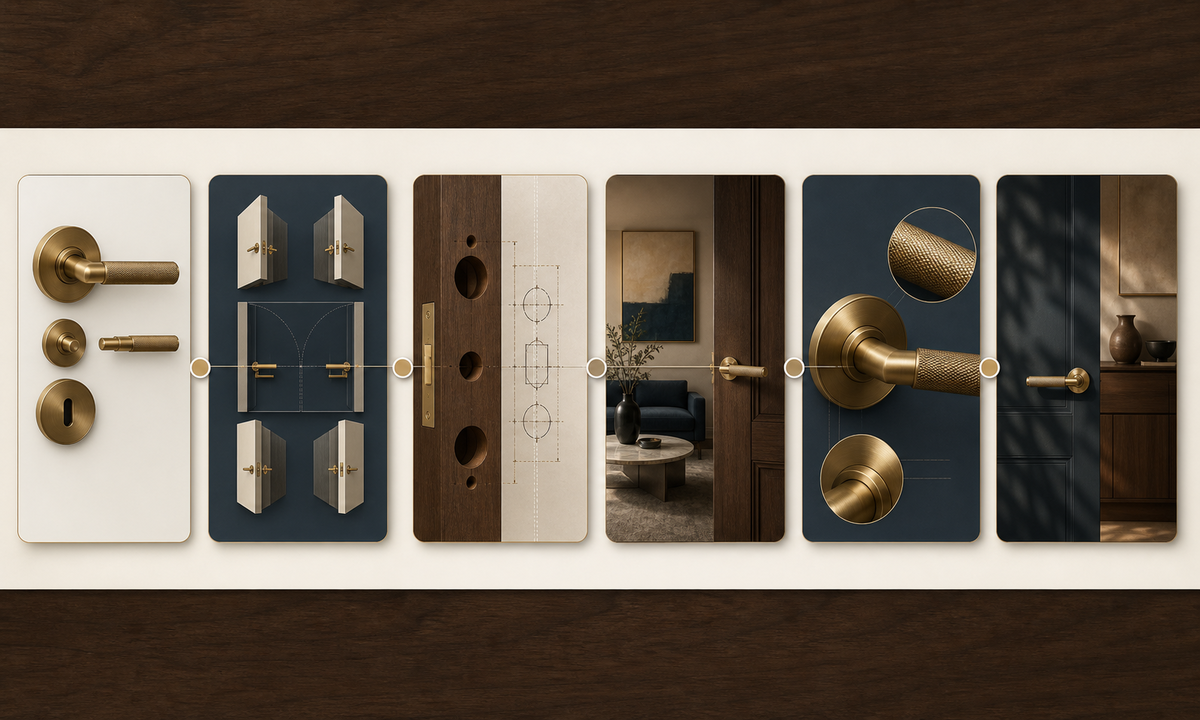
- Freeze SKU, function, finish, handing, door thickness range, backset, cross-bore, edge-bore, latch, strike, spindle, included parts, certifications, compatibility, warranty, and market claims.
- Capture calibrated front, three-quarter, side, rear, lever-return, rose or escutcheon, keyway or turn, latch, strike, fastener, finish, packaging, and correctly installed references.
- Choose one documented door preparation and scene; map the hardware axis, edge distance, swing, lever clearance, reflections, copy zone, and every detail that must remain fixed.
- Generate a restrained concept with no hand operating the hardware and no view that requires inventing hidden parts.
- Inspect silhouette, proportions, handing, latch side, keyway, screws, finish, scale, door preparation, reflections, clearances, and scene plausibility at catalog zoom.
- Composite approved product photography for final hero use when necessary and add verified function, dimensions, compatibility, certification, warranty, availability, disclosure, and CTA separately.
Example prompt variants
- Matte black passage lever on a documented white oak interior door, warm residential hallway, front three-quarter view, preserve round rose, lever return, two screw positions, latch axis, exact finish, and generous right copy space.
- Satin brass privacy set on a painted hotel-room door, quiet editorial light, preserve rectangular escutcheon, interior turn profile, lever handing, screw pattern, door thickness, and no card reader or occupancy claim.
- Brushed nickel entry handleset on an approved exterior door preparation, overcast daylight, preserve cylinder position, thumbpiece, lower mount, latch and deadbolt spacing, finish grain, scale, and no security-rating implication.
Quality checklist
- SKU, function, finish, handing, lever, rose or escutcheon, keyway or turn, indicator, screws, spindle, latch, strike, dimensions, and included parts match approved references.
- Door thickness, backset, bores, edge preparation, swing, axis, clearance, scale, and installation are physically plausible and documented.
- Finish hue, directional grain, reflectivity, highlights, fingerprints, edges, shadows, and surrounding materials behave consistently.
- No extra security, accessibility, fire, privacy, smart-home, certification, durability, or compatibility claim is implied by the scene.
- References, product truth sheet, prompt, output, technical review, composite decision, copy approval, and channel remain traceable.
Mistakes to avoid
- Supplying only a front view and allowing the model to invent the latch, strike, screws, rear trim, or lever return.
- Mirroring the scene and accidentally changing handing, latch side, keyway orientation, or door swing.
- Pairing the hardware with an incompatible door preparation or scale because the environment looked attractive.
- Using a generated lock scene as evidence of security rating, accessibility, fire compliance, finish durability, or installation compatibility.
Related AIBase pages
- Open Nano Banana Pro
- Create bathroom hardware campaign images
- Create lighting fixture campaign images
Practical next step
Open the most relevant AIBase generator, run one narrow prompt first, and save the best result before adding more constraints. The fastest way to improve output quality is to compare one variable at a time: subject, camera, background, lighting, then final polish.