
HappyHorse Family Heritage Photo Animation Prompts with Consent
Animate authorized multigenerational family photographs with subtle motion while preserving identity, age, relationships, clothing, damage, historical context, privacy, and dignity.
Quick answer
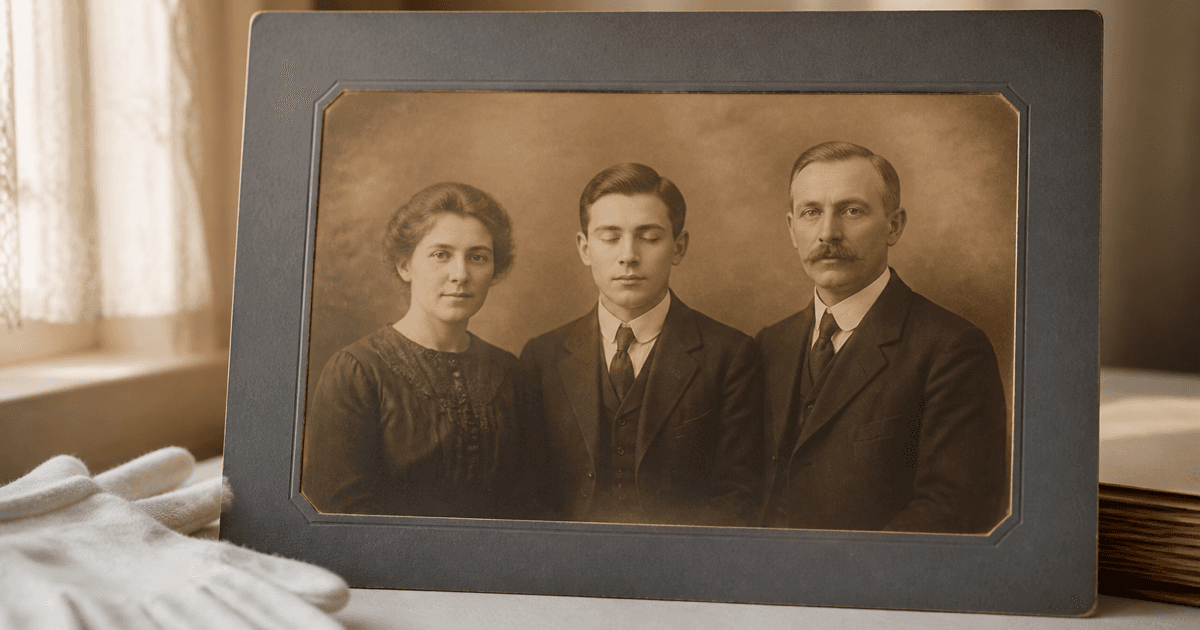
Before uploading, identify who owns the photograph and seek permission from living people or appropriate family decision-makers, especially for private, sensitive, memorial, adoption, migration, medical, military, or cultural context. Use the unaltered scan as the exact first frame and add only one natural blink or subtle breathing per clearly visible person. Preserve apparent age, expression, pose, clothing, objects, photographic damage, crop, grain, and uncertainty. Do not invent speech, smiles, gestures, relationships, names, occupations, events, beliefs, or a restored version of history.
Who this guide is for
Families, archivists, genealogists, museums, local-history groups, and editors creating private, consented heritage clips from owned or appropriately licensed photographs.
Recommended model
| Use case | Recommended model | Why |
|---|---|---|
| This workflow | HappyHorse for restrained multigenerational portrait motion | Micro-motion can add presence to a still family portrait, but consent, identity, historical uncertainty, and the source photograph must control every creative decision. |
AIBase is an independent creative platform. Model names are shown only to identify supported underlying technologies and workflow choices.
Prompt template
Animate the uploaded authorized family heritage photograph as the exact first frame. Preserve every visible person's identity, apparent age, facial structure, skin texture, expression, gaze, hair, body proportions, pose, hands, clothing, jewelry, objects, spacing, occlusions, background, crop, focus, exposure, scratches, fading, grain, and photographic character. Motion only: [one natural blink for the clearest face / subtle breathing for visible torsos / tiny movement in already loose fabric], camera locked, [3-5 seconds], ending close to the source. No face replacement, beautification, youthification, restoration, colorization, speech, lip-sync, new smile, wave, embrace, relationship, name, date, occupation, uniform meaning, event, extra person, text, sound, or watermark.
Step-by-step workflow
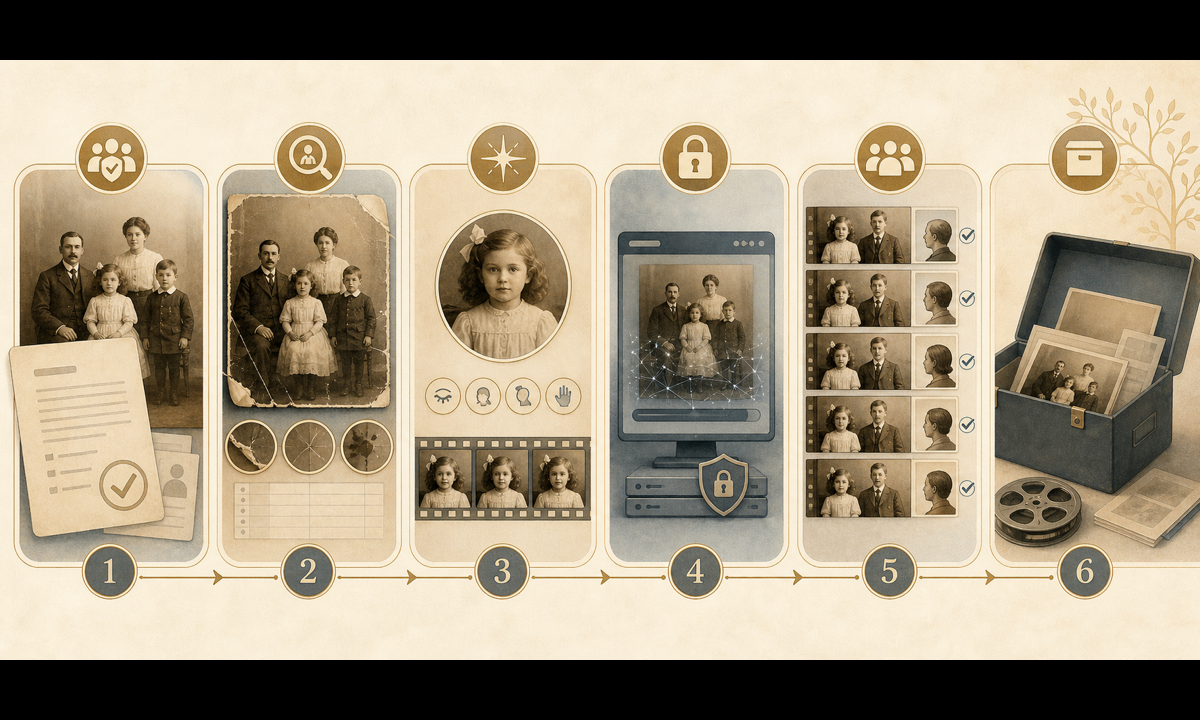
- Document photograph ownership, living-person consent, family decision-makers, cultural restrictions, intended audience, downloads, retention, disclosure, veto, and removal contact.
- Record known identities and facts separately from uncertain or inferred relationships, dates, locations, occupations, uniforms, objects, damage, and missing context.
- Inventory each face, apparent age, expression, pose, hands, clothing, object, overlap, background, crop, blur, scratch, fade, and grain as protected source anchors.
- Choose one micro-motion per clearly visible subject, keep the camera locked, and avoid combining animation with restoration, colorization, reframing, or invented interaction.
- Inspect every frame privately for face drift, age change, new teeth, expression shift, hand mutation, clothing change, object motion, background movement, and historical implication.
- Share with approved relatives first, add only verified names and dates as editable captions, disclose animation, control downloads, and preserve source, decision record, and removal path.
Example prompt variants
- Four-second authorized three-adult studio portrait, one natural blink for the central sharply visible face and subtle breathing only, preserve every identity, expression, pose, clothing, spacing, sepia tone, scratches and crop.
- Three-second authorized multigenerational outdoor photo, subtle breathing only for visible torsos, preserve faces, age, hands, hats, chairs, garden, faded color and blur; no wave, smile change or camera move.
- Five-second authorized family table portrait, one blink for the two front-facing adults, preserve children, dishes, clothing, room, flash, grain and damage; no speech, toast, eating, relationship, restoration or sound.
Quality checklist
- Ownership, living-person consent, family authority, cultural restrictions, audience, downloads, retention, disclosure, veto, and removal route are documented.
- Identity, apparent age, expression, gaze, body, pose, hands, clothing, objects, spacing, background, crop, damage, grain, and photographic character remain source-faithful.
- Motion is limited to approved micro-actions with no new speech, smile, gesture, interaction, relationship, person, event, or camera movement.
- Known names, dates, locations, relationships, occupations, uniforms, and historical claims are separated from uncertainty and added only as verified editable captions.
- Source scan, ownership, consent, context notes, prompt, output, family review, publication scope, retention, correction, and deletion remain traceable.
Mistakes to avoid
- Assuming one relative can authorize every living person, private story, cultural item, memorial use, public post, download, or indefinite retention.
- Making relatives smile, wave, embrace, speak, dance, or react and thereby inventing a relationship, mood, performance, or event.
- Combining restoration, colorization, sharpening, face repair, youthification, and animation so the altered identity appears historically authentic.
- Publishing inferred names, dates, occupations, uniforms, locations, relationships, or family narratives as confirmed facts.
Related AIBase pages
- Open HappyHorse
- Use the portrait animation guide
- Animate grandparents photos
- Animate memorial portraits respectfully
Practical next step
Open the most relevant AIBase generator, run one narrow prompt first, and save the best result before adding more constraints. The fastest way to improve output quality is to compare one variable at a time: subject, camera, background, lighting, then final polish.