
Seedance 2 Pottery Wheel Trimming Process Video Prompts
Animate one verified pottery trimming pass from an approved studio photo while preserving vessel form, leather-hard clay, tool contact, hands, wheel, trimmings, and safety context.
Quick answer
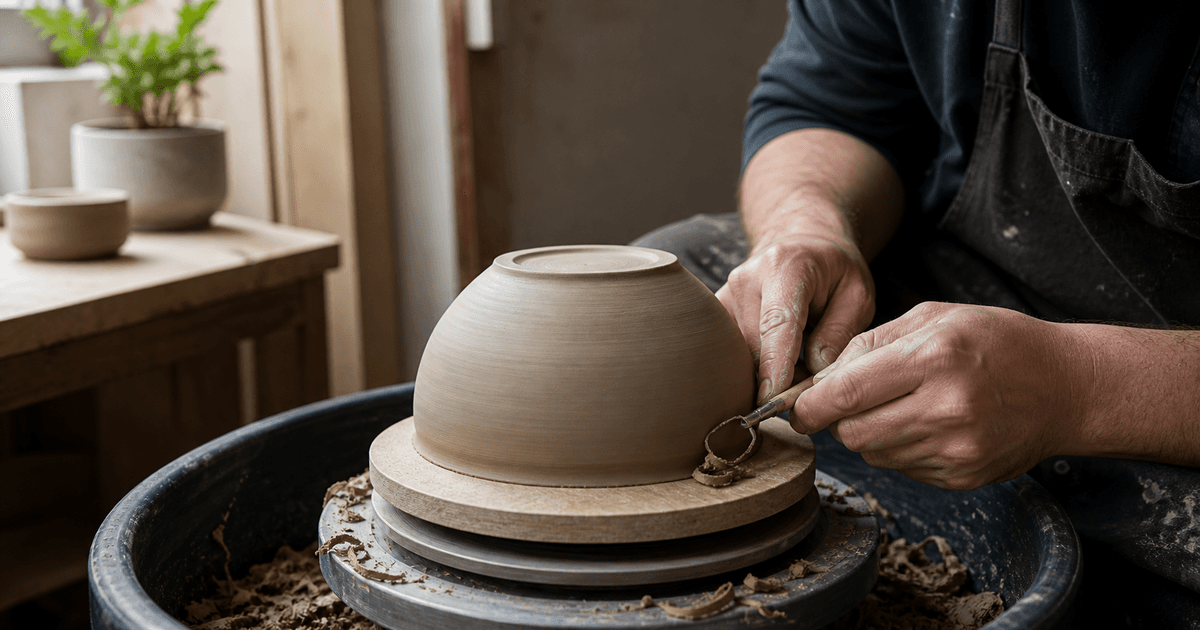
Begin with an authorized sharp photo showing a leather-hard vessel securely centered on the wheel or chuck, the exact trimming tool, both hands, support, tool-rest relationship, clay surface, and existing trimmings. Ask Seedance 2 for one short documented pass along one visible foot or lower-wall section while the vessel rotates in the verified direction. Lock vessel profile, rim, wall thickness cues, tool shape, grip, wheel head, splash pan, bench, camera, and light. Treat the result as illustrative unless the potter confirms every frame; use real footage for instruction, safety, speed, pressure, and craftsmanship claims.
Who this guide is for
Potters, ceramic studios, craft educators, course creators, and social teams creating restrained process inserts from their own approved trimming-stage photography.
Recommended model
| Use case | Recommended model | Why |
|---|---|---|
| This workflow | Seedance 2 image-to-video for one source-led pottery trimming pass | A visible vessel, tool, support, and contact point can anchor a small motion, reducing the invention that appears when a whole pottery sequence is requested from one still. |
AIBase is an independent creative platform. Model names are shown only to identify supported underlying technologies and workflow choices.
Prompt template
Animate the uploaded authorized pottery trimming photo as the exact first frame. Vessel [verified clay body, leather-hard stage and form] is centered on [wheel head / chuck] and rotates [verified direction] slowly for [3-5 seconds]. The existing [exact trimming tool] held by the visible hands makes one short documented pass from [start] to [end] along [foot ring / lower wall], then lifts and holds. Preserve vessel profile, rim, wall and foot geometry visible in source, clay texture and moisture, centering, support, tool shape, grip, fingers, wheel head, bat or chuck, splash pan, trimmings, apron, bench, background, camera, crop, light and shadows. No new hand, changing vessel, collapse, deep cut, flying shard, added clay, glazing, firing, finished reveal, camera orbit, text, logo, sound or watermark.
Step-by-step workflow
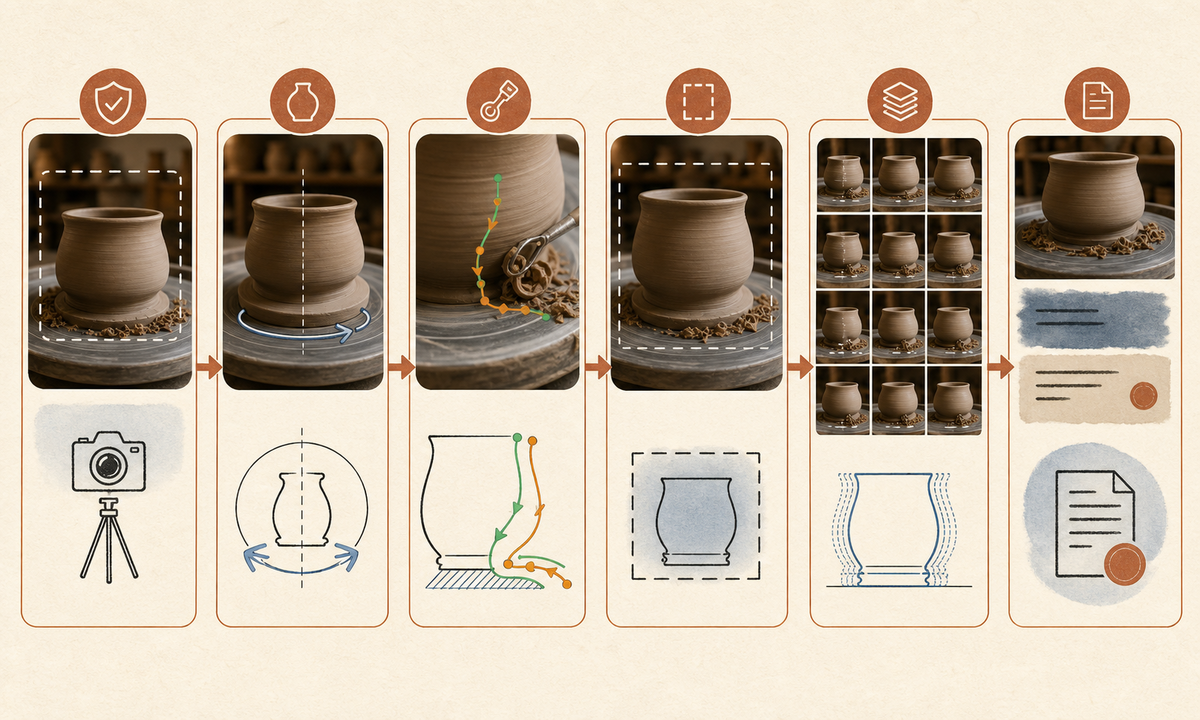
- Confirm rights, maker, vessel stage, clay body, dryness, support method, wheel direction, tool, intended cut, safety limits, educational context, and reviewer.
- Capture fixed close views before, during, and after the real approved pass, including vessel profile, foot, rim, tool edge, grip, wheel head, chuck or bat, and trimmings.
- Map the one motion: vessel rotation, tool start, contact angle, short path, lift, endpoint, duration, while the camera, hands not involved, wheel base, and background remain fixed.
- Generate a locked-camera draft with low rotation and one light pass; do not combine centering, trimming the full foot, refining, signing, sanding, glazing, firing, or reveal.
- Inspect frame by frame for vessel wobble, changing diameter, rim drift, impossible tool penetration, extra fingers, reversed wheel, teleporting trimmings, wetness change, or lost support.
- Add verified stage, tool, safety, speed context, maker credit, captions, illustrative disclosure, and link to full real instruction in post-production.
Example prompt variants
- Four-second locked macro: the approved leather-hard bowl rotates slowly counterclockwise while the existing loop tool completes one shallow pass around the visible outer foot edge, then lifts; preserve profile, rim, fingers, chuck, trimmings and light.
- Three-second side view: one potter’s rib lightly refines the already established lower-wall curve for a short pass, preserve vessel diameter, tool grip, wheel direction, support and no finished transformation.
- Five-second detail: the wheel turns slowly while the existing tool touches only the marked foot-ring segment and stops, no full-circle cut, extra hand, clay spray, camera move or shape change.
Quality checklist
- Vessel, clay stage, dryness, profile, rim, foot, support, wheel direction, tool, grip, contact path, and intended cut match approved references.
- Rotation, contact, pressure cues, trimmings, gravity, hands, shadows, and endpoint remain physically coherent across frames.
- No extra finger, tool, vessel, collapse, cracking, deep cut, reversed wheel, shape transformation, finishing, glazing, or firing appears.
- The clip is not presented as exact instruction, safe technique, maker proof, production speed, or quality evidence without expert review and real sources.
- Rights, source set, motion map, prompt, output, frame review, maker approval, captions, disclosure, and export remain traceable.
Mistakes to avoid
- Prompting a complete rough pot to finished trimmed foot transformation from one photo.
- Leaving wheel direction, clay stage, support method, tool edge, contact point, or endpoint undefined.
- Accepting a stable-looking clip with changing vessel diameter, floating tool contact, extra fingers, or disappearing trimmings.
- Publishing illustrative motion as a substitute for real safety instruction, pressure guidance, or proof of handmade production.
Related AIBase pages
Practical next step
Open the most relevant AIBase generator, run one narrow prompt first, and save the best result before adding more constraints. The fastest way to improve output quality is to compare one variable at a time: subject, camera, background, lighting, then final polish.