
HappyHorse Community Orchestra Group Photo Animation Prompts
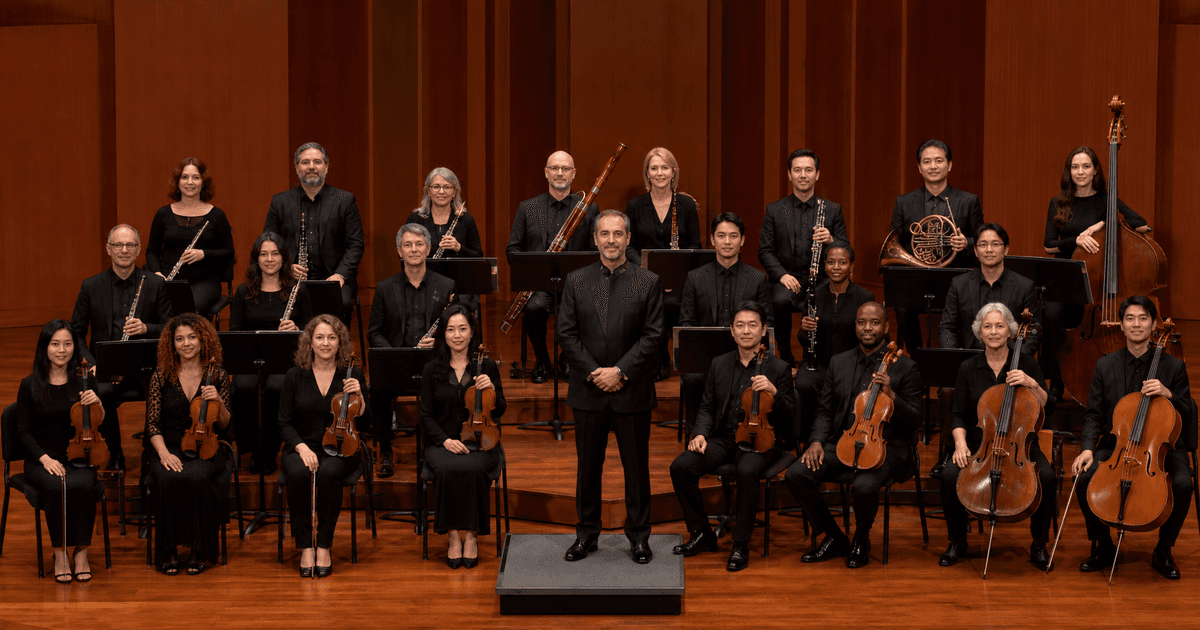
Animate authorized orchestra group portraits with restrained motion while protecting every identity, instrument, bow, music stand, seating position, consent boundary, and event context.
Quick answer
Obtain explicit synthetic-animation permission from every identifiable musician, conductor, guest, and guardian where required, plus the photographer, ensemble, and venue. Map every person, row, chair, music stand, instrument, bow, mouthpiece, endpin, hand, folder, sign, and background figure. Ask HappyHorse only for subtle breathing and one or two precisely named blinks with a locked camera. Keep instruments, bows, pages, hands, conductor, and mouths still; do not invent playing, conducting, tuning, applause, speech, sound, repertoire, roles, membership, awards, or audience reaction.
Who this guide is for
Community, youth, school, university, amateur, and professional ensembles; concert presenters; arts nonprofits; photographers; and communications teams sharing an approved orchestra portrait.
Recommended model
| Use case | Recommended model | Why |
|---|---|---|
| This workflow | HappyHorse for restrained orchestra group portrait micro-motion | Identity-led micro-motion can add life to an approved portrait while strict stillness protects instrument geometry, hand placement, seating, event truth, and the absence of synthetic performance. |
AIBase is an independent creative platform. Model names are shown only to identify supported underlying technologies and workflow choices.
Prompt template
Animate the uploaded authorized orchestra group photo as the exact first frame. Preserve every person's identity, apparent age, face, expression, gaze, hair, body proportions, row, chair and position, pose, hands, fingers, clothing, badge zones, accessibility aids, and every instrument's type, size, strings, keys, valves, pegs, bridges, bows, mouthpieces, bells, endpins and orientation; also preserve music stands, folders, pages, conductor, podium, stage, signs, background people, crop, camera, light, shadows, blur, and grain. Motion only: subtle breathing across the group and one natural blink from [named row and position], [3-5 seconds], locked camera, stable ending. No mouth movement, playing, bowing, fingering, conducting, tuning, page turn, gesture, touch, person added or removed, instrument mutation, sign change, camera move, text, music, voice, or watermark.
Step-by-step workflow
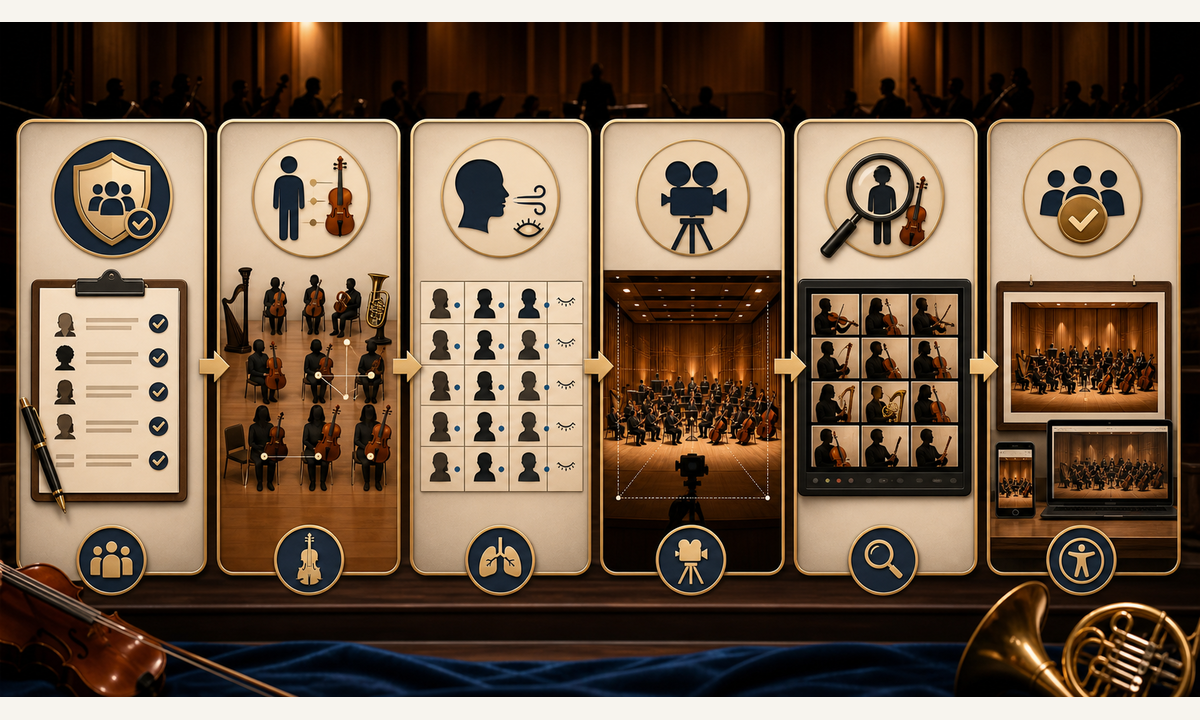
- Create a consent and rights roster for every identifiable musician, conductor, guest, minor or guardian, photographer, ensemble, venue, displayed work, and intended public or internal channel.
- Audit the portrait for audience members, minors, badges, schedules, sheet music, screens, donor details, backstage access, addresses, restricted areas, and culturally or commercially sensitive context.
- Map every person by row and position plus hands, clothing, aids, chairs, stands, folders, pages, instruments, bows, mouthpieces, endpins, conductor, signs, stage, and background figures.
- Request only subtle breathing and no more than one or two named blinks while mouths, hands, instruments, bows, pages, stands, conductor, stage, signs, and camera remain still.
- Inspect every frame person by person and instrument by instrument for identity, age, gaze, hands, overlaps, string and key geometry, bow duplication, page changes, sign drift, and unintended performance.
- Publish factual ensemble, event, date, venue, photographer, repertoire and role context only when verified, with consent-based caption, accessibility, disclosure, correction, removal route, and current links.
Example prompt variants
- Four-second twelve-person chamber orchestra portrait: subtle breathing and one blink from the front-left violinist, preserve all faces, seats, violins, bows, cello endpin, stands, folders, stage and locked camera.
- Three-second youth orchestra group: breathing only, preserve every approved identity, uniform, instrument, hand, chair, stand, conductor and sign zone, no mouth, bow, page, or baton movement.
- Five-second wind ensemble portrait: two named back-row blinks, preserve flutes, clarinets, saxophones, brass bells, keys, mouthpieces, stands, rows, background and no playing or camera motion.
Quality checklist
- Every identifiable person or guardian, photographer, ensemble, venue, displayed work, and channel has the required approval for synthetic animation.
- Identity, apparent age, expression, gaze, rows, seats, poses, hands, clothing, aids, instruments, bows, stands, folders, conductor, stage, signs, and crop remain stable.
- Instrument type, scale, strings, keys, valves, pegs, bridges, mouthpieces, bells, endpins, orientation, hand contact, and overlaps remain physically coherent.
- Motion stays within approved breathing and named blinks and does not invent playing, conducting, tuning, repertoire, roles, membership, endorsement, achievement, or sound.
- Consent roster, rights and privacy review, source map, prompt, person-and-instrument inspection, approvals, publication, expiry, correction, and removal remain traceable.
Mistakes to avoid
- Assuming an event release, membership form, school permission, or conductor approval automatically covers synthetic animation for every person and channel.
- Animating mouths, bows, fingers, valves, keys, pages, baton, or instruments and causing performance, identity, hands, and hardware to drift.
- Leaving minors, audience identities, badges, schedules, donor information, copyrighted scores, screens, or backstage security details visible without review.
- Using the portrait to imply current membership, role, repertoire, audition result, endorsement, diversity, award, attendance, or musical quality.
Related AIBase pages
Practical next step
Open the most relevant AIBase generator, run one narrow prompt first, and save the best result before adding more constraints. The fastest way to improve output quality is to compare one variable at a time: subject, camera, background, lighting, then final polish.