
Veo 3.1 Pro Home Fragrance Brand Film Prompts
Plan home-fragrance brand films with Veo 3.1 Pro using evidence-based scent cues, stable packaging, safe flame behavior, one cinematic action per shot, and approved claims.
Quick answer
Translate only documented scent notes into material, light, weather, and room cues; do not show an ingredient, origin, or wellness outcome that the product cannot support. Build the film from separate five-to-eight-second shots, protect the vessel and label, keep flames and hot wax physically safe, and add exact notes, burn time, claims, warnings, logo, and CTA as approved overlays.
Who this guide is for
Candle, diffuser, room-spray, incense, and home-care brands creating launch films, collection stories, ecommerce loops, retail screens, or paid social edits.
Recommended model
| Use case | Recommended model | Why |
|---|---|---|
| This workflow | Veo 3.1 Pro text-to-video or reference-led video for modular cinematic shots | A Pro workflow suits deliberate glass, wax, vapor, fabric, wood, and camera direction across a sequence, while product and fragrance facts remain controlled outside generation. |
AIBase is an independent creative platform. Model names are shown only to identify supported underlying technologies and workflow choices.
Prompt template
Create one [5-8]-second cinematic home-fragrance shot for [story beat]. Verified creative cues: [documented scent family or approved mood, without adding ingredients]. Scene [room/material macro/approved product setting]. Subject [generic vessel or authorized reference-led product]. Action [one event: curtain shifts / reed absorbs liquid / match approaches unlit wick but does not touch / candle flame moves subtly / spray mist disperses away from faces]. Camera [one move and lens feel], lighting [direction], tactile natural color. Preserve vessel silhouette, fill level, wax or liquid color, wick or reed count, cap, label zone, material, reflections, shadows, surface contact, flame scale, and continuity. No text, invented botanical ingredient, origin scene, wellness outcome, air-purifying claim, burn-time claim, certification, readable label, logo mutation, unsafe flame, unattended hazard, smoke cloud, face exposure, watermark, or second action.
Step-by-step workflow
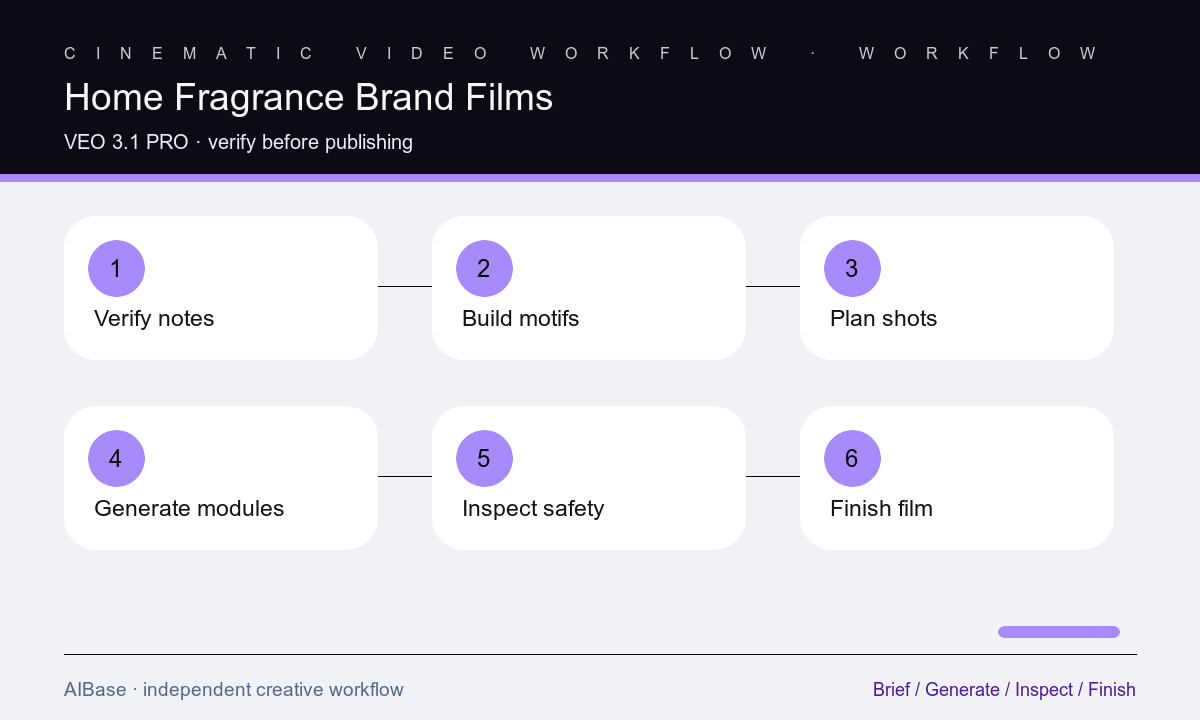
- Build an approved fact sheet for product type, scent notes, ingredients that may be shown, vessel, wax or liquid, wick or reed count, burn and safety guidance, claims, packaging, rights, and market.
- Choose one emotional arc and translate verified notes into abstract materials, palette, light, movement, and room context without depicting unsupported ingredients or outcomes.
- Split the arc into independent shots with one subject, action, camera move, sound intention, continuity note, and explicit flame, mist, or liquid boundary.
- Generate atmosphere and material shots separately from exact product hero shots, using authorized references where vessel and packaging fidelity matters.
- Inspect glass, ceramic, wax, liquid, reeds, wick, flame, smoke, mist, reflections, fill level, labels, hands, surfaces, shadows, safety, and shot-to-shot continuity.
- Assemble approved clips with packshots, licensed sound, exact scent copy, warnings, logo, captions, disclosure, and channel crops, then complete product, legal, safety, and rights review.
Example prompt variants
- Seven-second morning-room atmosphere shot for a documented fresh-linen scent direction: sheer curtain shifts once in window light above an empty neutral table, slow lateral glide, no product, person, laundry claim, text, or extra action.
- Six-second reference-led diffuser macro: approved glass vessel and five reeds remain fixed as liquid darkens the lower reed tips subtly, gentle push-in, preserve fill level, cap geometry, label zone, reflections, table contact, and no invented botanical.
- Five-second lit-candle hero: authorized ceramic vessel with verified single wick and small steady flame, one subtle focus pull from rim texture to flame, preserve wax level, glaze, label zone, shadows, safe clear surroundings, no hand or smoke plume.
Quality checklist
- Every shown ingredient, scent note, origin cue, material, burn detail, safety condition, certification, and product claim is documented or omitted.
- Vessel, cap, label zone, fill level, wax or liquid color, wick or reed count, materials, reflections, shadows, and surface contact stay stable.
- Flame, smoke, mist, liquid, fabric, and camera motion behave plausibly without unsafe placement, facial exposure, overflow, sudden ignition, or continuity drift.
- Exact packaging, scent copy, burn time, warnings, logos, claims, price, CTA, and legal lines use approved assets and remain editable.
- Product, fragrance, safety, legal, brand, rights, accessibility, and channel owners approve the film against current packaging and destination content.
Mistakes to avoid
- Showing flowers, fruit, woods, resins, farms, or extraction scenes that viewers may read as actual ingredients or origins without evidence.
- Using a huge flame, dramatic smoke, unattended placement, crowded textiles, children, pets, or direct facial spray to make the film feel cinematic.
- Prompting relaxation, sleep, focus, purification, toxin removal, or long-lasting performance as visual fact without approved substantiation.
- Trying to generate the complete label, scent notes, warnings, logo, and CTA inside moving product footage.
Related AIBase pages
- Open Veo 3.1 Pro
- Use the cinematic Pro workflow
- Create luxury product commercials
- Plan beverage brand films
Practical next step
Open the most relevant AIBase generator, run one narrow prompt first, and save the best result before adding more constraints. The fastest way to improve output quality is to compare one variable at a time: subject, camera, background, lighting, then final polish.