
Veo 3.1 Pro Repair Café Brand Film Prompts Without Fake Repair Outcomes
Create cinematic repair-café brand films from verified community footage and generated material atmosphere without inventing repairs, expertise, safety, waste impact, or endorsements.

Quick answer
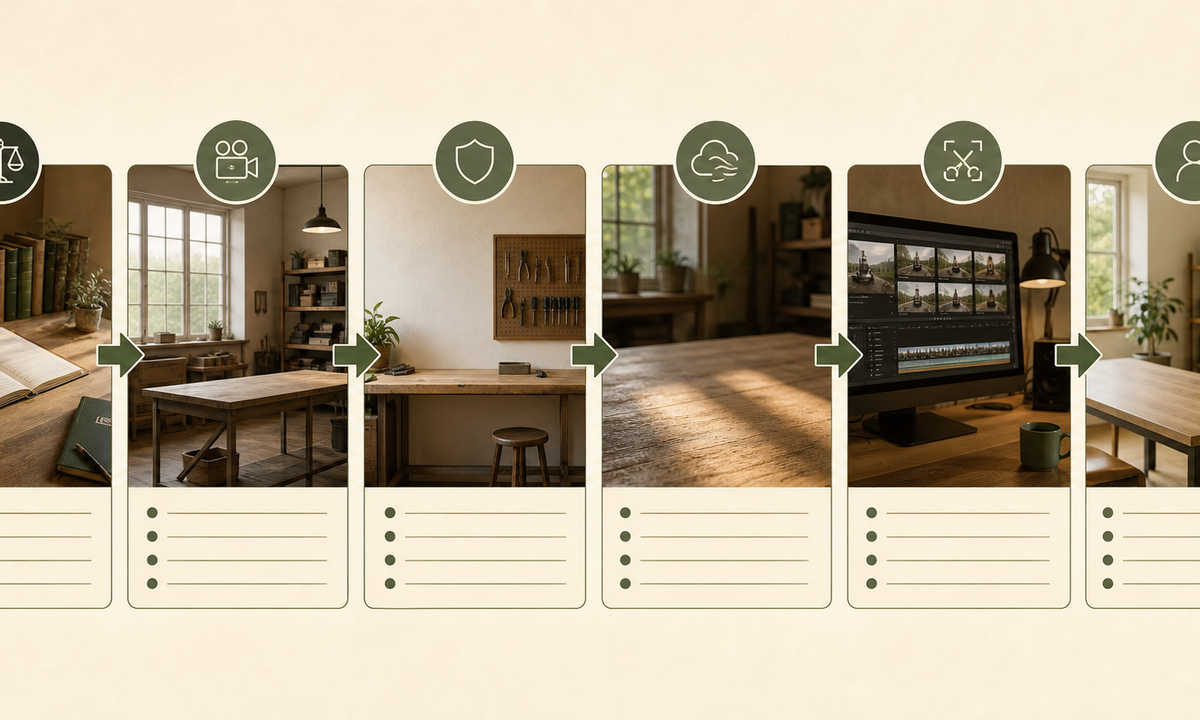
Let authorized real footage show the actual venue, volunteers, visitors, objects, diagnostic steps, repairs, safety practices, and outcomes. Use Veo 3.1 Pro only for non-evidentiary cinematic atmosphere such as light across a cleared workbench, abstract tool shadows without use, material textures, or a transition built from neutral screws and fabric offcuts. Never generate a person repairing an appliance, a before-and-after result, an electrical action, expertise, certification, item saved, waste diverted, cost avoided, partnership, or community impact. Keep every claim tied to event records and disclose generated plates when they could be mistaken for real activity.
Who this guide is for
Repair cafés, libraries, maker spaces, circular-economy nonprofits, municipalities, volunteer coordinators, and documentary teams producing event explainers, recruitment films, fundraising stories, or local awareness campaigns.
Recommended model
| Use case | Recommended model | Why |
|---|---|---|
| This workflow | Veo 3.1 Pro for cinematic text-free material atmosphere around verified real repair evidence | It can provide polished connective shots while real footage and records remain authoritative for people, skills, tools, electrical safety, repair state, outcomes, waste, and impact. |
AIBase is an independent creative platform. Model names are shown only to identify supported underlying technologies and workflow choices.
Prompt template
Create a [4-7 second] text-free cinematic atmosphere plate for a repair-café brand film. Purpose [opening mood / chapter transition / closing reflection], not evidence of an actual event or repair. Subject [soft window light moving across an empty cleared workbench / macro texture of sorted generic fasteners / abstract fabric offcut layers], one motion [specific], camera [specific], lens and crop [specific], palette [specific], caption-safe zone [specific], stable ending. No person, hand, volunteer, visitor, real venue, branded tool, powered device, appliance, battery, plug, exposed wire, soldering, diagnosis, repair, before-after result, broken or fixed item, safety equipment claim, certificate, waste quantity, money, partner logo, word, letter, number, sound or watermark.
Step-by-step workflow
- Build an evidence and rights ledger for event dates, venue, organizers, funders, volunteers, visitors, minors, photographers, interviews, objects, owners, diagnoses, actions, outcomes, safety boundaries, qualifications, and impact metrics.
- Separate the story into authorized real event footage, participant interviews, verified records, real object close-ups, and clearly non-evidentiary generated atmosphere.
- Use real footage for all tool contact, electrical or battery work, disassembly, diagnosis, repair, testing, ownership, participation, and before-and-after states; redact personal and device data.
- Generate only empty-workbench, neutral material, or abstract transition plates with no recognizable device, repair action, person, venue, outcome, mark, or claim.
- Assemble names, roles, event facts, repair status, safety limitations, item counts, waste methods, partners, dates, access information, captions, audio description, disclosure, and CTA as editable sourced layers.
- Review with event leads, repair and electrical safety specialists, participants, privacy, legal, funders, accessibility, localization, impact measurement, correction, withdrawal, and archive owners.
Example prompt variants
- Six-second opening plate: warm side light slowly crosses an empty scratched wooden workbench with a few generic unbranded screws sorted at the edge, shallow depth, no tool, device, hand, repair, text or logo.
- Five-second chapter transition: macro view of neutral fabric offcuts and a single generic zipper coil casting moving shadows, no garment, repair action, person, outcome, word or sound.
- Seven-second closing atmosphere: abstract circles of metal, wood and cloth settle into a calm composition with open caption space, no appliance part, certification, waste metric, partner mark or repaired result.
Quality checklist
- Event, venue, people, roles, objects, ownership, diagnoses, actions, outcomes, safety rules, qualifications, partners, dates, item counts, waste methods, and impact claims match approved evidence.
- Every repair action and outcome comes from authorized real footage; generated plates contain no person, device, tool use, diagnosis, repair, test, safety proof, venue, or impact evidence.
- The edit does not imply that every item is repairable, safe, accepted, completed, free, warrantied, professionally serviced, or diverted from waste.
- Names, roles, claims, dates, access details, safety notes, captions, audio description, disclosure, partner marks, and CTA remain editable and accessible.
- Rights ledger, evidence, prompts, outputs, specialist reviews, participant approvals, publication, correction, withdrawal, expiry, and archive remain traceable.
Mistakes to avoid
- Generating convincing hands-on repair footage because it looks easier than documenting a real safe process.
- Cutting from a broken object to a working one and implying a verified outcome without continuous evidence and owner confirmation.
- Calling every volunteer an expert or implying electrical, battery, pressure, medical, or child-product work is accepted and safe.
- Publishing unsupported totals for items repaired, money saved, emissions avoided, waste diverted, skills taught, or community impact.
Related AIBase pages
Practical next step
Open the most relevant AIBase generator, run one narrow prompt first, and save the best result before adding more constraints. The fastest way to improve output quality is to compare one variable at a time: subject, camera, background, lighting, then final polish.