
Nano Banana Pro Camping Gear Campaign Prompts That Preserve Product Construction
Build premium outdoor campaign concepts from approved gear references while protecting seams, poles, hardware, included parts, scale, and safety truth.
Quick answer
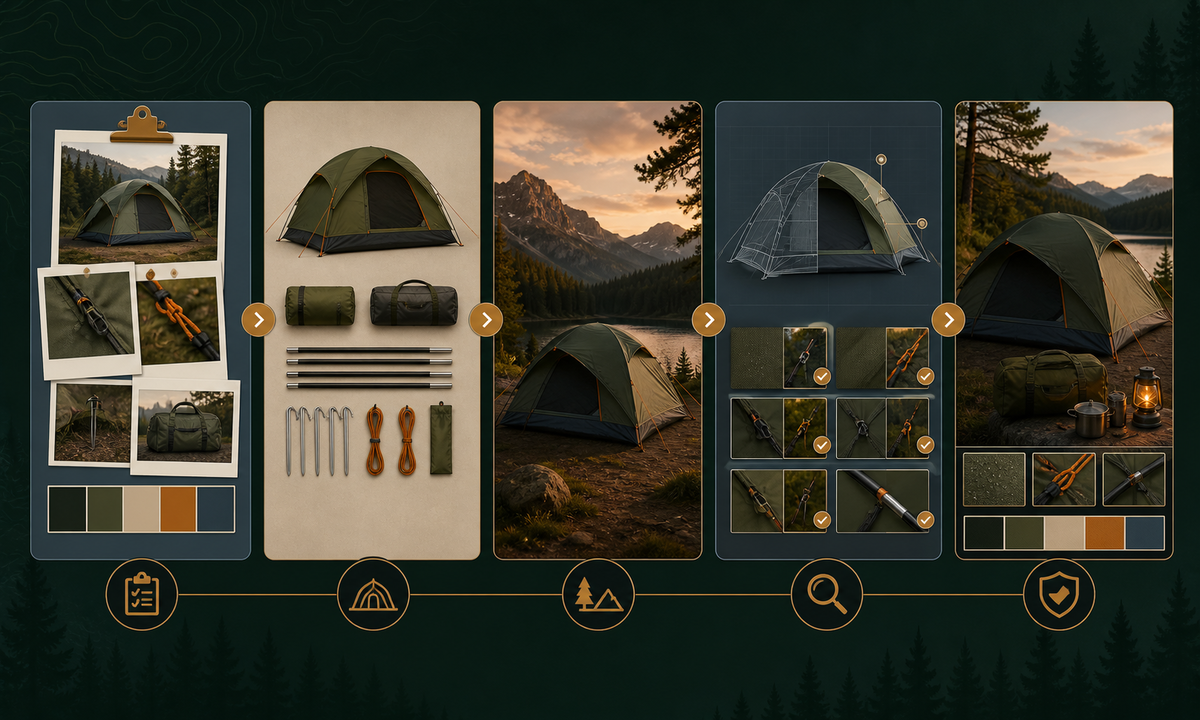
Build a truth sheet from approved front, side, packed, detail, and included-parts references. Lock tent panel count, pole crossings, doors, vents, seams, guy points, zippers, hardware, color, dimensions, and included accessories before describing the campsite. Generate a campaign setting around the product, then composite a verified packshot when construction, scale, safety, or included contents cannot be guaranteed.
Who this guide is for
Camping brands, outdoor retailers, marketplace teams, photographers, and agencies developing tent, sleep-system, stove, lantern, furniture, or accessory campaigns.
Recommended model
| Use case | Recommended model | Why |
|---|---|---|
| This workflow | Nano Banana Pro for high-fidelity reference-led outdoor concepts | Detailed material and scene control is useful for preproduction, but approved references must remain authoritative for construction, included parts, safety, and performance. |
AIBase is an independent creative platform. Model names are shown only to identify supported underlying technologies and workflow choices.
Prompt template
Use the uploaded authorized [gear SKU] references as exact product truth. Create a [wide/square/vertical] campaign concept in [verified safe setting], with [camera], [light], and [weather]. Preserve exact silhouette, dimensions and scale relationships, panels, seams, poles, hubs, doors, vents, zippers, straps, buckles, guy points, stakes, feet, fabric, colorway, logo zone, packed form, included parts, setup state, contact, and wear. Do not redesign, mirror, add or remove hardware, imply unsupported weather resistance, place flame near fabric, invent accessories, people, wildlife, text, logo, certification, claim, or watermark.
Step-by-step workflow
- Verify SKU, revision, measurements, capacity, materials, included parts, setup state, safety instructions, performance claims, rights, and target crop.
- Build a protected-anchor list from multi-angle packshots and detail references, including every repeated pole, clip, buckle, seam, and accessory count.
- Choose one physically safe, weather-consistent scene that does not imply a tested condition or unsupported product performance.
- Generate one camera and lighting direction at a time, keeping the full gear silhouette and contact points visible.
- Compare construction, scale, tension, shadows, terrain contact, fire clearance, and accessories against references; route uncertain products to compositing.
- Add approved packshots, dimensions, capacity, setup guidance, safety copy, price, availability, claims, and CTA as editable reviewed layers.
Example prompt variants
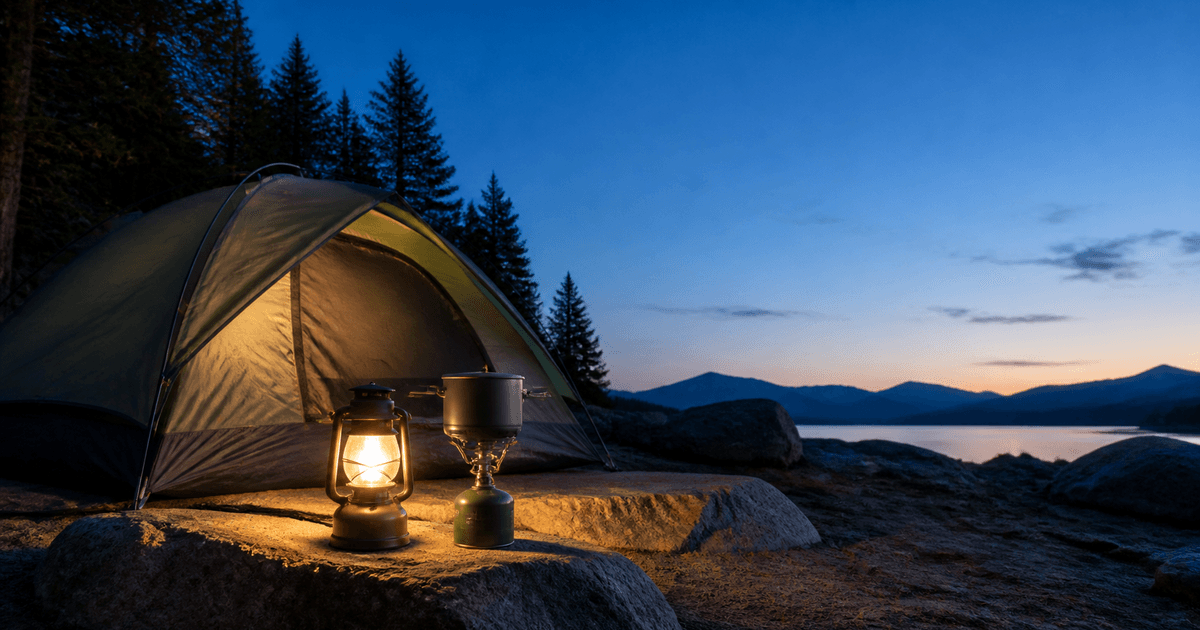
- Approved two-person dome tent on a broad established lakeside pad at blue hour, preserve exact pole crossings, door, vents, seams, guy points, colorway and packed bag; no person, rain, wind claim or fire.
- Approved camp lantern on a stable stone table beside its real carry case, warm low output, preserve cage, handle, controls, battery door and scale; no flame, runtime claim, text or logo.
- Approved compact stove in a dry controlled outdoor-kitchen concept with burner off, preserve supports, valve, hose and included case; no fuel canister invention, cookware, flame, person or safety claim.
Quality checklist
- SKU, revision, geometry, materials, colors, hardware, included parts, and scale match approved references.
- Setup, terrain contact, ventilation, clearances, weather, flame, fuel, and human-use cues are physically safe.
- The scene does not function as evidence for capacity, waterproofing, wind rating, warmth, runtime, load, certification, or durability.
- Real product, dimensions, safety guidance, claims, price, and availability are verified editable content.
- References, prompt, outputs, comparisons, approvals, market, and expiry are traceable.
Mistakes to avoid
- Asking for a dramatic storm scene and accidentally making an unsupported waterproof or wind claim.
- Allowing extra poles, missing vents, impossible guy lines, floating feet, or mismatched accessories.
- Showing flames, fuel, heaters, or cooking too close to tents and fabrics.
- Treating a generated campsite as evidence of product capacity, performance, or real location use.
Related AIBase pages
Practical next step
Open the most relevant AIBase generator, run one narrow prompt first, and save the best result before adding more constraints. The fastest way to improve output quality is to compare one variable at a time: subject, camera, background, lighting, then final polish.