
Veo 3.1 Pro Outdoor Apparel Brand Film Prompts
Plan cinematic outdoor apparel shots while preserving the approved garment, talent, environment, safety, and evidence-backed performance claims.
Quick answer
Build the film as separate shots, each with one garment state, one safe body action, one terrain condition, and one camera path. Lock construction, fit, color, hardware, layers, talent identity, and weather continuity. Keep waterproof, warmth, durability, sustainability, and performance claims out of generation unless the campaign has approved evidence and real-world validation.
Who this guide is for
Outdoor apparel brands, campaign directors, ecommerce teams, retailers, and agencies prototyping or producing short films for jackets, shells, midlayers, trail clothing, and accessories.
Recommended model
| Use case | Recommended model | Why |
|---|---|---|
| This workflow | Veo 3.1 Pro | Cinematic shot development benefits from richer motion and environmental control, while exact garment construction and product claims still require references, compositing, and expert review. |
AIBase is an independent creative platform. Model names are shown only to identify supported underlying technologies and workflow choices.
Prompt template
Create one [duration] [aspect ratio] cinematic outdoor-apparel shot using the authorized garment and talent references. Preserve exact talent identity, body proportions, hair, garment silhouette, hood, collar, panels, seams, zippers, pulls, pockets, cuffs, hem, vents, logo placement, color, material, fit, base layers, pack straps, footwear, and accessories. Environment: verified [terrain and weather]. Safe action: [one low-risk movement]. Fabric response: [one plausible cue]. Camera: [one lens impression and path]. Light: [one coherent source]. End on [edit point]. No garment redesign, color drift, extra pocket, opened closure, exposed skin not approved, body reshaping, face drift, impossible weather protection, fall, cliff-edge stunt, wildlife interaction, changed trail, generated logo, performance claim, text, cut, transition, watermark, or sound.
Step-by-step workflow
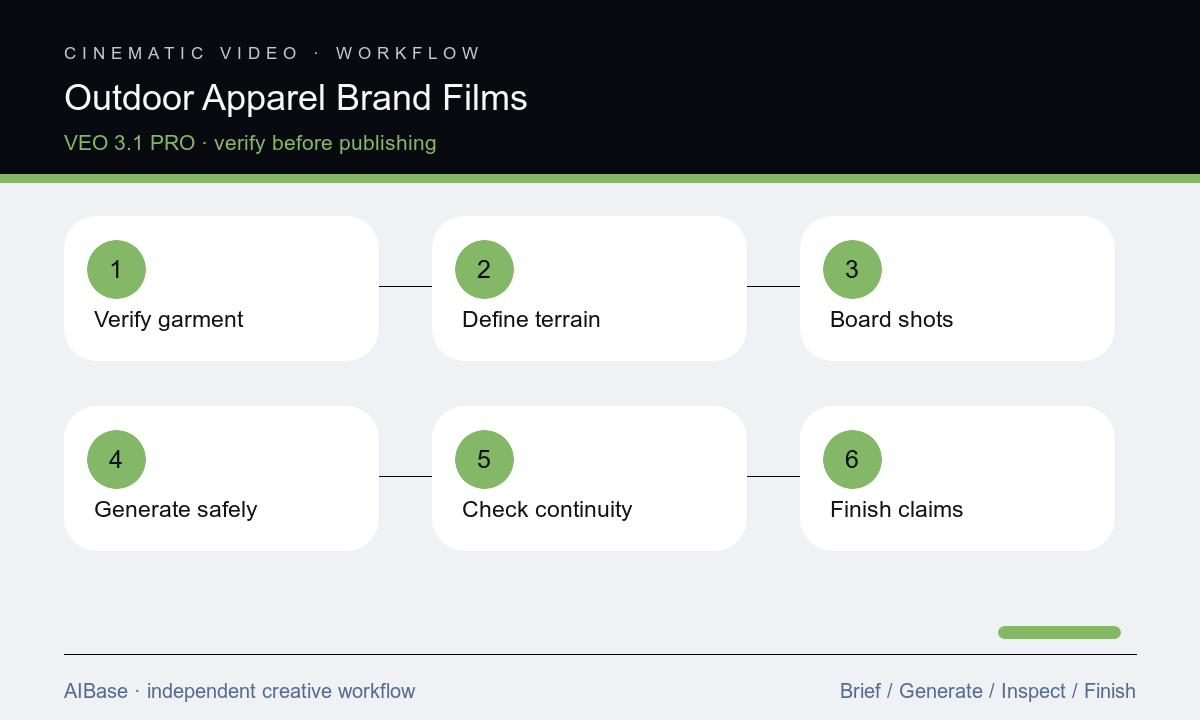
- Build a truth pack for garment construction, color, fit, layering, talent consent, locations, weather, permitted actions, product testing, claims, environmental rules, and required disclosures.
- Write a short story arc with environment, preparation, movement, detail, and resolve, assigning one purpose and one product proof boundary to each shot.
- Storyboard separate shots with continuity notes for garment state, closures, hood, layers, pack, weather, ground, direction of travel, light, and talent position.
- Generate the lowest-risk atmosphere and movement plates first, using exact garment references and avoiding stunts or product performance that generation cannot substantiate.
- Inspect every frame for identity, anatomy, garment construction, fabric physics, logo, terrain, weather, safety, continuity, and accidental product claims; composite approved product detail where needed.
- Finish with licensed audio, controlled typography, claim substantiation, accessibility, location and talent releases, environmental review, channel crops, and a documented approval chain.
Example prompt variants
- Six-second wide trailhead shot with the exact approved shell and talent, one calm pack-strap adjustment, hood down and zipper half closed throughout, light wind in hem only, slow lateral track, preserve all panels, pockets, color, layers, trail, and overcast light.
- Five-second medium ridge-walk shot on a verified broad safe path, exact approved jacket, trousers, pack, footwear, and talent; two steady steps, restrained fabric response, camera follows parallel, no cliff edge, rain claim, speed effect, or terrain change.
- Four-second macro detail of the exact approved cuff and zipper pull, permitted hand tightens cuff once, preserve hardware, seam tape, fabric weave, logo position, skin, glove, and soft side light; no water beading or durability demonstration.
Quality checklist
- Garment silhouette, hood, collar, panels, seams, closures, pockets, cuffs, hem, vents, hardware, logo, color, material, fit, layers, and accessories match references.
- Talent identity, anatomy, skin, hair, clothing coverage, consented action, and continuity remain stable with no unsafe or demeaning depiction.
- Terrain, weather, light, wind, fabric response, foot contact, pack physics, direction of travel, and camera movement are coherent across shots.
- Waterproofing, warmth, breathability, durability, sustainability, origin, testing, and comparative claims are evidence-backed, approved, and not inferred from generated imagery.
- Product, talent, location, music, environmental, accessibility, legal, disclosure, crop, export, and withdrawal checks are complete.
Mistakes to avoid
- Writing one prompt for an entire mountain journey and accepting garment, weather, identity, and terrain drift between implied scenes.
- Using dramatic rain, snow, cliff, fire, speed, or survival imagery that creates unsafe behavior or unsupported performance claims.
- Reviewing the jacket only at a distance and missing changed pockets, closures, panels, logos, layers, or fit in motion.
- Treating a cinematic generated demonstration as evidence of waterproofing, warmth, durability, sustainability, or athlete endorsement.
Related AIBase pages
- Open Veo 3.1 Pro
- Create cinematic fashion films
- Build travel destination films
- Animate fashion lookbook photos
Practical next step
Open the most relevant AIBase generator, run one narrow prompt first, and save the best result before adding more constraints. The fastest way to improve output quality is to compare one variable at a time: subject, camera, background, lighting, then final polish.