
Seedance 2 Coffee Roasting Process Video Prompts from Roastery Photos
Animate one visible cooling-tray or drum action from authorized roastery photos while preserving machinery, bean state, timing, and documentary boundaries.
Quick answer
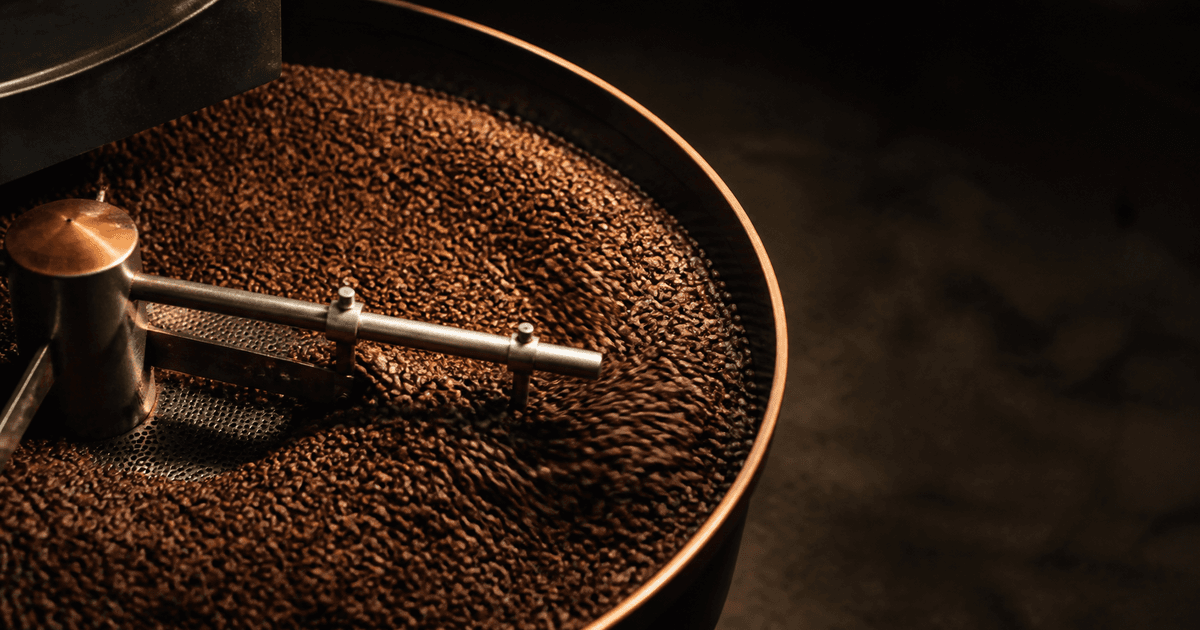
Choose an authorized frame where one mechanical relationship is clearly visible: cooling-tray arms over roasted beans, a drum door before discharge, or beans already falling through a short visible path. Animate only that existing action. Lock the machine, guard, fasteners, bean color and volume, tray, controls, room, camera, and light. Unless a roaster verifies the output, label it illustrative rather than documentary process footage.
Who this guide is for
Coffee roasters, equipment makers, cafes, educators, and editors creating restrained process details from their own approved roastery photography.
Recommended model
| Use case | Recommended model | Why |
|---|---|---|
| This workflow | Seedance 2 image-to-video for one source-led mechanical action | A still can anchor real machinery and process state while a narrow motion request limits invented equipment, transformations, and unsafe operation. |
AIBase is an independent creative platform. Model names are shown only to identify supported underlying technologies and workflow choices.
Prompt template
Animate the uploaded authorized roastery photo as the exact first frame. Confirmed stage: [cooling / door opening / short bean discharge]. Motion only: [existing agitator rotates a few degrees / visible beans settle / existing door moves along its hinge] over [3-5 seconds], then hold. Preserve machine model and geometry, guards, fasteners, openings, controls, tray, agitator, bean color, roast state, volume, surface texture, room, camera, crop, light, and shadows. No green-to-brown transformation, flame, smoke increase, person, hand, new chute, changed controls, invented gauge, origin, roast profile, temperature, flavor, certification, word, logo, sound, or watermark.
Step-by-step workflow
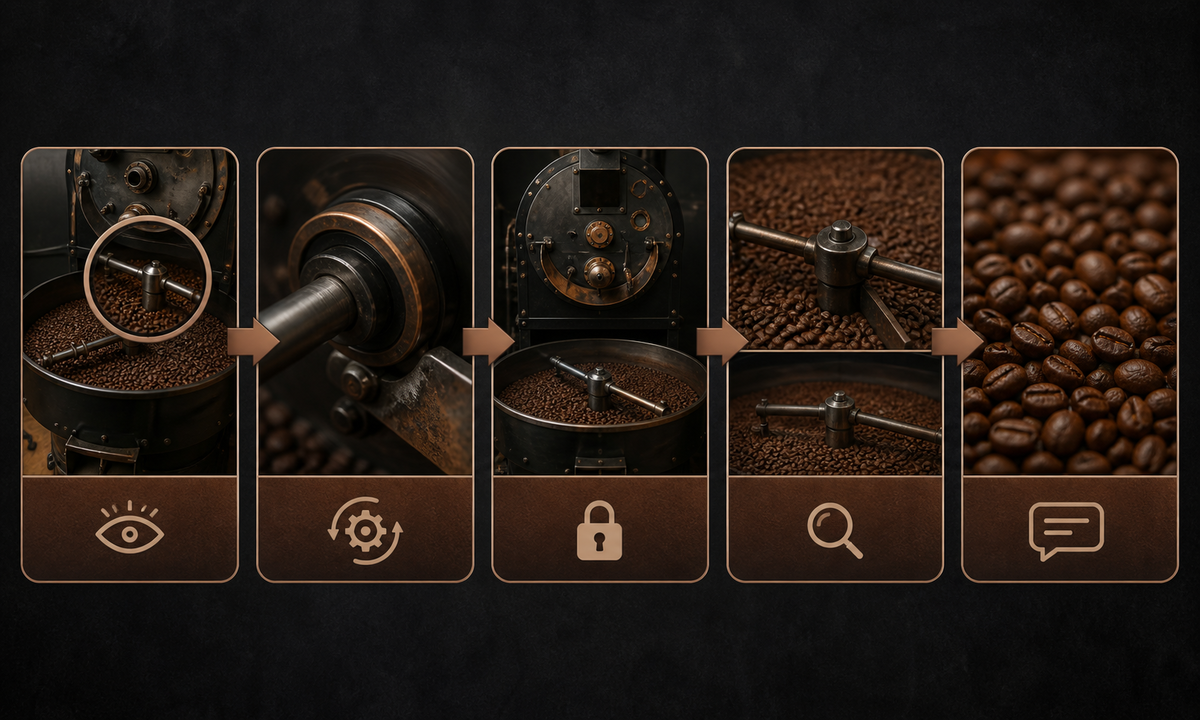
- Confirm image rights, machine, roast stage, operational context, safety rules, and the qualified reviewer who can validate what is shown.
- Select a sharp frame with one visible moving assembly and no hidden interaction the model would need to invent.
- Describe the action’s start, path, distance, speed, contact, and stable endpoint while locking bean state and every machine anchor.
- Generate a locked-camera draft first; introduce a very small push only after mechanical continuity is stable.
- Inspect frame by frame for duplicated arms, changing fasteners, impossible bean flow, altered guards, drifting controls, smoke, heat, and room geometry.
- Add factual roast, equipment, origin, safety, and process captions from approved records; disclose illustration where appropriate and archive review evidence.
Example prompt variants
- Four-second locked cooling-tray macro: the existing agitator arm rotates twelve degrees clockwise while roasted beans shift locally and settle; preserve bean color, volume, tray perforations, hub and room light.
- Three-second source-led drum-door detail: the visible closed door opens only a few centimeters on its real hinge and stops; preserve latch, guard, fasteners and dark interior, with no beans, flame or person.
- Five-second existing discharge frame: only the already visible short stream of roasted beans continues into the cooling tray and ends; preserve chute, machine, bean state, pile volume and camera.
Quality checklist
- Machine, guards, controls, fasteners, openings, tray, beans, stage, room, and camera match the authorized source.
- One mechanical action has a plausible axis, contact, gravity, speed, continuity, and stable ending.
- Bean color, roast state, volume, texture, smoke, heat, and pile do not transform without source evidence.
- The clip does not claim a roast profile, temperature, flavor, origin, process, safety, or certification it cannot prove.
- Source, prompt, output, roaster review, disclosure, captions, approvals, and retirement are traceable.
Mistakes to avoid
- Prompting green beans to roast visibly and fabricating an entire thermal process from one image.
- Combining drum rotation, door opening, discharge, cooling, smoke, camera orbit, and package reveal in one clip.
- Accepting impossible agitator geometry, multiplying beans, missing guards, or changing machine controls.
- Publishing generated machinery footage as documentary proof of a specific roastery’s process.
Related AIBase pages
Practical next step
Open the most relevant AIBase generator, run one narrow prompt first, and save the best result before adding more constraints. The fastest way to improve output quality is to compare one variable at a time: subject, camera, background, lighting, then final polish.