
Veo 3.1 Pro Glass Recycling Brand Film Prompts
Storyboard cinematic glass recycling films from verified facility stages while keeping material flows, contamination, recovery, energy, emissions, jobs, and circularity claims evidence-based.
Quick answer
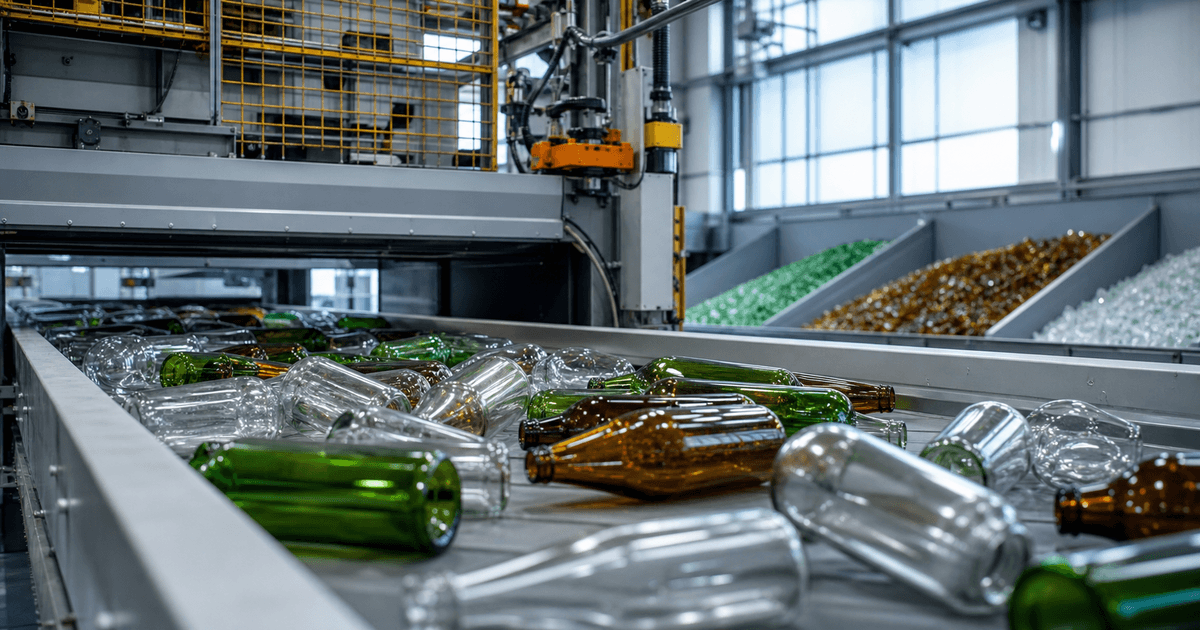
Start with the exact facility and reporting boundary. Verify accepted glass streams, collection sources, contamination and rejects, color sorting, crushing or beneficiation, cullet destinations, yield, losses, energy, water, emissions, transport, worker safety, dates, and claim methodology. Film or collect authorized references for each real stage. Use Veo 3.1 Pro to storyboard transitions and controlled cinematic versions of documented scenes, never to fabricate workers, pristine feedstock, zero waste, closed-loop bottle return, energy savings, emission reductions, local jobs, or a furnace outcome. Keep statistics, methodology, dates, partners, certifications, and disclosure as sourced editable content.
Who this guide is for
Glass processors, material recovery facilities, packaging brands, municipalities, sustainability teams, manufacturers, nonprofits, and agencies developing an evidence-led recycling story.
Recommended model
| Use case | Recommended model | Why |
|---|---|---|
| This workflow | Veo 3.1 Pro for reference-led cinematic storyboards of verified recycling stages | Longer-form cinematic planning benefits from deliberate sequencing and visual continuity, while all facility, environmental, labor, and circularity claims remain anchored to source evidence. |
AIBase is an independent creative platform. Model names are shown only to identify supported underlying technologies and workflow choices.
Prompt template
Create a cinematic [shot or transition] from authorized references of [exact facility and documented stage]. Preserve actual glass stream, container colors and condition, contamination level, conveyor, guards, sorter, crusher or cullet form, building, PPE, worker count if approved, signage zones, camera access, light, dust, and safe operating distance. Motion [specific documented conveyor or camera move], [duration], stable endpoint. No invented worker, unsafe access, clean feedstock, zero waste, bottle-to-bottle loop, furnace, new container, energy saving, emission reduction, certification, statistic, readable text, logo, voice, music, or watermark.
Step-by-step workflow
- Define organization, site, time period, operational boundary, accepted streams, rejects, outputs, customers, metrics, methodology, evidence owners, and claims approval.
- Obtain facility, equipment, worker, contractor, vehicle, artwork, signage, aerial, and music permissions plus safety rules and restricted-camera zones.
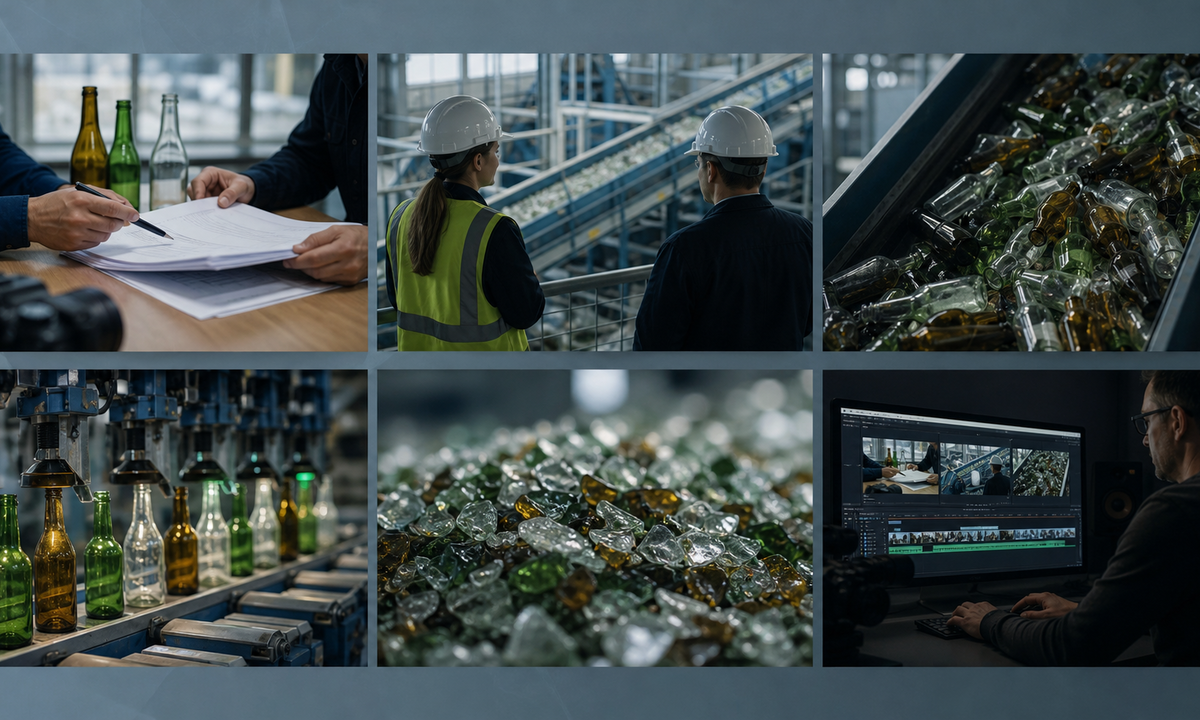
- Document the real sequence: collection boundary, intake, inspection, separation, color sorting, contaminant removal, crushing or beneficiation, cullet storage, transport, and destination evidence.
- Create a shot matrix labeling real footage, generated concept, reconstructed transition, source, uncertainty, safety limit, and every claim the shot may or may not support.
- Generate only documented stages and restrained connective shots; reject cleaner material, faster lines, safer-looking access, added workers, full circular loops, or output products not seen in evidence.
- Edit with sourced figures, methods, dates, limitations, captions, audio description, credits, disclosure, and correction path; complete operations, safety, environmental, legal, and community review.
Example prompt variants
- Six-second low-angle glide beside the authorized color-sorting conveyor, preserve actual clear, amber and green container mix, guards, machinery, speed, daylight and no worker or cleanliness upgrade.
- Five-second macro of documented processed cullet moving under stable industrial light, preserve particle-size range, mixed color, dust and moisture condition; no sparkle effect, perfect purity, statistic or circular arrow.
- Eight-second transition from approved intake bottles to the facility’s documented cullet pile using one restrained match cut, no furnace, new bottle, zero-waste loop, partner logo, emissions claim or voiceover.
Quality checklist
- Facility, boundary, date, accepted streams, contamination, rejects, outputs, yield, energy, water, emissions, transport, destinations, and methodology match current evidence.
- Equipment, guards, PPE, worker access, conveyor behavior, container mix, cullet size, dust, storage, vehicles, signs, season, and light remain source-faithful.
- No generated frame implies zero waste, closed loop, infinite recyclability, purity, savings, certification, local impact, worker outcome, or downstream product without support.
- Claims, statistics, dates, methods, limitations, captions, audio description, credits, disclosure, and links remain editable and cited.
- Permissions, sources, shot matrix, prompts, outputs, operations and safety reviews, claim approvals, publication, correction, and withdrawal remain traceable.
Mistakes to avoid
- Turning a generic clean recycling montage into proof of a specific facility’s actual material flow and performance.
- Removing contaminants, rejects, dust, transport, downtime, safety barriers, or losses to make the process look perfectly circular.
- Using an intake-to-new-bottle match cut to imply bottle-to-bottle recovery when downstream destinations are not verified.
- Publishing environmental savings, diversion, emissions, job, purity, or certification claims without a defined boundary, date, method, and source.
Related AIBase pages
Practical next step
Open the most relevant AIBase generator, run one narrow prompt first, and save the best result before adding more constraints. The fastest way to improve output quality is to compare one variable at a time: subject, camera, background, lighting, then final polish.