
Veo 3.1 Pro Pet Food Brand Film Prompts for Ingredient-Led Stories
Plan ingredient-led pet food films with verified recipes, species-safe scenes, realistic feeding behavior, package control, and editable nutrition claims.

Quick answer
Build the film from a verified formula and one visual truth per shot: measured kibble texture, a sealed pack beside a clean bowl, safe storage, a calm species-appropriate mealtime, or a real ingredient that the current recipe actually contains. Use generated footage as concept or decorative material, not proof of nutrition, palatability, health, veterinary endorsement, sourcing, sustainability, manufacturing, pet identity, or product appearance. Composite the approved package and food, then add regulated copy, feeding guidance, disclaimers, and CTA from reviewed sources.
Who this guide is for
Pet food and treat brands, retailers, agencies, shelters with approved partnerships, and ecommerce teams developing a launch film, recipe story, retailer loop, social cutdown, or brand mood piece for dog, cat, or another specifically supported species.
Recommended model
| Use case | Recommended model | Why |
|---|---|---|
| This workflow | Veo 3.1 Pro for selected cinematic concept shots after formula and claim review | A shot-based cinematic workflow can explore material, light, and emotional pacing, but exact food, package, animal welfare, feeding behavior, nutrition, ingredient, and sourcing facts need real references and expert approval. |
AIBase is an independent creative platform. Model names are shown only to identify supported underlying technologies and workflow choices.
Prompt template
Create one [duration]-second cinematic concept shot for a [species] food brand. Verified visual truth: [approved food form/color/texture or actual ingredient]. Shot purpose: [texture/storage/calm mealtime/package reveal without readable copy]. Animal: [fictional healthy adult species] performing [one calm natural action], or no animal. Set [safe environment], bowl and portion [neutral], camera [one move], light [direction], stable end frame. No exact package unless composited from reference, forced eating, guarding, choking, distress, unsafe ingredient, oversized portion, human food cue, puppy/kitten claim, body transformation, veterinary setting, health or nutrition outcome, ingredient not in formula, certification, sourcing cue, text, logo, sound, or watermark.
Step-by-step workflow
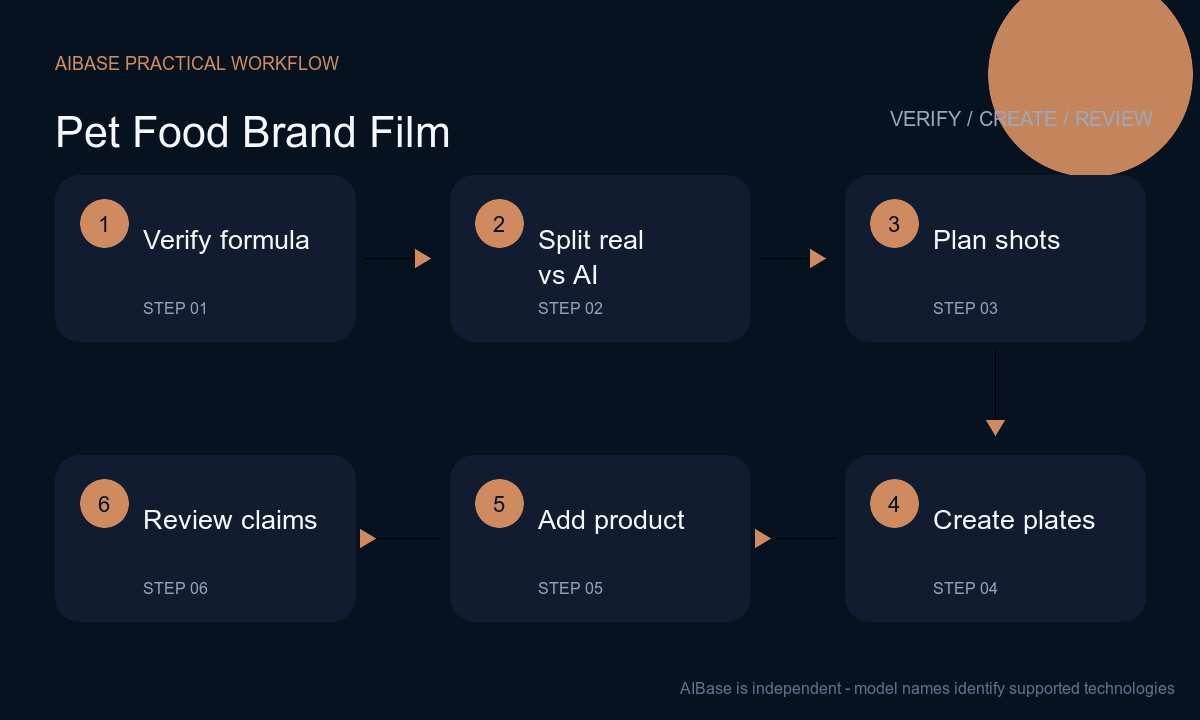
- Freeze species, life stage, recipe, ingredient list, nutrient and regulatory status, food form, color, texture, portion and feeding guidance, pack version, markets, claims, sourcing, certifications, veterinary relationships, safety limits, and approval owners.
- Separate what must be filmed or composited from what may be concepted. Real pack, food texture, serving size, ingredient evidence, manufacturing, farms, veterinarians, named animals, and testimonials require verified source material.
- Plan three to five independent shots, each with one purpose and physical event. Map animal species, body, coat, bowl, food, floor, package zone, human interaction, camera, light, start, and end anchors.
- Generate low-risk plates such as empty set atmosphere, abstract ingredient color, or a fictional adult animal approaching a neutral bowl calmly. Stop if anatomy, behavior, portion, food, or environment becomes unsafe or misleading.
- Composite approved pack and product photography. Add exact recipe name, ingredient and nutrition language, feeding guidance, transition advice, claim qualifiers, certifications, price, retailer, disclosure, captions, audio, and CTA as editable layers.
- Run veterinary or animal-nutrition, regulatory, welfare, product, legal, accessibility, and market review. Verify destinations and inventory before release, monitor feedback, and retire assets when formula, pack, claim, guidance, or availability changes.
Example prompt variants
- Six-second macro concept: a measured scoop of verified brown round kibble falls a short distance into a plain ceramic dog bowl, preserve uniform size and dry texture, slow side light, locked macro camera, stable final portion, no package, dog, meat chunk, ingredient cue, dust cloud, health claim, word or logo.
- Eight-second calm lifestyle concept: one fictional adult tabby cat walks toward a plain shallow bowl and pauses before eating, safe quiet kitchen floor, natural gait and whiskers, bowl remains fixed, slow low camera push, no forced appetite, kitten, owner hand, oversized portion, package, veterinary cue, speech, text or sound.
- Seven-second brand plate: approved product pouch composite zone stands beside a sealed neutral storage bin while morning light crosses a clean pantry shelf, camera arcs fifteen degrees and ends on empty copy space, no readable generated label, ingredient pile, farm, certification, freshness effect, pest, person, animal or claim.
Quality checklist
- Species, life stage, formula, food form, color, texture, portion, ingredients, nutrition, feeding guidance, transition advice, pack, markets, claims, sourcing, and certifications match current approved records.
- Animals show stable anatomy, natural gait, calm voluntary behavior, safe bowl and environment interaction, appropriate supervision, and no distress, guarding, choking, aggression, forced appetite, or humanized performance.
- Generated visuals do not function as evidence of palatability, digestion, allergy response, weight change, coat quality, dental benefit, energy, longevity, veterinary approval, ingredient presence, sourcing, or sustainability.
- Approved food and packaging remain source-faithful; recipe name, ingredients, nutrition, claims, qualifiers, guidance, price, retailer, disclosure, captions, audio, and CTA are editable and reviewed.
- Formula record, references, animal and location rights, prompts, outputs, product composites, welfare review, claim approval, versions, markets, publication, correction, and retirement are traceable.
Mistakes to avoid
- Showing a generated pet eagerly eating and treating that behavior as proof of taste preference, appetite improvement, digestion, energy, health, happiness, or a veterinarian’s recommendation.
- Using attractive meat, fish, vegetables, grains, farms, kitchens, factories, certifications, recyclable materials, or sourcing landscapes that do not match the current recipe and evidence.
- Accepting changing coat markings, extra limbs, unstable bowls, multiplying kibble, impossible chewing, oversized servings, unsafe ingredients, guarding, choking, distress, or forced human interaction.
- Embedding recipe name, nutrition values, feeding amount, life-stage suitability, certification, health claim, price, retailer, veterinarian quote, or legal qualifier inside generated frames.
Related AIBase pages
Practical next step
Open the most relevant AIBase generator, run one narrow prompt first, and save the best result before adding more constraints. The fastest way to improve output quality is to compare one variable at a time: subject, camera, background, lighting, then final polish.