
HappyHorse Dance Troupe Group Photo Animation Prompts
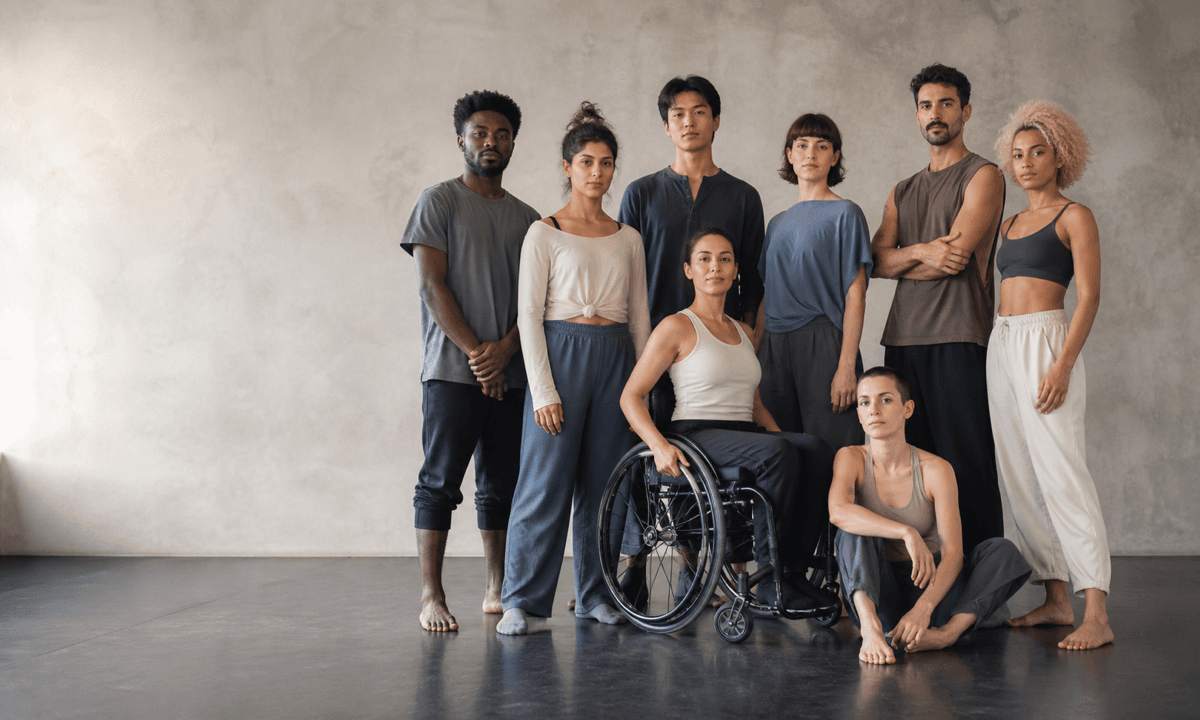
Animate authorized dance-troupe portraits with restrained motion while protecting identity, consent, formation, costume, body representation, venue, minors, and performance context.
Quick answer
Get permission from every identifiable dancer, guardian where required, photographer, troupe, costume or choreography rights owner where applicable, and venue for the exact animation and channel. Ask HappyHorse only for subtle breathing and one or two mapped blinks while every identity, apparent age, body, expression, pose, formation, contact point, costume, cultural garment, mobility aid, prop, floor, backdrop and camera stays fixed. Do not invent choreography, turns, lifts, applause, smiles, touch, role, skill, award, relationship or performance footage.
Who this guide is for
Dance companies, studios, schools, community troupes, festival organizers, photographers and communications teams sharing an approved cast, recital or company portrait.
Recommended model
| Use case | Recommended model | Why |
|---|---|---|
| This workflow | HappyHorse for restrained identity-led troupe portrait animation | Minimal portrait motion can add presence while explicit locks protect dancers, bodies, formation, costumes, cultural context, accessibility and the factual record of the photographed moment. |
AIBase is an independent creative platform. Model names are shown only to identify supported underlying technologies and workflow choices.
Prompt template
Animate the uploaded authorized dance-troupe group photo as the exact first frame. Preserve every person's identity, apparent age, skin tone, facial features, expression, gaze, hair, body proportions, row and position, pose, hands, feet, contact and spacing, costume, footwear, cultural or religious garment, accessibility aid, prop, floor, backdrop, sign and logo zones, crop, camera, light, blur and grain. Motion only: subtle breathing and one natural blink from [precise mapped people] over [3-5 seconds], locked camera, stable ending. No choreography, head turn, arm or leg motion, lift, spin, bow, smile change, speech, music, applause, person added or removed, costume change, body reshaping, text or watermark.
Step-by-step workflow
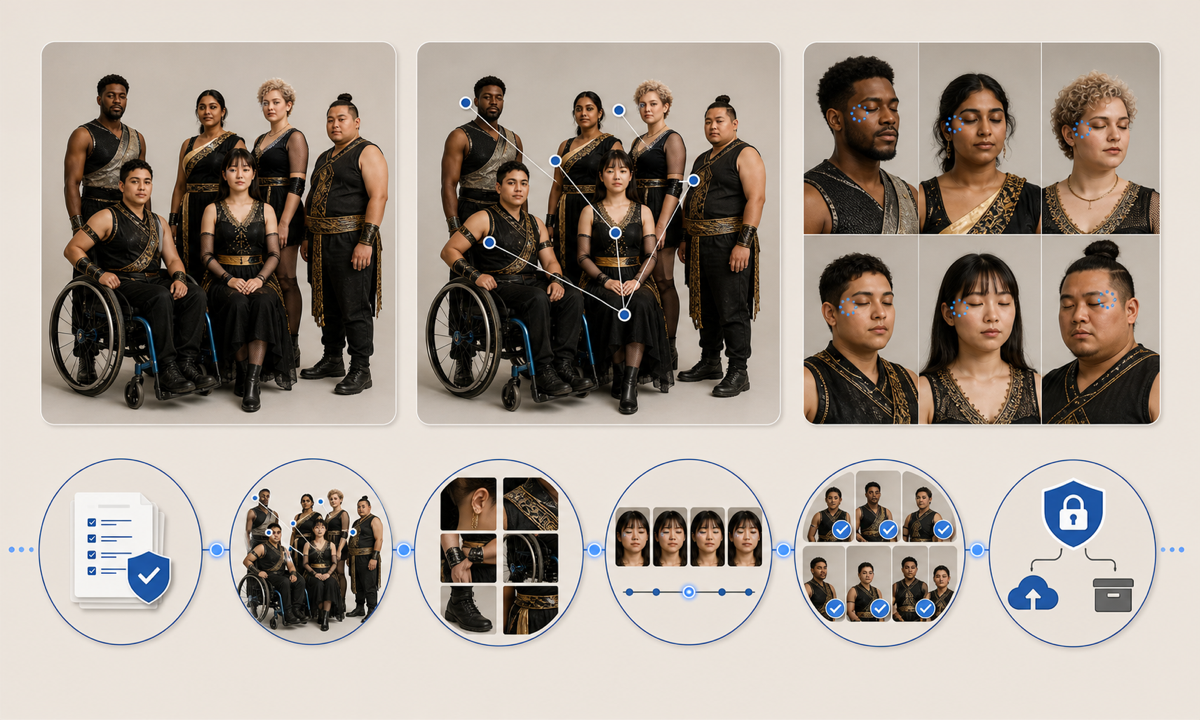
- Create a permission roster for every identifiable dancer, guardian where required, photographer, troupe, school, venue, costume, artwork and intended channel, territory, duration, reuse and withdrawal route.
- Audit minors, names, badges, schedules, backstage access, sensitive body or health context, cultural material, religious dress, choreography, music references, sponsors, audience members and location clues.
- Map each person by row and position plus protected face, body, pose, hands, feet, contact, costume, aid, prop, floor mark, sign, backdrop, crop and a minimal motion assignment.
- Generate a short locked-camera draft with group breathing and no more than two staggered named blinks; keep limbs, formation, contact, fabric, props and background still.
- Inspect every frame person by person for identity, age, body, gaze, mouth, hands, feet, overlap, contact, costume, aids, props, duplicated people, formation and backdrop drift.
- Publish only after consent, safeguarding, cultural, costume, accessibility and troupe review with factual credits, disclosure, caption, correction, removal, retention and expiry.
Example prompt variants
- Four-second twelve-person contemporary company portrait: subtle breathing and one blink from the standing dancer second from right; preserve every identity, neutral pose, bare feet, costume, spacing and locked camera.
- Three-second youth recital group photo: breathing only with one guardian-approved front-row blink, preserve apparent ages, uniforms, hair, hands, feet, rows, teacher, backdrop and no choreography or smile change.
- Five-second traditional dance ensemble portrait: two mapped blinks at separate times, preserve identities, cultural garments, jewelry, props, formation, floor, signs and source grain; no fabric flourish, gesture, music or camera move.
Quality checklist
- Every identifiable person or guardian, photographer, troupe, institution, venue, costume and relevant rights owner approved the exact animation scope, audience, territory and duration.
- Identity, apparent age, body, expression, gaze, pose, hands, feet, contact, spacing, formation, costume, aids, props, floor, signs, backdrop and crop remain source-faithful.
- Minors, cultural or religious context, body and health information, backstage details, schedules, audience members, sponsors and location clues are absent, protected or approved.
- Motion stays within breathing and mapped blinks and does not invent choreography, skill, role, award, relationship, endorsement, performance, music or audience response.
- Consent roster, source, maps, prompt, person-by-person inspection, cultural and accessibility review, publication, expiry, withdrawal and deletion remain traceable.
Mistakes to avoid
- Assuming a recital waiver, troupe membership or photographer license automatically grants synthetic-animation and advertising rights for every dancer.
- Animating a bow, turn, lift, kick, arm line or group choreography and causing bodies, limbs, contact, costumes and formation to drift.
- Reshaping bodies, smoothing disability aids, standardizing costumes or changing culturally specific garments for visual consistency.
- Using the clip to imply a performance, role, award, current membership, endorsement, training quality, cultural authenticity or dancer relationship without verification.
Related AIBase pages
Practical next step
Open the most relevant AIBase generator, run one narrow prompt first, and save the best result before adding more constraints. The fastest way to improve output quality is to compare one variable at a time: subject, camera, background, lighting, then final polish.