
Veo 3.1 Fast Bicycle Repair Shop Tune-Up Reel Prompts
Plan fast bicycle-shop tune-up reels with real service footage plus generic transitions that never invent mechanics, repairs, safety checks, prices, parts, or outcomes.
Quick answer
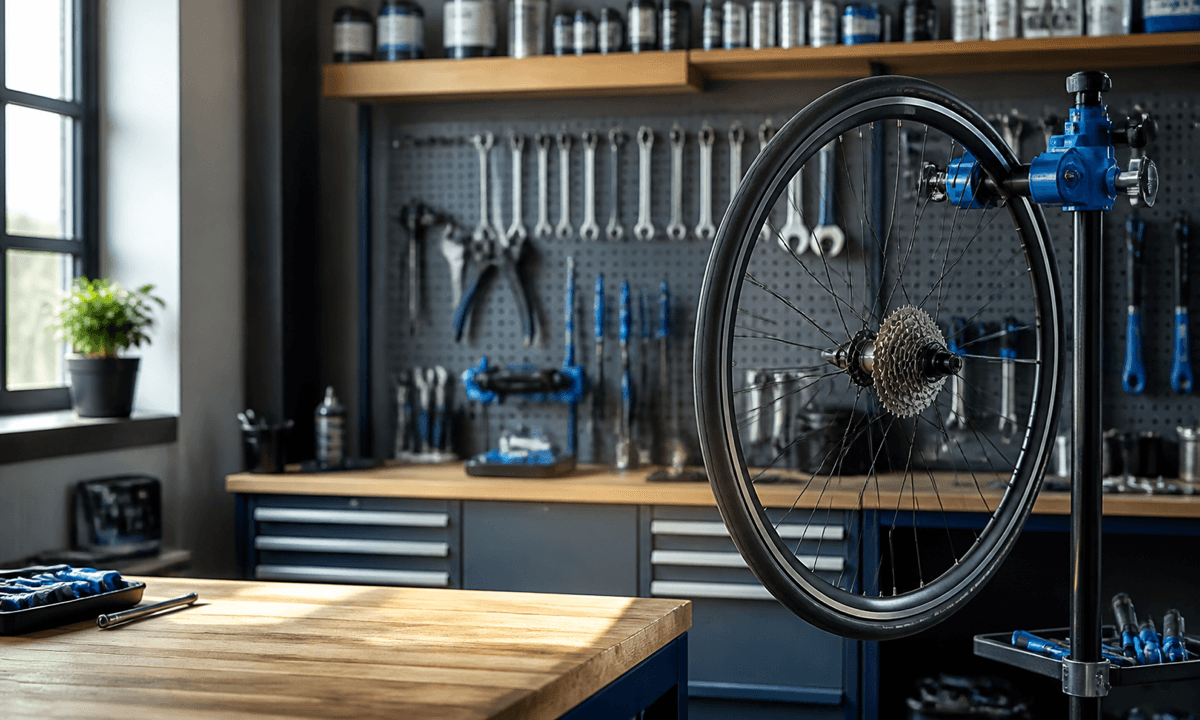
Film real mechanics, bicycles, tools, inspection points, replacement parts, workshop conditions, and completed work with permission and shop safety controls. Use Veo 3.1 Fast only for generic atmosphere or edit glue such as an abstract wheel-shadow opener, clean color transitions, or an empty end-card plate. Never generate a repair step, torque action, brake test, wheel alignment, mechanic, customer bicycle, part condition, safety approval, price, turnaround time, or before-and-after result as evidence about the actual shop.
Who this guide is for
Independent bicycle shops, mobile mechanics, cycling clubs, service departments, and local agencies creating seasonal tune-up, booking, workshop, event, and maintenance-awareness reels.
Recommended model
| Use case | Recommended model | Why |
|---|---|---|
| This workflow | Veo 3.1 Fast for generic non-evidentiary hooks and transitions | Fast short-form generation suits atmosphere and pacing, while real technicians, bicycles, repair methods, safety checks, parts, service claims, pricing, and outcomes require authentic footage and shop approval. |
AIBase is an independent creative platform. Model names are shown only to identify supported underlying technologies and workflow choices.
Prompt template
Create one [3-5 second] vertical, clearly illustrative transition for a bicycle repair shop tune-up reel. Shot job [abstract opener / section divider / empty booking end-card plate]. Scene [spoke-like light shadows across an unmarked workshop wall / clean circular paper geometry / quiet empty workbench-inspired planes], camera [locked / one slow push], palette [specific], protected zones [headline and CTA], stable edit handles. No bicycle, wheel, brake, chain, battery, mechanic, customer, hand, tool, repair, damage, test, safety mark, certification, price, appointment, before-and-after, word, logo, sound or watermark.
Step-by-step workflow
- Define one reel goal, audience, season, bicycle categories, verified service scope, exclusions, price basis, turnaround wording, booking route, filming permissions, safety owner, and publication window.
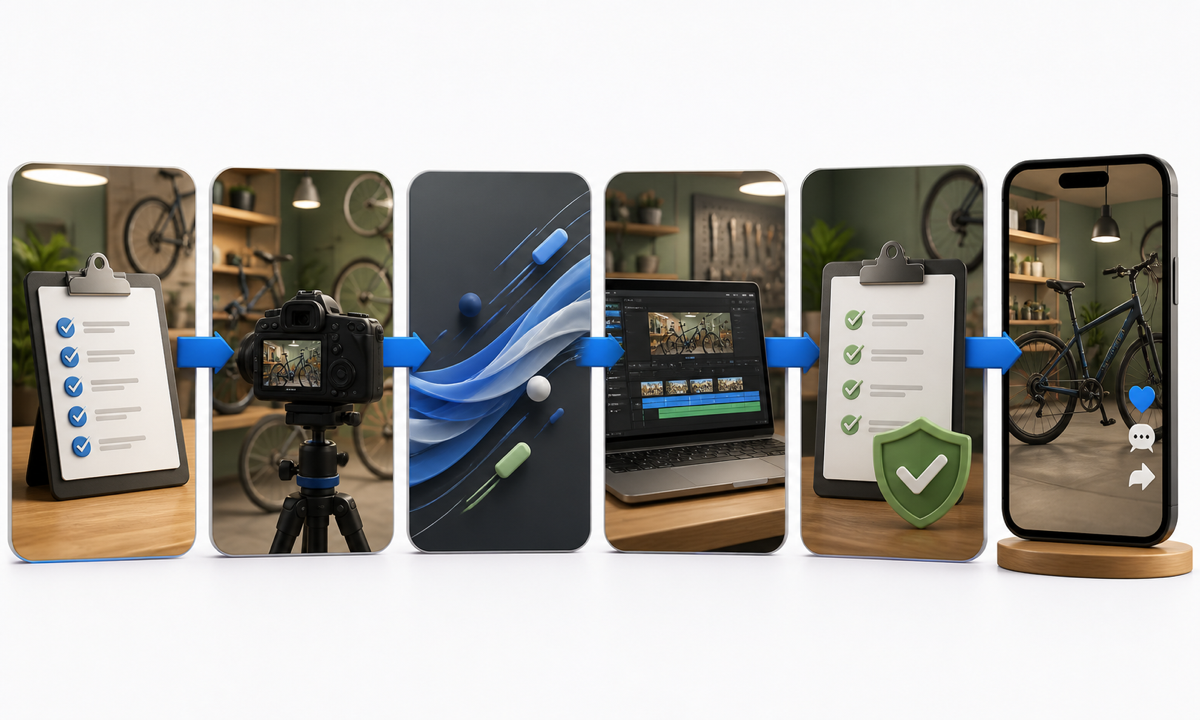
- Classify each shot as real shop evidence, licensed factual footage, or generic generated atmosphere; use real footage for every person, bicycle, tool, inspection, adjustment, replacement, test, and result.
- Build a six-to-fifteen-second storyboard with one generic opener, two or three authentic service clips, verified scope or seasonal guidance, limitations, and a current booking CTA.
- Generate only the abstract plate with one simple camera move and no repair action, bicycle, person, tool, part, certification, safety outcome, inventory, price, or destination detail.
- Edit in authorized footage, current services, exclusions, mechanic names where approved, price basis, turnaround range, booking details, captions, disclosure, licensed audio, and accessible contrast.
- Have the shop’s qualified reviewer check technique portrayal, guards, stands, tools, batteries, torque context, test boundaries, disposal, claims, consent, prices, availability, and local advertising rules before scheduling.
Example prompt variants
- Four-second vertical opener with soft morning light casting one abstract spoke-like shadow across a clean sage workshop wall, slow push, no bicycle, wheel, tool, person, text or logo.
- Three-second transition using layered graphite and cream circles rotating subtly like paper cutouts, protected center copy zone, no chain, gear, brake, repair action, badge or sound.
- Five-second empty end-card plate inspired by an orderly workbench using unbranded wood and blue panels, locked camera, protected booking zone, no bicycle part, price board, appointment screen or word.
Quality checklist
- Goal, audience, services, bicycle categories, exclusions, prices, turnaround wording, booking route, availability, consent, safety review, and expiry are current.
- Generated clips contain no real-seeming bicycle, mechanic, customer, workshop, repair, inspection, adjustment, replacement, test, part condition, result, price, certification, or safety claim.
- Every person, bicycle, tool, procedure, damaged part, replacement, and completed result shown comes from authorized real or licensed footage with accurate context.
- Captions, disclosure, contrast, audio, service wording, qualifications, price basis, turnaround, booking CTA, link, crop, overlays, and no-audio path pass review.
- Storyboard, sources, releases, prompts, outputs, safety approval, schedule, corrections, expiry, and rollback remain traceable.
Mistakes to avoid
- Generating a convincing brake, drivetrain, wheel, suspension, or e-bike repair and presenting it as the shop’s real method or completed work.
- Showing unsafe stands, spinning wheels near hands, battery work, missing eye protection, unguarded tools, or torque actions without qualified context.
- Claiming a universal tune-up, fixed turnaround, guaranteed safety, exact price, compatible part, or performance improvement without inspecting the actual bicycle.
- Mixing stock generated workshop scenes with real footage so viewers cannot tell which mechanics, facilities, tools, parts, and outcomes belong to the shop.
Related AIBase pages
Practical next step
Open the most relevant AIBase generator, run one narrow prompt first, and save the best result before adding more constraints. The fastest way to improve output quality is to compare one variable at a time: subject, camera, background, lighting, then final polish.