
Veo 3.1 Pro Ceramic Studio Brand Film Prompts
Storyboard a cinematic ceramic-studio film using verified maker footage and bounded atmosphere without inventing artists, processes, materials, provenance, safety, or impact.
Quick answer
Build the film around documented studio facts: named makers, consent, actual clay bodies, forming and firing methods, tools, kilns, glaze practice, sourcing, edition or production model, location, safety, and approved claims. Use authentic footage for every person, studio, process, finished piece, failure, and provenance statement. Use Veo 3.1 Pro only for clearly illustrative atmosphere or connective images that do not impersonate the real workshop, such as abstract clay strata, mineral color transitions, or an empty generic still-life plate.
Who this guide is for
Independent ceramic studios, pottery schools, galleries, craft retailers, museums, and agencies creating maker profiles, collection launches, workshop stories, exhibition films, and brand introductions.
Recommended model
| Use case | Recommended model | Why |
|---|---|---|
| This workflow | Veo 3.1 Pro for cinematic non-evidentiary atmosphere and transitions | Cinematic generation can support pacing and mood, while artist identity, studio reality, forming and firing technique, material provenance, safety, authorship, and product claims need authentic evidence and maker approval. |
AIBase is an independent creative platform. Model names are shown only to identify supported underlying technologies and workflow choices.
Prompt template
Create one clearly illustrative cinematic atmosphere shot for a ceramic studio brand film. Narrative job [material opener / transition / closing plate], scene [abstract clay strata under raking light / mineral glaze colors moving across unmarked plaster / empty generic still life of raw clay shapes], camera [specific slow move], duration [4-6 seconds], palette [documented brand palette], protected zones [specific], stable edit handles. No identifiable maker, hand, studio, wheel, kiln, firing, glaze application, finished product, signature, cultural motif, origin cue, certification, sustainability claim, word, logo, voice, music or watermark.
Step-by-step workflow
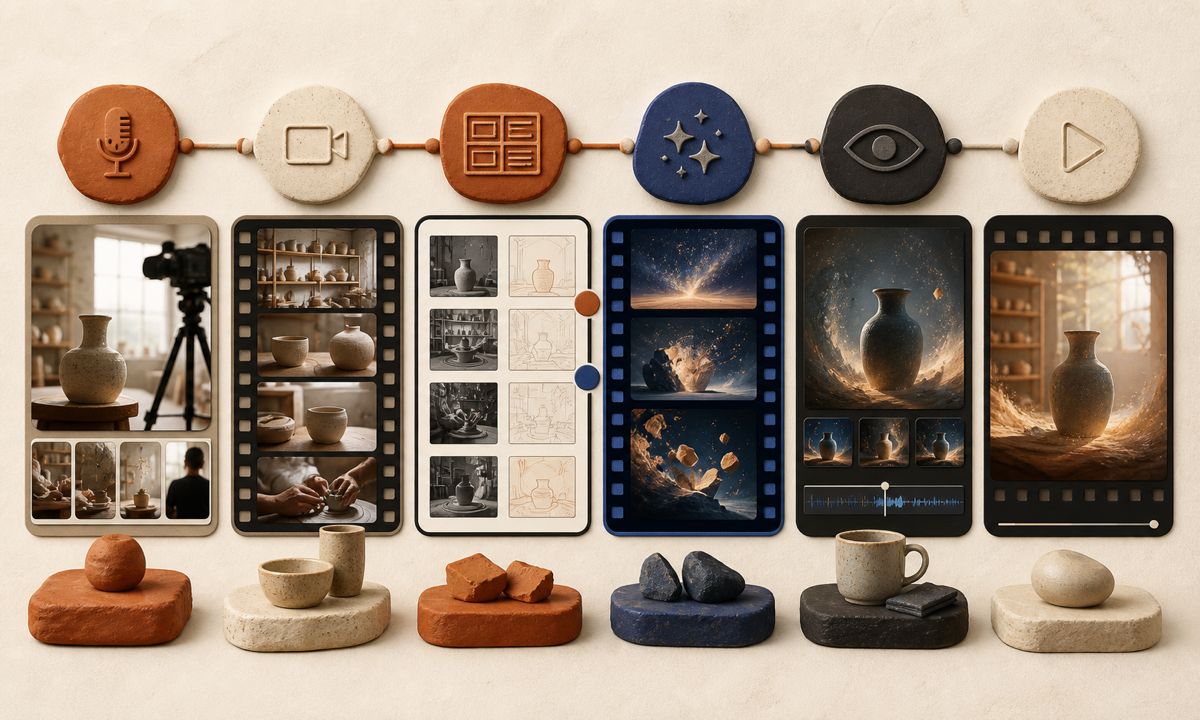
- Interview the studio and freeze the approved narrative, maker identities, roles, consent, location, clay and glaze facts, forming methods, firing range, kiln type, sourcing, edition model, safety, claims, credits, and correction owner.
- Inventory authentic footage for makers, hands, tools, wheel or hand-building, drying, trimming, glazing, loading, firing context, inspection, finished work, packing, teaching, and studio environment.
- Mark every storyboard beat as verified evidence, licensed context, or clearly illustrative generated atmosphere; generated shots may connect the story but never prove authorship, technique, provenance, safety, or impact.
- Generate one restrained atmosphere shot per prompt with a single camera move, material logic, neutral objects, stable edit handles, and no people, processes, studio identifiers, products, text, or unsupported cultural cues.
- Review frames for accidental hands, faces, pottery signatures, culturally specific motifs, impossible clay behavior, kiln misuse, fake studio evidence, material drift, and imagery that resembles a named maker’s work.
- Assemble authentic interviews and process footage with generated transitions, then add verified captions, credits, accessibility, disclosure, licensed sound, product or workshop links, approvals, and correction path.
Example prompt variants
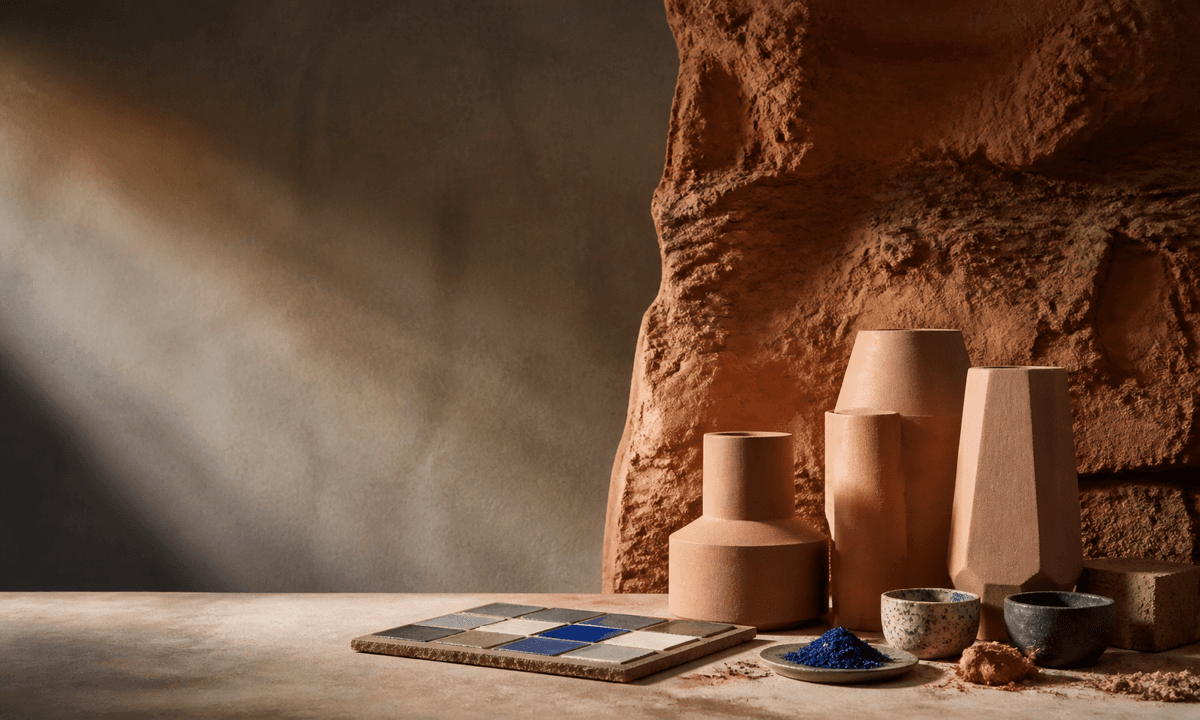
- Five-second macro opener of abstract terracotta clay strata with real granular texture under warm raking light, one slow lateral move, no vessel, hand, tool, signature, word or sound.
- Four-second transition of cobalt and cream mineral color fields diffusing across a dry unmarked plaster plane, clearly abstract, locked camera, no glaze process, brush, pottery, kiln or logo.
- Six-second closing plate with three generic raw clay geometric forms on a neutral shelf, soft dawn light and protected credit zone, no finished ware, maker mark, studio identity, cultural motif or text.
Quality checklist
- Maker identities, roles, consent, studio, methods, clay, glaze, firing, kiln, sourcing, edition, safety, teaching, dates, credits, and claims match approved evidence.
- Generated shots contain no real-seeming maker, hand, studio, tool use, forming, glazing, firing, finished product, signature, cultural attribution, certification, impact, word, or logo.
- Authentic footage supports every authorship, provenance, process, material, product, safety, community, environmental, and educational statement.
- Camera movement, material behavior, palette, edit handles, captions, disclosure, credits, audio description, subtitles, sound rights, links, and crops pass review.
- Interviews, releases, evidence map, prompts, outputs, maker approvals, masters, publication, corrections, withdrawal, and rollback remain traceable.
Mistakes to avoid
- Generating a photoreal maker at a wheel and allowing viewers to assume that person, studio, technique, or authorship is real.
- Inventing kiln loading, firing, glaze chemistry, clay sourcing, traditional knowledge, cultural motifs, certifications, waste reduction, or community impact.
- Copying the recognizable visual language or signature forms of a living ceramic artist without authorization and clear purpose.
- Using cinematic dust, unsafe silica exposure, bare-hand kiln interaction, unstable shelving, or food-use scenes that conflict with actual studio safety and product testing.
Related AIBase pages
Practical next step
Open the most relevant AIBase generator, run one narrow prompt first, and save the best result before adding more constraints. The fastest way to improve output quality is to compare one variable at a time: subject, camera, background, lighting, then final polish.