
Veo 3.1 Pro Water Refill Station Brand Film Prompts
Plan evidence-led water refill station brand films with authentic footage, abstract generated transitions, and careful treatment of quality, access, savings, and impact claims.
Quick answer
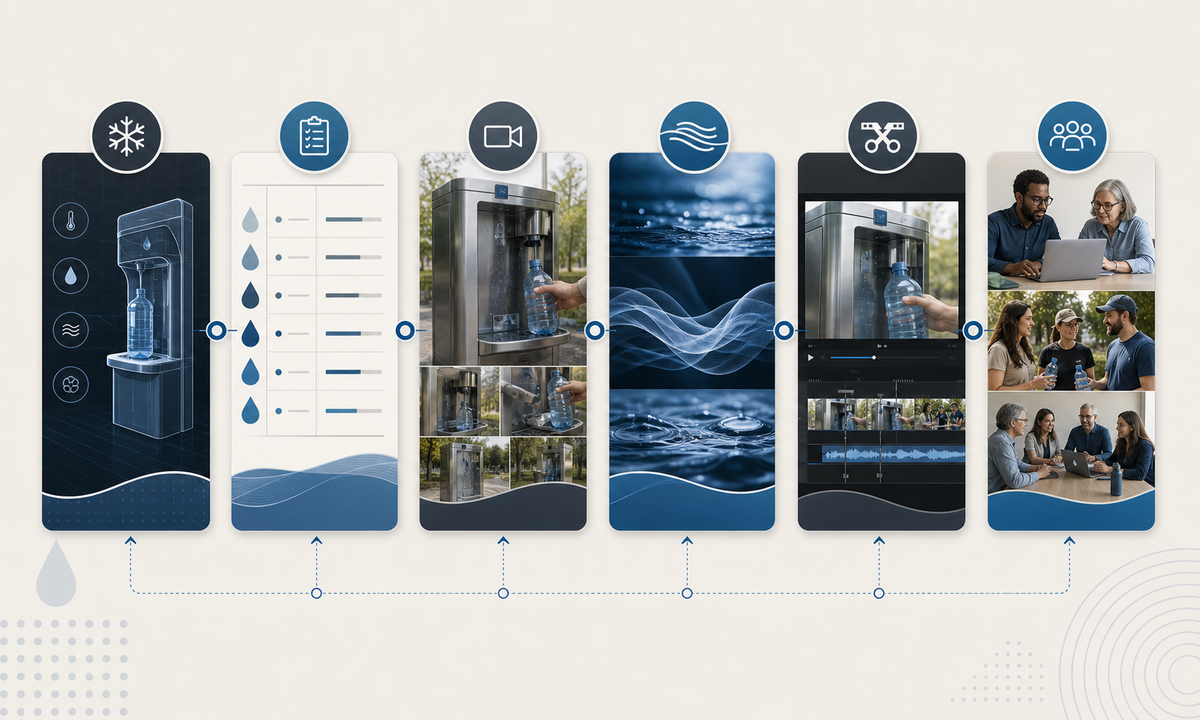
Use authentic dated footage for real stations, water sources, treatment equipment, testing, maintenance, staff, customers, containers, queues, access, payment, and neighborhoods. Freeze evidence for locations, hours, outage handling, source and treatment, quality standards, testing cadence and results, pricing, accessibility, container rules, maintenance, ownership, partners, and measured waste or cost outcomes. Use Veo 3.1 Pro only for clearly abstract transitions—such as a clean ripple, flowing line, or modular loop—and never as documentary proof of water quality, availability, sanitation, savings, plastic reduction, public access, or community impact.
Who this guide is for
Water refill operators, retail and campus programs, municipalities, hospitality groups, nonprofits, equipment providers, and agencies producing an evidence-led service or impact film.
Recommended model
| Use case | Recommended model | Why |
|---|---|---|
| This workflow | Veo 3.1 Pro for cinematic abstract connective plates within an evidence-led edit | Longer controlled shots can unify a film visually, while authentic footage and cited records remain the only evidence for operations, quality, access, users, and outcomes. |
AIBase is an independent creative platform. Model names are shown only to identify supported underlying technologies and workflow choices.
Prompt template
Create a [4-7 second] clearly abstract cinematic transition for a water refill station brand film. Motif [one transparent ripple / one continuous blue line passing through modular shapes / one circular form refilling and holding], palette [specific], camera [specific], light [specific], protected title or citation zone [specific]. No real station, tap, pipe, filter, tank, laboratory, test strip, map, building, worker, customer, child, bottle brand, water source, treatment process, hygiene act, payment, queue, quantity, result, certification, word, number, logo, voice, sound claim or watermark.
Step-by-step workflow
- Freeze the exact stations, ownership, locations, dates, hours, service area, source, treatment, testing standard and cadence, current results, maintenance, outages, price, access, container rules, partners, and support.
- Build a claim ledger for water quality, safety, uptime, affordability, plastic or carbon reduction, volume, reach, behavior change, and savings with source, period, geography, method, reviewer, caveat, and expiry.
- Capture licensed dated footage of real station exteriors and interfaces, maintenance, testing, staff, container filling, accessibility features, payment steps, queues, and community context with consent and privacy review.
- Storyboard authentic footage for every operational or impact claim, then place clearly abstract Veo 3.1 Pro transitions only between evidence-led chapters.
- Add editable citations, dates, location scope, measurement method, limitations, captions, audio description, translations, disclosure, support, and correction routes in post-production.
- Review with water-quality, operations, legal, accessibility, privacy, partner, community, and claims owners; archive evidence and define correction, expiry, withdrawal, and rollback.
Example prompt variants
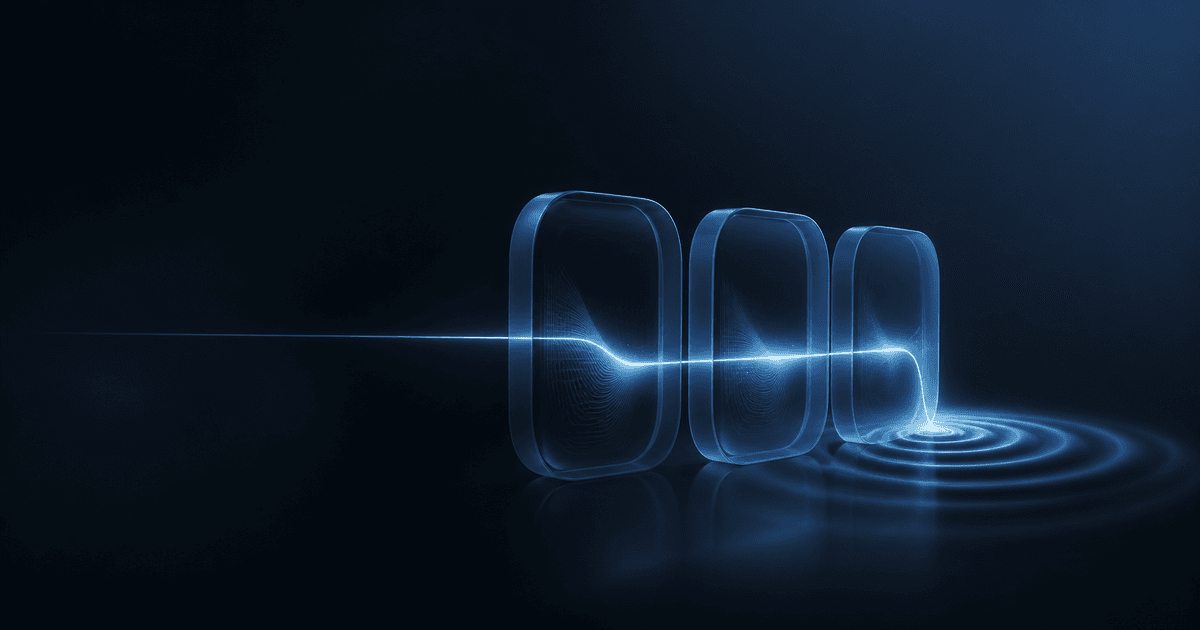
- Five-second chapter transition: one clear blue line travels through three abstract rounded modules and returns as a continuous loop, dark neutral field, empty lower citation zone, no pipe, filter or claim.
- Four-second water chapter plate: a single clean ripple expands across an unmarked surface and settles into stillness, locked camera, no station, bottle, purity cue, number or logo.
- Six-second access chapter transition: softly lit geometric openings align along one path and hold around an empty title zone, no map, neighborhood, person, wheelchair symbol, hours or promise.
Quality checklist
- Stations, dates, ownership, locations, hours, source, treatment, tests, maintenance, outages, pricing, access, container rules, partners, and support match current records.
- Every quality, safety, uptime, affordability, volume, plastic, carbon, savings, reach, or impact statement has scoped evidence and visible limitations.
- Documentary footage is authentic, licensed, correctly dated and separated clearly from generated abstract material.
- Generated plates contain no fake station, infrastructure, test, worker, customer, community, water source, sanitation act, payment, access feature, or result.
- Evidence ledger, footage log, releases, prompts, labels, edit, reviews, approvals, expiry, corrections, and withdrawal remain traceable.
Mistakes to avoid
- Generating a spotless station, transparent pipes, laboratory test, smiling customers, or full bottles and presenting it as real operational evidence.
- Using clear water, blue light, leaves, or circular motion as proof of purity, safety, sustainability, savings, or plastic reduction.
- Quoting cumulative liters, avoided bottles, cost savings, uptime, or community reach without method, period, geography, baseline, caveat, and current source.
- Ignoring outages, maintenance, queues, payment, container hygiene, accessibility gaps, neighborhood concerns, privacy, or correction routes in an aspirational edit.
Related AIBase pages
Practical next step
Open the most relevant AIBase generator, run one narrow prompt first, and save the best result before adding more constraints. The fastest way to improve output quality is to compare one variable at a time: subject, camera, background, lighting, then final polish.