
Nano Banana 2 Prompts to Remove Water Spots From Glass Product Photos
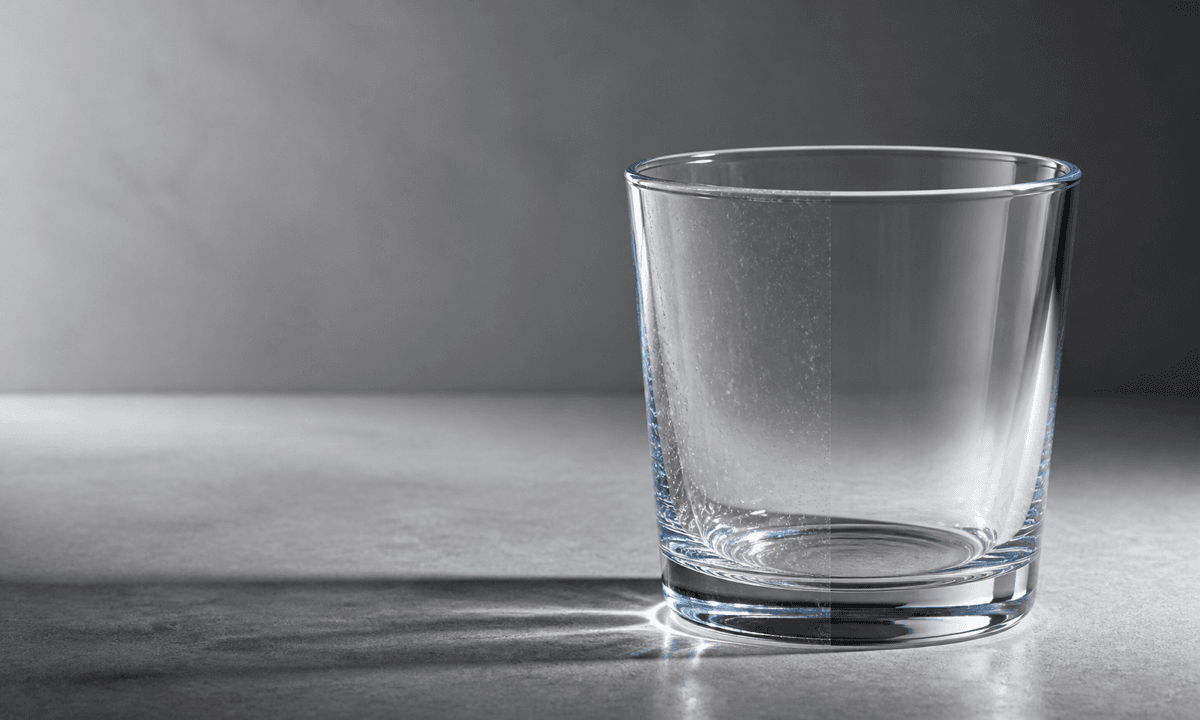
Remove isolated water spots from authorized glass product photos while preserving honest scratches, bubbles, edges, refraction, labels, color, and condition.
Quick answer
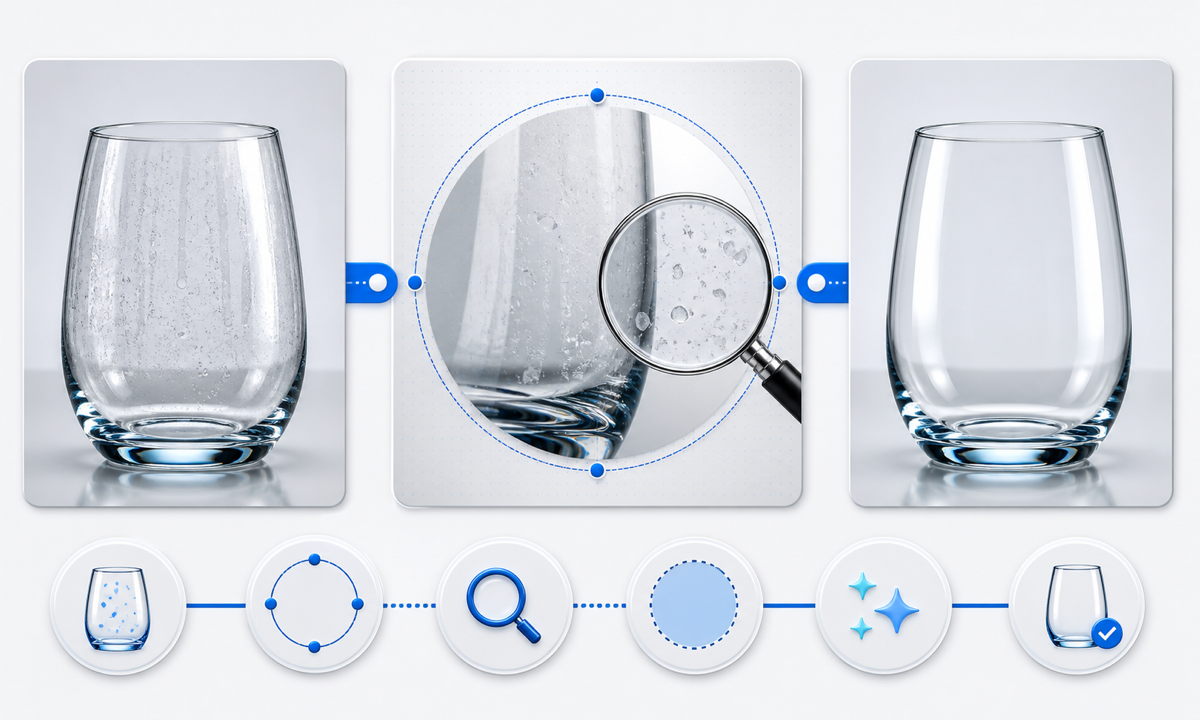
Confirm that each target is a removable drying mark or studio splash, not a bubble, scratch, chip, coating defect, printed detail, or sign of the sold item’s condition. Mask one small spot cluster and ask Nano Banana 2 to rebuild only that area from adjacent documented glass while locking silhouette, rim thickness, seams, tint, refraction, caustics, reflections, label edges, contents, shadows, crop, and every unmarked condition detail. When the spot overlaps a critical edge or hides undocumented geometry, reshoot instead of asking the model to guess.
Who this guide is for
Glassware brands, bottle and jar sellers, home-goods retailers, product studios, and catalog retouchers cleaning authorized studio images after verified water or mineral residue was left on the sample.
Recommended model
| Use case | Recommended model | Why |
|---|---|---|
| This workflow | Nano Banana 2 image-to-image for one bounded glass-surface cleanup | A tightly masked edit can remove a temporary studio artifact while the approved source set remains authoritative for transparent edges, refraction, reflections, contents, labeling, and condition. |
AIBase is an independent creative platform. Model names are shown only to identify supported underlying technologies and workflow choices.
Prompt template
Edit the uploaded authorized [exact glass product, color and view]. Remove only the marked verified water or mineral spot at [precise location]. Reconstruct that tiny surface area from the adjacent documented glass and approved clean reference. Preserve exact silhouette, rim and wall thickness, seams, bubbles, scratches, tint, transparency, refraction, caustics, reflections, contents, label, closure, shadow, crop, background and all unmarked condition. No polishing, scratch repair, chip repair, edge change, fill-level change, label reconstruction, color shift, word, number or watermark.
Step-by-step workflow
- Verify SKU, sample, material, finish, coating, contents, channel, image rights, and whether each mark is removable residue rather than product condition or manufacturing evidence.
- Keep an untouched master and collect authorized clean angles that document the glass edge, wall, tint, refraction, reflection, label, liquid, base, and closure behind the target.
- Mask one spot cluster narrowly and map protected bubbles, scratches, chips, seams, embossed marks, print, highlights, caustics, contents, and background edges.
- Run one localized edit and reject any output that globally polishes the item, changes thickness, smooths evidence, moves a reflection, alters contents, or invents hidden print.
- Compare source and result at full resolution and listing size against alternate views for halos, cloned texture, broken refraction, reflection discontinuity, softened labels, and false cleanliness.
- Export only the approved correction and retain source, references, mask, prompt, reviewer, condition decision, disclosure choice, and rollback file.
Example prompt variants
- Remove only three marked drying spots from the authorized clear tumbler sidewall; preserve rim thickness, molded seam, tiny source bubbles, tabletop refraction, highlight and shadow.
- Remove the verified mineral ring beside the approved amber bottle shoulder, preserve tint gradient, label edge, glass scratches, liquid level, closure, reflection and crop.
- Remove one studio splash mark from the outside of the documented cosmetic jar base, preserve faceted edge, wall thickness, product fill, printed label, caustic and all unmarked dust.
Quality checklist
- SKU, sample, glass type, coating, tint, geometry, label, contents, closure, and disclosed condition match the authorized source set.
- Only verified temporary residue changed; bubbles, scratches, chips, seams, embossing, print, wear, dust, and manufacturing variation remain honest.
- Rim, wall, base, transparency, tint, refraction, caustics, reflections, contents, label edges, grain, and shadow remain continuous.
- The edit does not imply new, flawless, hand-blown, lead-free, tempered, sealed, sanitized, or another unsupported product state or claim.
- Source, reference set, mask, prompt, output, product review, condition decision, approval, export, and rollback remain traceable.
Mistakes to avoid
- Using a global clean-glass prompt that erases honest scratches, bubbles, seams, dust, or coating texture.
- Treating a chip, stress mark, print defect, internal bubble, or product residue as removable studio water spotting.
- Reconstructing a rim, label, liquid boundary, or faceted edge from imagination when no clean reference documents it.
- Publishing a polished edit that changes the disclosed condition of vintage, handmade, returned, or refurbished glassware.
Related AIBase pages
Practical next step
Open the most relevant AIBase generator, run one narrow prompt first, and save the best result before adding more constraints. The fastest way to improve output quality is to compare one variable at a time: subject, camera, background, lighting, then final polish.