
Seedance 2 Paper Marbling Process Video Prompts From Photos
Animate one documented paper-marbling action per clip while preserving tray, bath, pigments, comb, paper, hands, pattern continuity, studio safety, and craft accuracy.
Quick answer
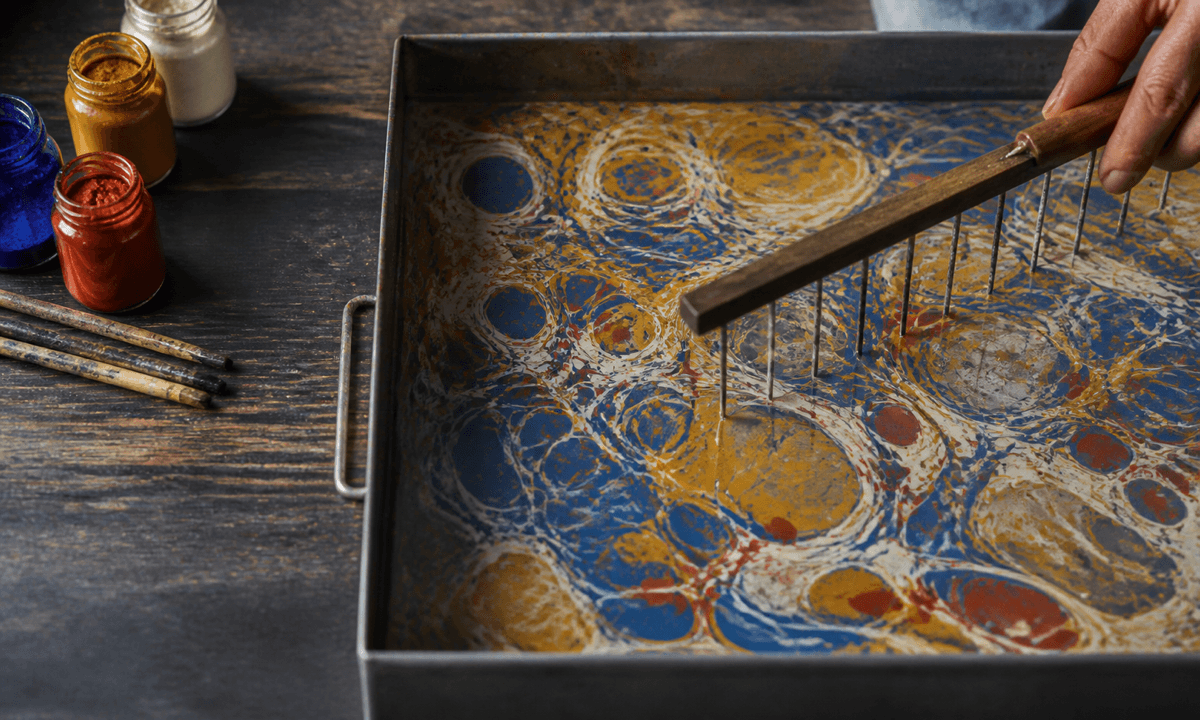
Start from an authorized sharp frame and animate one visible, documented action only: one pigment drop spreading on the existing bath, one comb pass through the existing colors, one controlled paper lowering, or one lift from the tray. Lock tray geometry, bath boundary, pigment count and color, pattern state, tool teeth, paper size and orientation, hand identity and anatomy, grip, occlusion, lighting, and camera. Do not ask one clip to invent the full preparation, pattern, transfer, rinse, and drying sequence.
Who this guide is for
Marbling artists, paper studios, bookbinders, craft educators, museums, workshops, and social editors turning owned or properly licensed process photography into short instructional or promotional clips.
Recommended model
| Use case | Recommended model | Why |
|---|---|---|
| This workflow | Seedance 2 image-to-video for one bounded marbling action | Source-led motion can add useful craft movement, but fluid behavior, pattern continuity, hand-tool contact, material sequence, studio safety, and factual technique still require a narrow shot plan and maker review. |
AIBase is an independent creative platform. Model names are shown only to identify supported underlying technologies and workflow choices.
Prompt template
Animate the uploaded authorized paper-marbling process photo as the exact first frame. Documented method and stage [specific], motion only [one pigment drop / one comb pass / one paper lowering / one lift] over [3-5 seconds]. Preserve exact tray, bath level and boundary, existing pigment colors and count, pattern state, comb or stylus geometry, paper dimensions and orientation, hand identity and anatomy, grip, apron, table, containers, reflections, shadows, camera, crop and light. Physically plausible surface flow and stable ending. No new color, extra hand, changing tool teeth, paper stretch, instant full pattern, splash, unsafe contact, recipe, word, sound or watermark.
Step-by-step workflow
- Verify image, artist, artwork, workshop, and music rights plus the documented marbling method, bath, pigments, additives, tools, paper, sequence, ventilation, protective practices, and review owner.
- Choose a sharp frame where the complete action path, tool or paper contact, liquid boundary, hands, occlusions, and target end state are visible.
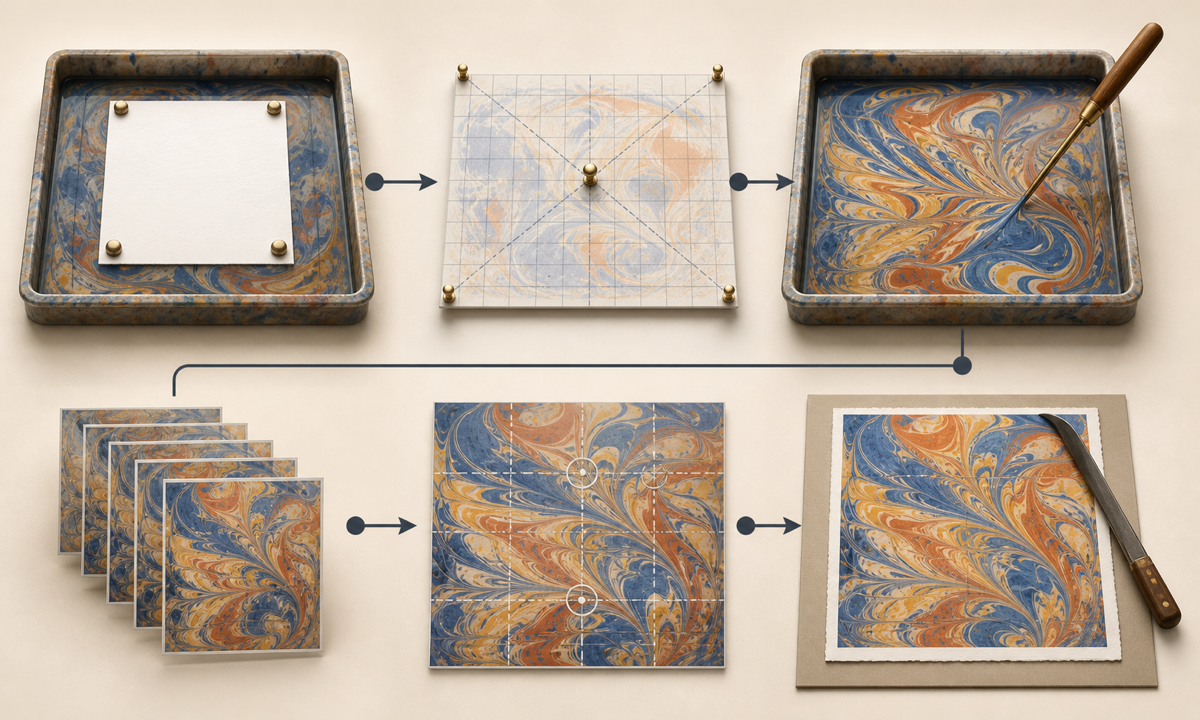
- Map fixed anchors and record the current pigment count, colors, pattern topology, bath level, tool geometry, paper edge, grip, motion direction, duration, and stable endpoint.
- Generate one locked-camera action first and reject extra pigment, changing teeth, multiplied hands, stretched paper, impossible flow, instant transfer, or multi-stage choreography.
- Inspect every frame for fluid continuity, pigment conservation, pattern progression, tool contact, paper rigidity, hand anatomy, reflections, tray edges, spills, and safety context.
- Assemble separately verified clips in real order, then add factual stage names, material notes, safety context, captions, licensed audio, disclosure, credits, and CTA as controlled layers.
Example prompt variants
- Four-second authorized tray close-up: one existing blue pigment drop expands gently on the documented bath, preserve all other red and ochre islands, tray edge, reflection and locked camera; no new drop or full pattern.
- Three-second comb pass: the visible comb moves once straight through the existing parallel color bands, preserve tooth count, hand grip, bath boundary, pigment continuity and top-down crop; no second hand or camera move.
- Five-second paper lift: the two visible hands lift the already-contacted sheet evenly from the near edge, preserve paper size, wet marbled pattern, tray, bath, sleeves and camera; no rinse, drip burst, drying rack or text.
Quality checklist
- Rights, method, bath, pigments, additives, tools, paper, sequence, safety, studio context, credits, and review owner are verified.
- Tray, bath, pigment colors and count, pattern topology, tool geometry, paper, hands, clothing, table, reflections, camera, and light remain source-faithful.
- The chosen action has plausible contact, surface flow, pigment conservation, speed, occlusion, paper behavior, and a stable documented endpoint.
- No invented recipe, chemical claim, archival-quality claim, cultural attribution, tool, stage, sound, word, or safety practice appears in generated pixels.
- Source, consent, process sheet, motion map, prompt, frames, maker review, edit, disclosure, publication, and rollback remain traceable.
Mistakes to avoid
- Trying to show pigment mixing, dropping, raking, combing, paper transfer, lifting, rinsing, and drying in one generated shot.
- Letting pigment islands disappear, colors merge arbitrarily, patterns reset between frames, or liquid cross the tray boundary without cause.
- Accepting fused fingers, changing comb teeth, bending tools, elastic paper, impossible hand contact, or a sheet that acquires a finished pattern before touching the bath.
- Publishing generated material recipes, toxicity guidance, historical attribution, archival claims, or workshop safety instructions as factual content.
Related AIBase pages
Practical next step
Open the most relevant AIBase generator, run one narrow prompt first, and save the best result before adding more constraints. The fastest way to improve output quality is to compare one variable at a time: subject, camera, background, lighting, then final polish.