
Seedance 2 Bookbinding Stitching Process Video Prompts
Animate one documented bookbinding stitch while preserving signatures, holes, thread path, needle, hand safety, paper grain, spine geometry, and workshop truth.
Quick answer
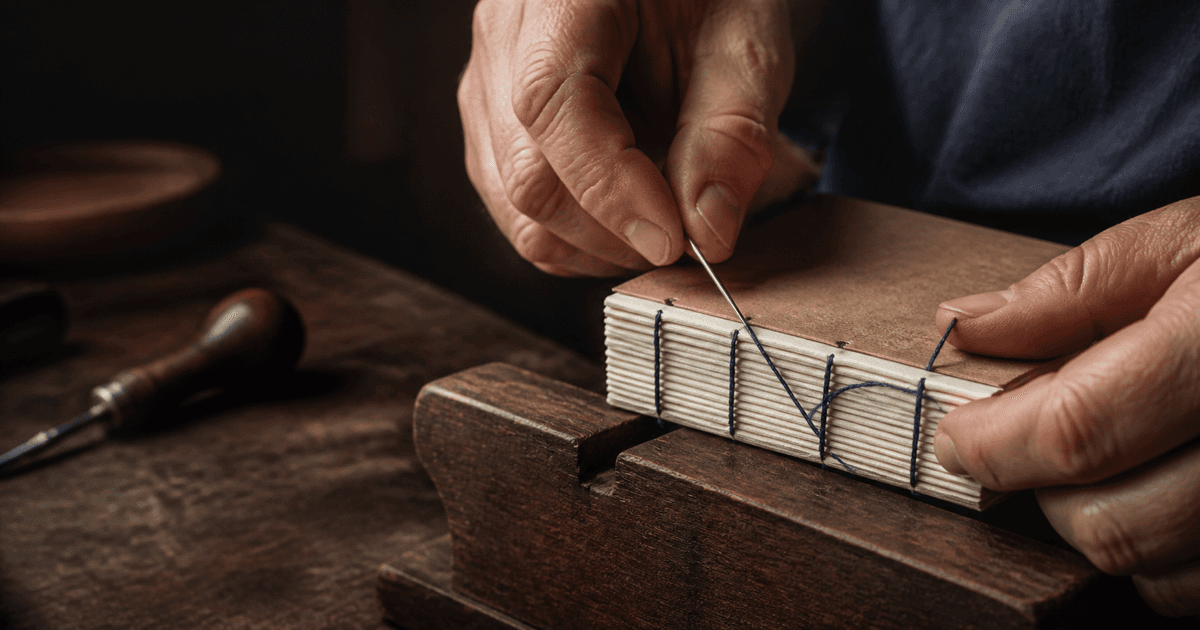
Start from an authorized close-up that clearly shows the exact binding structure, signature stack, pre-punched holes, needle, thread direction, hand positions, paper edges, spine, and current stitch state. Ask Seedance 2 for only one short documented action—needle passes through one visible hole, thread follows the verified route, hand pulls to a supported tension, then holds. Use real footage for instruction, provenance, handcraft, speed, durability, archival, or safety claims.
Who this guide is for
Bookbinders, stationery brands, workshops, art schools, publishers, museums, and editors producing illustrative craft reels, chapter transitions, or product-making stories from approved source frames.
Recommended model
| Use case | Recommended model | Why |
|---|---|---|
| This workflow | Seedance 2 image-to-video for one bounded bookbinding stitch | A source-led close-up can add tactile paper and thread motion when the action, geometry, occlusion, and safe hand positions are mapped from real references. |
AIBase is an independent creative platform. Model names are shown only to identify supported underlying technologies and workflow choices.
Prompt template
Animate the uploaded authorized bookbinding frame as the exact first frame. Motion only: the existing [needle] travels through the visible pre-punched hole at [location] in [documented direction], the existing [thread type and color] follows the verified path and is pulled [distance] to the documented resting tension over [3-5 seconds], then holds. Preserve exact signature count, page order, hole spacing, spine, fold, paper grain and deckle, needle shape, thread path and thickness, knot, hand identity and finger count, grip, tool clearances, bench, clips, shadows, camera, crop, and light. No new hole, stitch, page, knot, tool, hand, completed binding, cut, glue, text, sound, logo, or watermark.
Step-by-step workflow
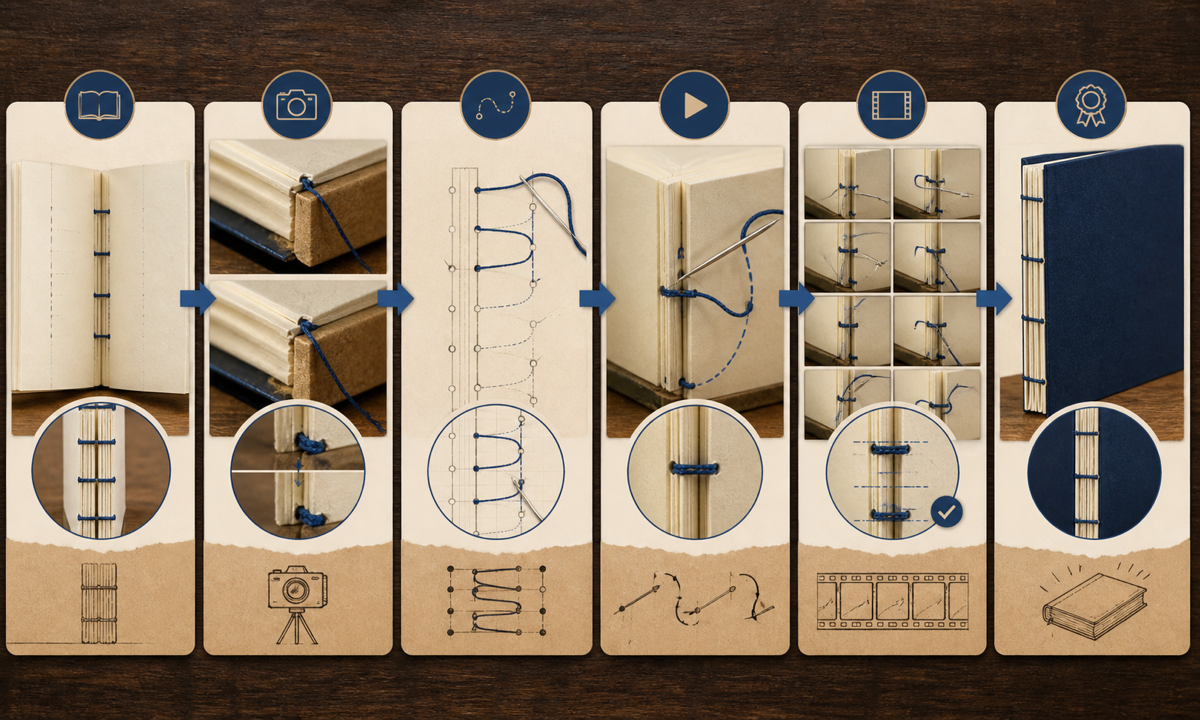
- Confirm binding method, signature count, paper, fold, grain, hole pattern, needle, thread, wax, stitch route, before and after states, safe handling, and rights with the maker.
- Capture approved macro references of the current hole, previous and next stitch, both thread sides, needle orientation, hand grip, spine, page edges, tools, and stable endpoint.
- Draw a motion map for needle entry, exit, thread slack, pull direction, occlusion, hand travel, page compression, and where the action must stop.
- Generate one locked-camera stitch action with no extra page turn, hole, knot, tool, glue, cut, camera move, or completion jump.
- Inspect every frame for needle continuity, thread path, hole count, finger anatomy, grip, page order, spine shape, paper tearing, tension, shadows, and unsafe contact.
- Use licensed real footage for technique, instructional sequence, material provenance, handcraft, safety, archival quality, durability, and finished-product evidence; label generated illustration where used.
Example prompt variants
- Four-second saddle-stitch macro: the approved needle exits the center hole and the existing navy thread follows, one measured pull, preserve two signatures, three holes, fingers, paper edges, spine, and locked camera.
- Three-second Japanese stab-binding detail: existing red thread tightens along one documented exterior segment without adding a hole or knot, preserve cover board, hole spacing, page block, hand, and bench.
- Five-second Coptic binding plate: needle passes through one visible signature hole toward the documented chain link and stops before forming the next stitch, preserve chain geometry, thread, signatures, fingers, and crop.
Quality checklist
- Binding method, signatures, page order, folds, holes, spine, needle, thread, knots, cover, paper, tools, and maker-approved state match references.
- Needle path, thread slack, tension, hand grip, occlusion, page compression, gravity, and stopping point are physically plausible.
- No hole, stitch, knot, page, tool, finger, completed section, glue, cut, damage, or workshop fact is invented.
- The clip does not prove technique, speed, safety, handcraft, material origin, archival quality, durability, or finished construction without evidence.
- Source frames, maker notes, motion map, prompt, frame review, safety review, disclosure, approval, and export remain traceable.
Mistakes to avoid
- Asking for a complete binding sequence from one frame and forcing new holes, knots, page order, and stitch geometry.
- Animating both hands, needle, long loose thread, pages, clips, tools, and camera at once.
- Accepting thread that passes through paper, changes side, duplicates, loses the needle, or tightens without slack moving.
- Presenting generated craft motion as documentary proof of the maker, method, materials, safety, archival quality, or durability.
Related AIBase pages
Practical next step
Open the most relevant AIBase generator, run one narrow prompt first, and save the best result before adding more constraints. The fastest way to improve output quality is to compare one variable at a time: subject, camera, background, lighting, then final polish.