
Veo 3.1 Pro Craft Brewery Brand Film Prompts
Plan a responsible craft brewery brand film around verified process, ingredients, equipment, hospitality, and editable alcohol messaging.
Quick answer
Use Veo 3.1 Pro for a small number of cinematic process shots after the brewery has approved its factual story. Anchor each shot to documented equipment, ingredients, methods, location, and product appearance; generate one action per shot, such as grain falling, steam moving, or light traveling across a copper vessel. Keep alcohol percentage, tasting notes, awards, origin, sustainability, production scale, availability, prices, health language, responsible-consumption text, and legal warnings in verified editable layers. Do not depict minors, intoxication, risky behavior, excessive consumption, or alcohol as a route to success, health, confidence, or belonging.
Who this guide is for
Independent breweries, taprooms, beverage agencies, tourism teams, and hospitality marketers producing a cinematic, process-led film for web, trade, or social channels where alcohol advertising is permitted.
Recommended model
| Use case | Recommended model | Why |
|---|---|---|
| This workflow | Veo 3.1 Pro for selected cinematic brewery process shots | A premium video pass is best reserved for tactile material, light, steam, grain, glass, and equipment motion, while product facts and regulated messaging stay outside the generated footage. |
AIBase is an independent creative platform. Model names are shown only to identify supported underlying technologies and workflow choices.
Prompt template
Create a [4 / 6 / 8]-second cinematic craft brewery brand-film shot based on the approved production brief. Verified scene: [mash vessel / grain handling / fermentation exterior / quality check / taproom detail]. One action: [specific restrained motion]. Preserve documented equipment type, ingredient, vessel material, facility character, product color, glass shape, process order, hygiene, camera continuity, and adult-only context. No worker unless separately authorized; no consumption, intoxication, minor, unsafe machinery contact, fake foam, invented logo, award, origin, certification, sustainability cue, health or success symbolism, text, sound, or watermark.
Step-by-step workflow
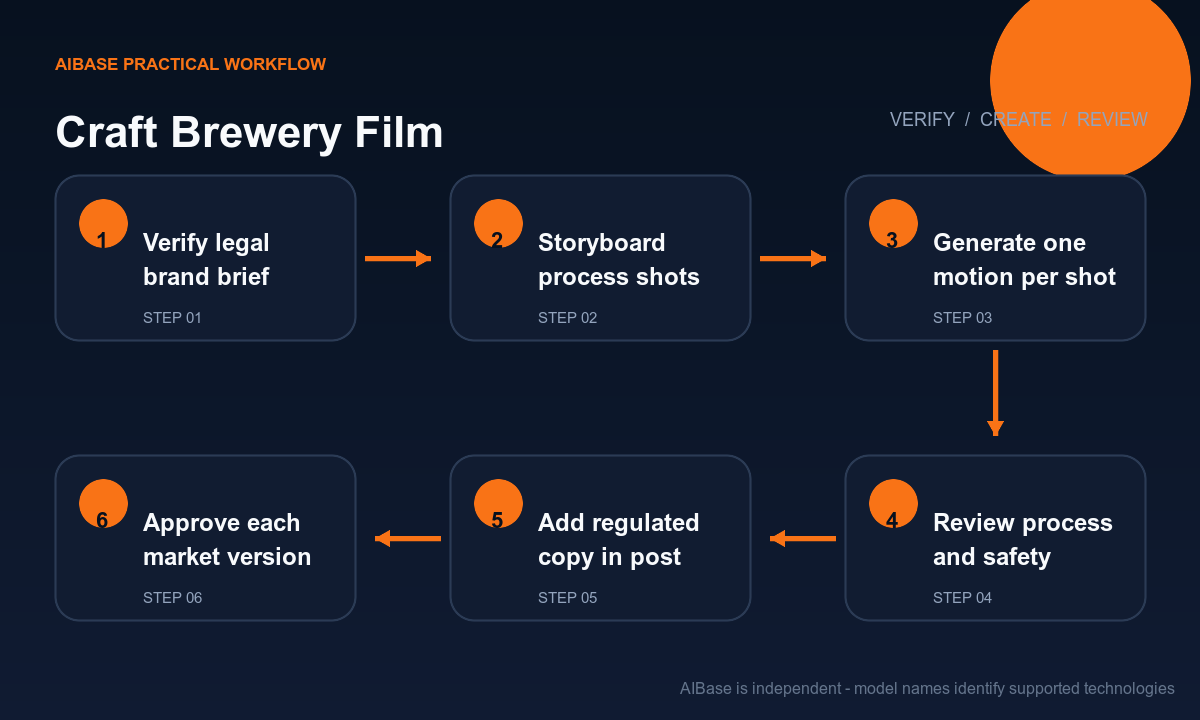
- Build an approved fact sheet covering legal market, audience age, facility and equipment, ingredients, process steps, product appearance, alcohol details, tasting language, awards, origin, sustainability, availability, permissions, and responsible-messaging requirements.
- Storyboard six to eight short shots with one job each—place, ingredient, process, material, quality, product, hospitality, close—and mark which shots require real evidence rather than generated atmosphere.
- Reserve Veo 3.1 Pro for selected cinematic shots where copper, grain, steam, bubbles, glass, wood, or directional light carry the story; use authorized real footage for distinctive equipment, people, labels, and operational claims.
- Generate one restrained action per shot with consistent lens, movement, palette, facility vocabulary, and edit handles; avoid active machinery interactions or detailed brewing steps the model may misstate.
- Review process order, equipment geometry, sanitation, ingredient identity, liquid color, glass fill, foam, people, age presentation, consumption cues, continuity, and every potential product or responsibility claim.
- Composite verified label, brewery name, ABV, tasting notes, award, origin, availability, disclosure, age gate, responsible message, captions, licensed audio, and CTA, then obtain legal and brand approval per market.
Example prompt variants
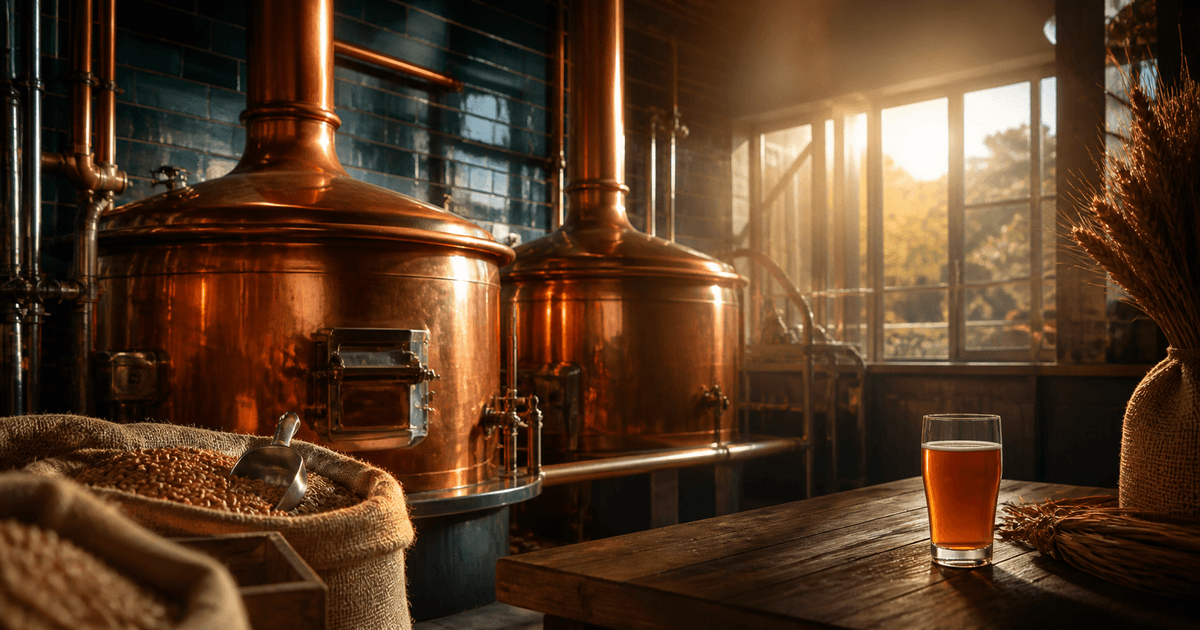
- Six-second slow push across documented copper brewing vessels as warm light moves over brushed surfaces and a small amount of safe ambient steam drifts upward, no person, active valve, logo, text, claim, sound, or product consumption.
- Four-second macro of verified malt grain falling gently into a clean stainless sample tray, locked camera, realistic gravity and dust control, no hand, farm, field, sustainability cue, origin claim, overflowing abundance, word, or watermark.
- Eight-second responsible product close: one verified amber beverage glass remains untouched on a wooden table while soft window light shifts, exact color and restrained foam, no person, toast, party, intoxication, label, benefit cue, or sound.
Quality checklist
- Facility, equipment, ingredients, process order, product color, glass, foam, people, permissions, market, age gate, alcohol facts, claims, awards, origin, sustainability, and availability match approved evidence.
- Machinery, vessels, pipes, valves, grain, steam, liquid, bubbles, glass, hands, shadows, reflections, camera movement, and shot continuity remain physically plausible.
- No minor, intoxication, rapid or excessive consumption, driving, unsafe work, sexualized scene, peer pressure, performance, health, success, or social-belonging implication appears.
- Exact brand, label, ABV, tasting note, award, origin, certification, warning, disclosure, caption, audio, CTA, and legal copy remain editable and market-specific.
- Fact sheet, evidence, permissions, prompts, source footage, generated shots, legal review, final edit, market versions, publication, and retirement remain traceable.
Mistakes to avoid
- Generating an entire brewing process from grain to glass and accepting equipment, sanitation, ingredient, sequence, or production-scale errors as cinematic shorthand.
- Showing a toast, party, repeated pours, intoxication, youthful-looking people, risky work, driving, or alcohol as proof of confidence, health, romance, creativity, or belonging.
- Using generated farms, local landscapes, barrels, awards, renewable energy, workers, heritage tools, or packaging as evidence for origin, sustainability, craftsmanship, employment, or history.
- Burning ABV, tasting notes, prices, awards, certifications, warnings, availability, location, age restrictions, or responsible-consumption language into pixels used across different markets.
Related AIBase pages
- Open Veo 3.1 Pro
- Create beverage brand films
- Create specialty coffee brand films
- Compare Veo Fast and Pro
Practical next step
Open the most relevant AIBase generator, run one narrow prompt first, and save the best result before adding more constraints. The fastest way to improve output quality is to compare one variable at a time: subject, camera, background, lighting, then final polish.