
Wan 2.7 Stroller Folding Hinge Product Video Prompts
Create a bounded stroller-hinge motion clip from approved references while preserving the frame, latch, lock state, clearances, supports, and safety context.
Quick answer
Use the exact stroller model, current manual, approved empty training setup, and a real start-to-end reference for one hinge or latch movement. Ask Wan 2.7 to animate only that documented short motion while the stroller is empty, stationary, supported, and clear of hands and pinch zones. Keep lock indicators, release order, force, child safety, carrying, storage, travel, and operating instructions in real footage and verified copy. If viewers could treat the clip as a safety instruction, publish real demonstrated footage instead.
Who this guide is for
Stroller brands, retailers, support teams, product trainers, marketplaces, and video editors creating a non-instructional mechanism detail, product-page loop, support visual, or storyboard from approved product references.
Recommended model
| Use case | Recommended model | Why |
|---|---|---|
| This workflow | Wan 2.7 image-to-video for one documented low-risk hinge movement | A source-led short motion can preserve product appearance and isolate one mechanism action, but real footage and the current manual must remain authoritative for operation, lock state, pinch hazards, load, and child safety. |
AIBase is an independent creative platform. Model names are shown only to identify supported underlying technologies and workflow choices.
Prompt template
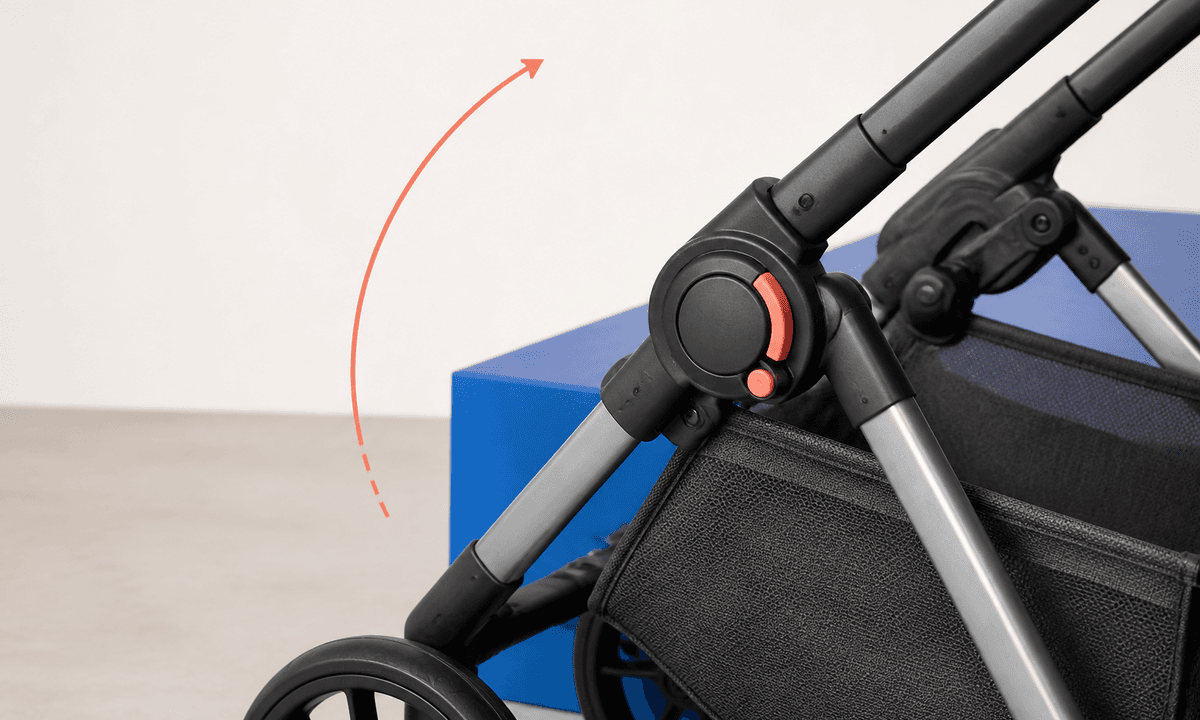
Animate the uploaded approved reference of the exact [stroller model and configuration] as the first frame in an empty controlled studio setup. Motion only: [named hinge rotates through the documented small angle / existing latch moves to the documented intermediate position] over [duration], then stops at [verified reference state]. Preserve frame tubes, hinge geometry, pins, latch, lock indicator shape, cables, fasteners, wheels, brake state, seat, canopy, basket, supports, floor contact, clearances, camera, crop and light. No child, person, hand, full fold, collapse, rolling, tipping, unlatching sequence, lock claim, pinch contact, missing part, word, number, logo, sound or watermark.
Step-by-step workflow
- Freeze exact model, revision, configuration, compatible parts, manual, notices, hinge and latch geometry, fold sequence, lock states, brake state, load limits, pinch zones, support setup, market, and approved communication purpose.
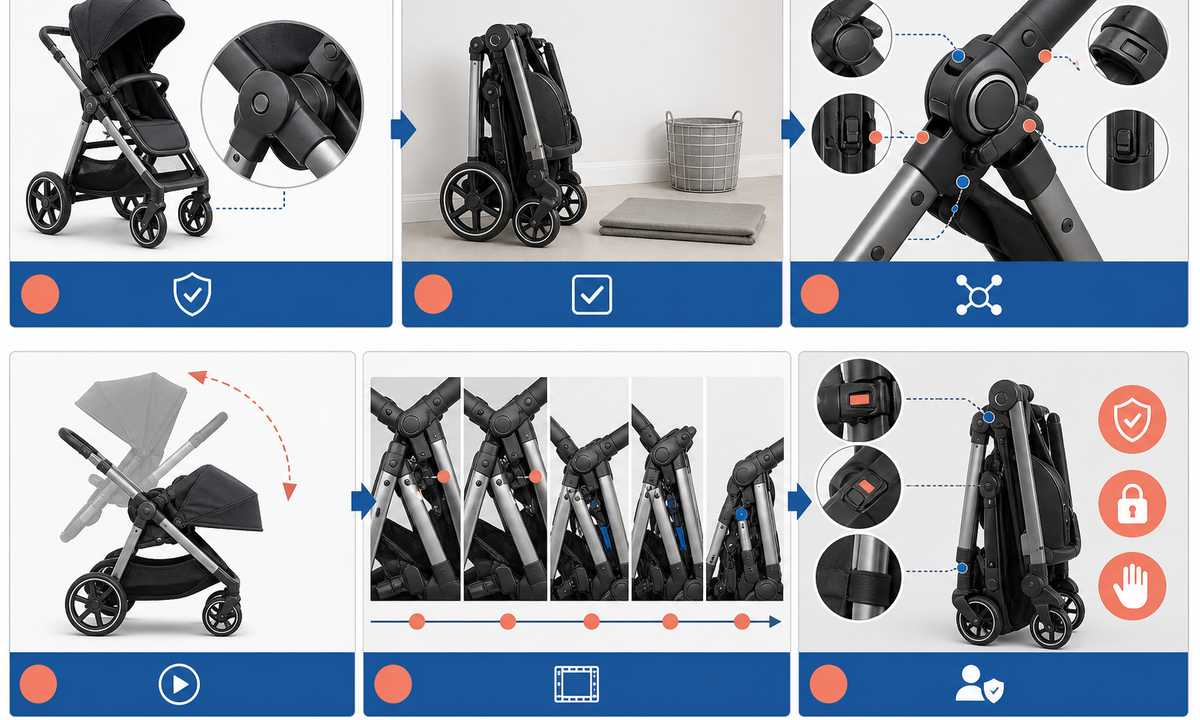
- Capture licensed real views of the empty stroller, both sides of the mechanism, start, intermediate and end states, indicator, clearances, supports, floor contact, and a complete real operation by a trained reviewer.
- Map every fixed and moving component, rotation axis, stop, cable, pin, latch, indicator, wheel, support, camera, and exclusion zone for one bounded action.
- Generate only the documented short mechanism movement in an empty stable setup; do not synthesize a full fold, hand interaction, release sequence, lock confirmation, or child-use context.
- Inspect every frame for changing tubes, duplicated pins, disappearing fasteners, false indicator state, cable stretch, interpenetration, tipping, rolling, pinch contact, camera drift, and an invented endpoint.
- Use real footage and current instructions for operation, warnings, hands, releases, locks, carrying, storage, transport, child placement, compatibility, maintenance, and support; add captions and disclosure.
Example prompt variants
- Four-second macro: the approved empty stroller hinge rotates only through the documented five-degree detail motion between supplied start and intermediate references, preserve every pin, cable, latch and support; locked camera.
- Three-second latch detail: the existing secondary latch moves to the verified intermediate service-view position with no hand shown, preserve indicator shape, frame clearance, fasteners and stable wheels; not an instruction.
- Five-second product-page loop: a tiny documented hinge articulation and return in the supported empty display rig, preserve seat, canopy, basket, wheels, brake state, frame geometry and no full fold.
Quality checklist
- Model, revision, configuration, frame, hinge, pins, latch, cables, fasteners, indicator, seat, canopy, basket, wheels, brake state, and supports match approved references.
- Axis, direction, angle, clearance, component contact, endpoint, stability, and camera remain consistent with the documented mechanism state.
- No child, hand, load, full folding sequence, release order, lock confirmation, pinch interaction, carrying method, compatibility, or safety outcome is invented.
- The generated clip is clearly non-instructional wherever necessary; real footage and current product guidance carry every operating and safety message.
- Manual revision, references, safe setup, prompt, frame inspection, engineering review, safety review, disclosure, publication, withdrawal, and rollback remain traceable.
Mistakes to avoid
- Generating a complete fold from one open-frame photo and letting hidden hinges, locks, cables, and clearances be invented.
- Showing a hand near a pinch point or implying that one visible release is the complete safe operating sequence.
- Allowing the stroller to roll, tip, collapse, change configuration, or display a false lock state between frames.
- Using synthetic motion as the only instruction for a parent or caregiver instead of current verified documentation and real demonstration.
Related AIBase pages
Practical next step
Open the most relevant AIBase generator, run one narrow prompt first, and save the best result before adding more constraints. The fastest way to improve output quality is to compare one variable at a time: subject, camera, background, lighting, then final polish.