
Wan 2.7 Ratchet Buckle Release Product Video Prompts
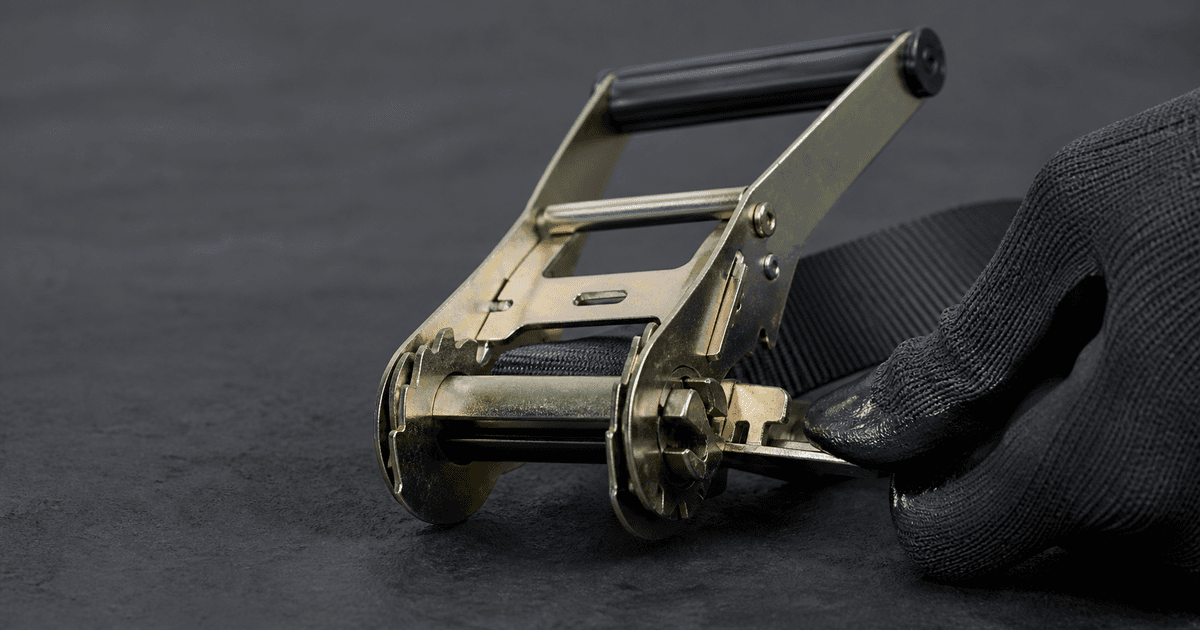
Animate one verified ratchet buckle release action while preserving pawl, spool, webbing, hand contact, tension state, and safety truth.
Quick answer
Start from an authorized sharp frame of the exact buckle revision in a safe unloaded demonstration state. Confirm handle, release lever, pawl, gear, spool, webbing path, hook or anchor context, pivot directions, travel limits, start state, and safe end state. Ask Wan 2.7 for only one documented movement, such as lifting the release lever to disengage the pawl while the handle and frame remain supported, then stop. Do not animate a loaded strap, sudden recoil, cargo release, complete unloading, rating demonstration, or safe-use proof from one still.
Who this guide is for
Cargo-control brands, outdoor equipment sellers, hardware teams, training-content producers, ecommerce studios, and agencies creating a short mechanism detail from approved product media.
Recommended model
| Use case | Recommended model | Why |
|---|---|---|
| This workflow | Wan 2.7 image-to-video for one low-amplitude verified buckle action | Source-led motion can show a narrow mechanical cue when pivots, contact, webbing state, hands, and endpoint are explicitly constrained. |
AIBase is an independent creative platform. Model names are shown only to identify supported underlying technologies and workflow choices.
Prompt template
Animate the uploaded authorized ratchet buckle photo as the exact first frame. Product [exact SKU and revision], safe state [unloaded with no stored tension], action [named release lever moves through documented direction and travel to disengage the visible pawl], duration [3-5 seconds], end [stop at documented open detent]. Preserve frame, handle, release lever, pawl, gear teeth, spool, axle, springs visible in source, fasteners, webbing width, weave, path, tail length, hook or anchor if shown, hand count, fingers, grip, support, surface, camera, crop, light and shadows. No ratcheting cycle, webbing rewind, snap, recoil, cargo, load, cut, fray, extra mechanism, strength or safety claim, word, logo change, sound or watermark.
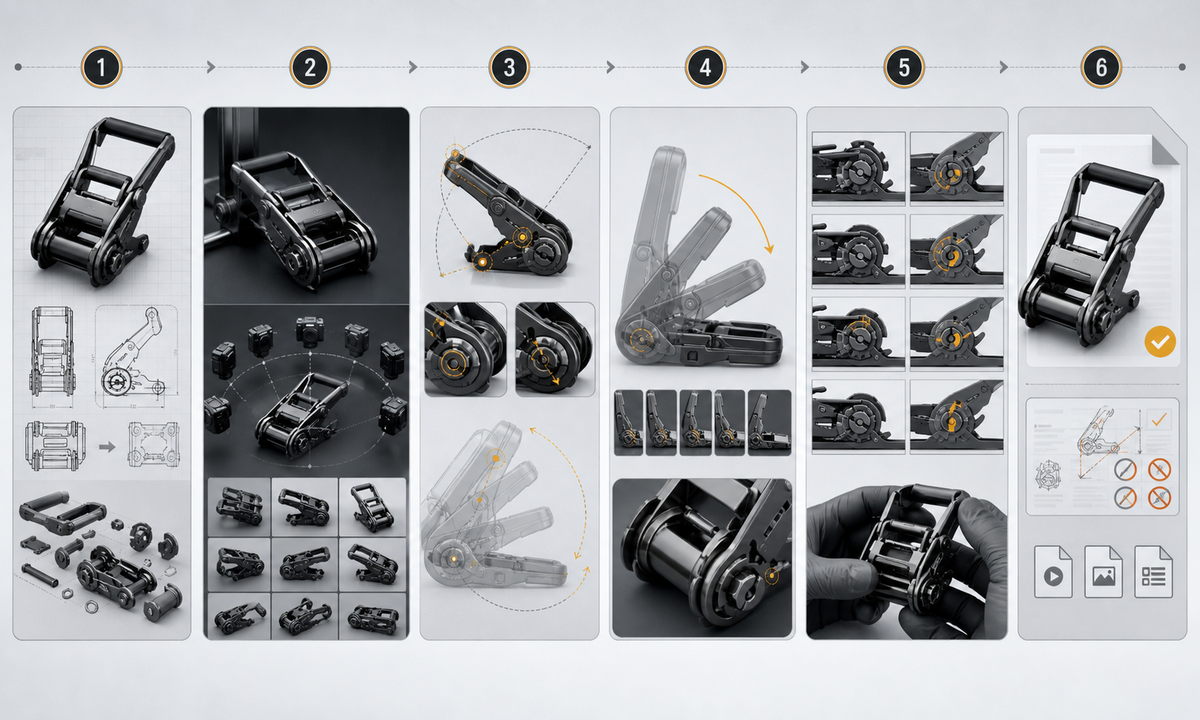
Step-by-step workflow
- Freeze the exact SKU, revision, buckle type, webbing specification, handle and release sequence, pivots, travel, detents, load prohibition, warnings, rating context, inspection criteria, and rights.
- Capture an unloaded demonstration from side and three-quarter views with the pawl, teeth, spool, webbing path, both hand contacts, support, and safe endpoint visible.
- Draw a motion map for the one active lever: pivot, direction, angle, contact change, start, stop, duration, while every other part and the webbing remain fixed.
- Generate a locked-camera lever release only; do not combine release, full opening, webbing pull, rewinding, hook removal, cargo movement, or reset.
- Inspect every frame for tooth and pawl contact, lever pivot, frame rigidity, spool and webbing stability, hand anatomy, pinch zones, recoil, reflections, and end-state coherence.
- Add verified operating steps, unload warning, inspection, ratings, compatibility, safety, captions, disclosure, support, and CTA as editable post-production layers.
Example prompt variants
- Four-second macro: on the approved unloaded buckle, the existing thumb lifts the small release lever through its documented arc until the pawl clears one tooth, then holds; preserve handle, gear, spool, webbing and camera.
- Three-second side view: the supported handle opens only to the first documented release position while the loose webbing remains motionless, preserve pivots, fasteners, fingers and background.
- Five-second no-operation alternative: the exact closed buckle remains fixed while one soft highlight travels across the metal frame, no lever, pawl, webbing, hand or camera movement.
Quality checklist
- SKU, revision, frame, handle, lever, pawl, teeth, spool, axle, spring, fasteners, webbing, hook, start and end states match approved references.
- Pivot, direction, travel, contact, hand support, timing, gravity, and endpoint are mechanically coherent in a verified unloaded state.
- No webbing rewind, recoil, load release, cargo movement, easy-use, strength, rating, compatibility, durability, or safety result is invented.
- Instructions, unload warning, inspection, ratings, compatibility, captions, disclosure, support, and CTA remain verified editable layers.
- Truth sheet, references, motion map, prompt, output, frame review, engineering and safety approvals, publication, and correction remain traceable.
Mistakes to avoid
- Prompting release while the strap appears tensioned and creating an unsafe recoil, flying handle, hand injury, or cargo implication.
- Confusing the release lever, drive pawl, handle, spool, direction, detent, or webbing path for the exact buckle revision.
- Combining lever release, full opening, rapid unwinding, hook removal, and reset in one unstable clip.
- Using generated motion as proof of load rating, ease, speed, durability, compatibility, inspection status, or safe operating practice.
Related AIBase pages
Practical next step
Open the most relevant AIBase generator, run one narrow prompt first, and save the best result before adding more constraints. The fastest way to improve output quality is to compare one variable at a time: subject, camera, background, lighting, then final polish.