
Seedance 2 Basket Weaving Process Video Prompts from Workshop Photos
Animate one documented basket-weaving action from authorized workshop stills while protecting weave structure, material paths, hands, tools, and craft truth.
Quick answer
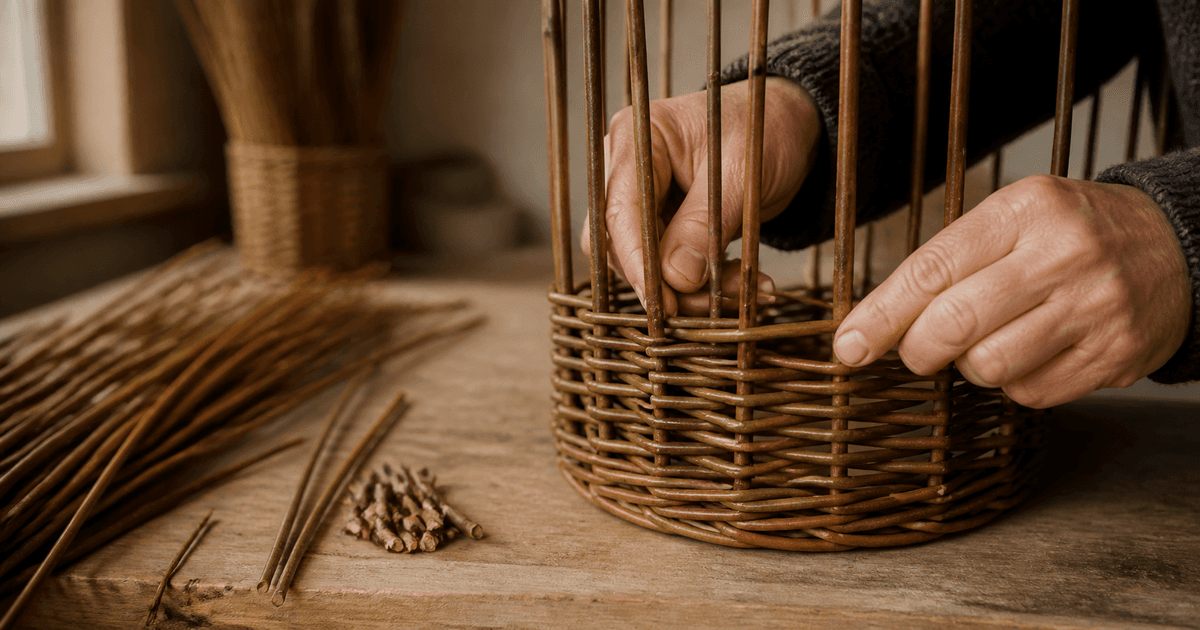
Choose an authorized workshop frame where the exact basket stage, stakes, active weaver, hand grip, tool, and contact path are visible. Ask Seedance 2 for one short documented action—such as passing one existing reed behind one stake and returning it to the front—then stop. Lock the basket diameter, stake count, over-under sequence, rim state, material thickness, moisture appearance, hands, tools, bench, camera, and light. Treat the clip as illustrative unless the maker verifies every frame and sequence.
Who this guide is for
Basket makers, craft schools, museums, heritage organizations, workshop marketers, and small product studios creating source-led process clips from their own approved photography.
Recommended model
| Use case | Recommended model | Why |
|---|---|---|
| This workflow | Seedance 2 image-to-video for one source-anchored weaving action | A still-led motion pass can communicate tactile process when the movement is narrow, visible, and reviewed by the actual maker. |
AIBase is an independent creative platform. Model names are shown only to identify supported underlying technologies and workflow choices.
Prompt template
Animate the uploaded authorized basket-weaving photograph as the exact first frame. Over [3-5 seconds], move only the existing [named hand and active weaver] through [one documented path around one named stake], apply [small visible bend], settle it at [exact end position], then hold. Preserve basket shape, base, wall height, stake count and spacing, established over-under pattern, active material thickness, taper, color, moisture, all other reeds, rim, handle state, hand count, fingers, grip, awl or knife, clothing, bench, scraps, camera, crop, light and shadows. No added reed, completed row, instant growth, pattern change, cut, split, unsafe tool motion, extra hand, word, logo, sound or watermark.
Step-by-step workflow
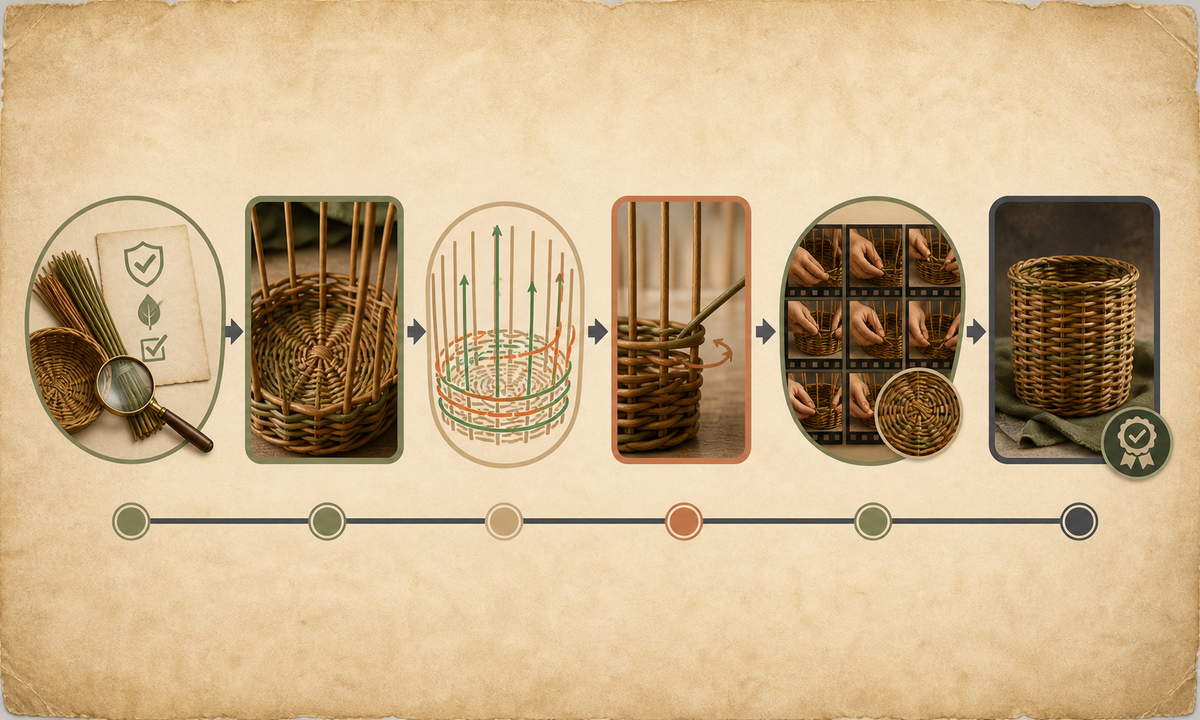
- Confirm maker and photographer rights, material species or type, preparation state, basket stage, weave structure, tools, safety boundaries, terminology, and publication context.
- Select a sharp frame where the active material, next stake, hand contact, tension direction, support, and safe endpoint remain visible.
- Map each visible stake and row, record the established over-under sequence, and define the active strand start, path, bend, tension, end, and duration.
- Generate a locked-camera one-stake pass before attempting a full row, tool change, rim finish, handle, or time-lapse progression.
- Review frame by frame with the maker for strand continuity, stake count, pattern order, hand anatomy, material flex, tension, tool safety, basket shape, and stable ending.
- Add verified material, region, maker, technique, stage, time, safety, workshop information, captions, disclosure, and credits in post-production.
Example prompt variants
- Four-second close-up: the existing right hand passes the visible willow weaver behind the front-center stake and returns it to the front, preserve every stake, prior row, fingers, awl, bench and camera.
- Three-second coiled basket detail: the existing hand tightens one visible stitch by a few millimeters and stops, preserve coil diameter, stitch spacing, needle, fiber texture and completed rows.
- Five-second flat-reed alternative: one existing strip bends around the next corner stake along the documented path, preserve rectangular base, corner angle, strip width, hands and all other materials.
Quality checklist
- Maker, material, preparation, basket stage, weave structure, stake count, active strand, tools, hands, and workshop match approved sources.
- The single action has continuous material, correct over-under order, plausible flex, tension, contact, timing, and a stable end.
- Basket geometry, row count, rim and handle state, hands, fingers, tools, scraps, shadows, camera, and light do not morph.
- The clip is not presented as proof of exact tradition, origin, authorship, speed, durability, sustainability, or instruction without verification.
- Rights, source map, prompt, output, maker review, captions, disclosure, approval, and export remain traceable.
Mistakes to avoid
- Prompting an entire basket to grow from one still or combining base, wall, rim, and handle construction in one clip.
- Allowing the active strand to duplicate, pass through a stake, reverse the established pattern, or change material mid-motion.
- Accepting extra fingers, unsafe awl or knife contact, shifting stake count, swelling walls, or a magically finished row.
- Using synthetic craft footage as documentary proof of a named maker, tradition, material origin, handmade claim, or production time.
Related AIBase pages
Practical next step
Open the most relevant AIBase generator, run one narrow prompt first, and save the best result before adding more constraints. The fastest way to improve output quality is to compare one variable at a time: subject, camera, background, lighting, then final polish.