
Seedance 2 Ceramic Mug Handle Attachment Process Video Prompts
Turn approved pottery references into a mug-handle attachment clip that preserves clay stage, cup shape, handle profile, hands, tools, joins, and sequence.
Quick answer
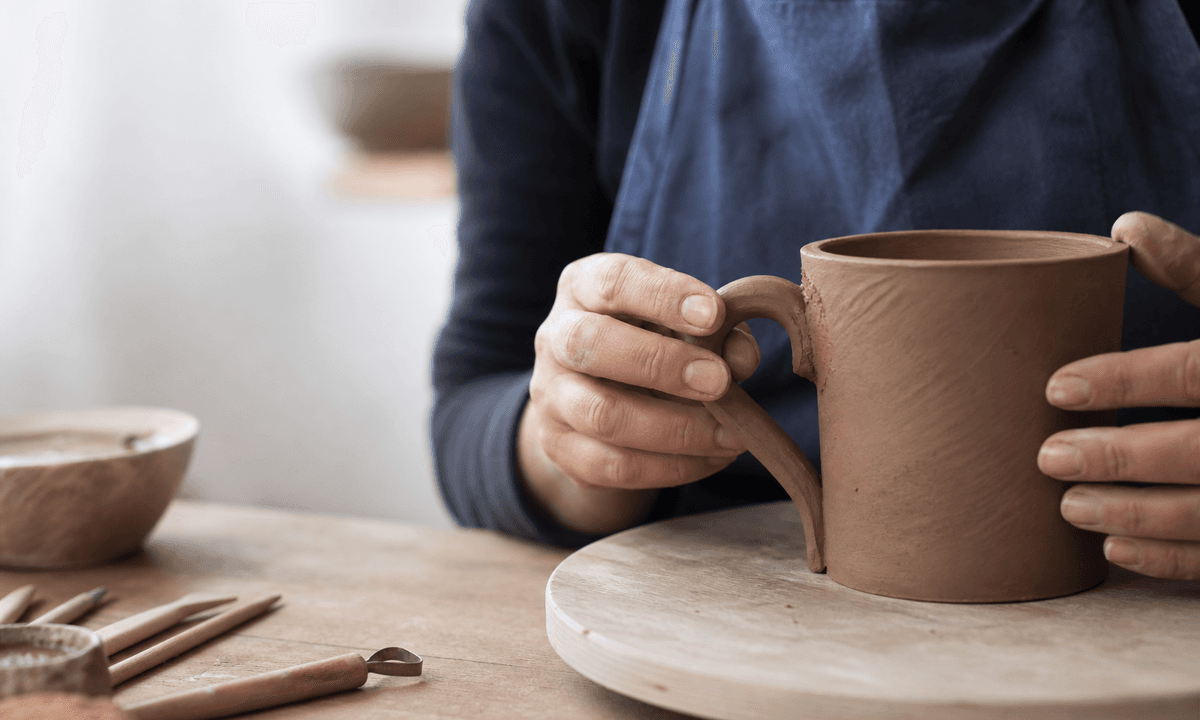
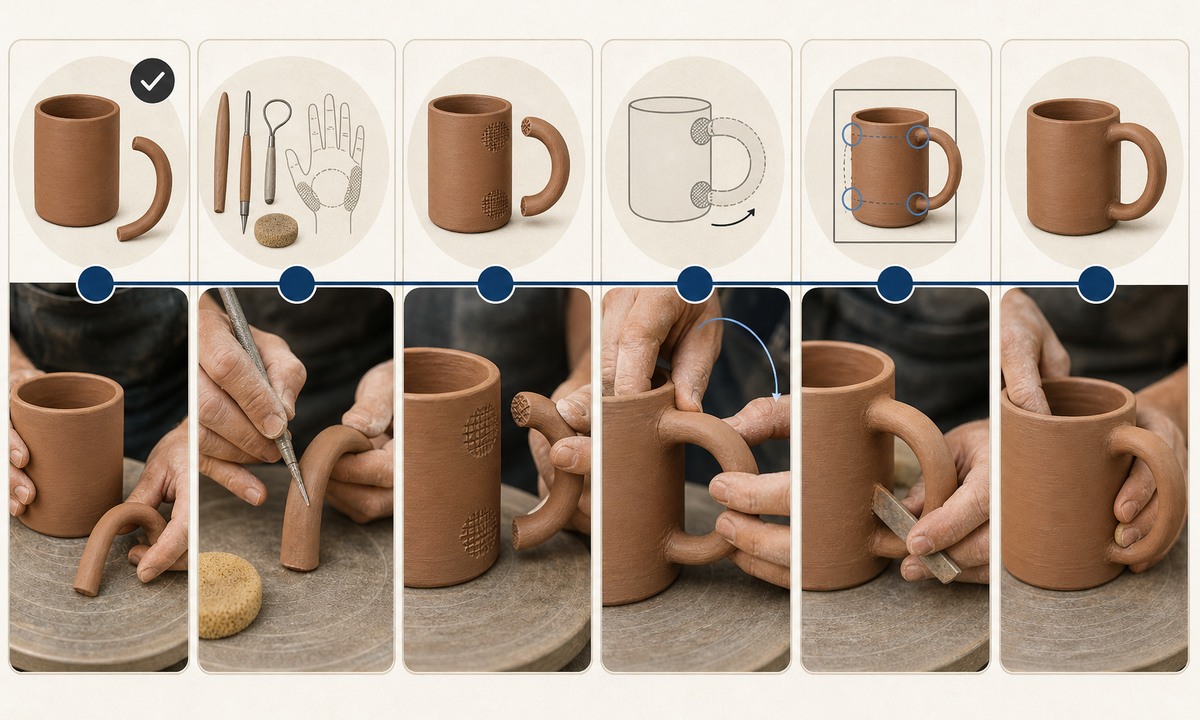
Start from a real reference sequence showing the same leather-hard cup, prepared handle, scored and slipped attachment points, hand positions, support, compression, cleanup, and finished join. Ask Seedance 2 to animate one documented placement or compression motion with a locked camera. Do not ask it to jump from separate pieces to a finished mug, change the clay moisture, invent fingers or tools, smooth away the join, add glaze, or imply a technique the potter did not perform.
Who this guide is for
Potters, ceramic studios, craft educators, workshop marketers, museums, and social editors turning approved bench photography into a short process-focused image-to-video clip.
Recommended model
| Use case | Recommended model | Why |
|---|---|---|
| This workflow | Seedance 2 image-to-video for one source-supported clay joining action | A bounded motion can communicate the tactile rhythm of handle attachment while strict source locks protect the cup, handle, hands, tools, clay state, and actual craft sequence. |
AIBase is an independent creative platform. Model names are shown only to identify supported underlying technologies and workflow choices.
Prompt template
Animate the uploaded authorized pottery reference as the exact first frame. Motion only: [the prepared handle moves the documented short distance to the scored cup / the thumb compresses the upper join once / the wooden tool blends one approved edge] over [duration], then holds. Preserve exact cup height, wall, rim, foot, clay color and moisture, handle curve and thickness, score marks, slip, join locations, hands, fingers, nails, grip, support, tools, board, scraps, camera, crop, focus and light. No instant finished mug, extra finger, hand swap, cup warp, handle growth, new tool, disappearing score, glaze, firing, steam, word, logo, sound or watermark.
Step-by-step workflow
- Freeze the exact vessel, clay body, moisture stage, handle-making method, score and slip method, attachment sequence, tools, potter, studio, safety context, and usage rights.
- Capture the same mug before attachment, both prepared contact points, first placement, support grip, upper and lower compression, cleanup, profile, and approved finished greenware reference.
- Map the fixed cup and board, moving handle or tool, supporting and active fingers, join boundaries, slip, clay response, camera, and start and end frame for one action.
- Generate only one short placement, compression, or cleanup motion; use real footage when the sequence teaches technique or the exact hand pressure matters.
- Inspect every frame for cup shape, rim, handle profile, contact points, clay moisture, finger anatomy, tool count, join continuity, false smoothing, camera drift, and impossible deformation.
- Assemble verified real stages, potter credit, clay and technique context, captions, disclosure, workshop information, music rights, and CTA outside the generated clip.
Example prompt variants
- Four-second side view: the approved curved handle moves one centimeter into the documented scored positions on the leather-hard mug while the support hand and camera stay fixed; stop at first contact.
- Three-second macro: the potter’s existing thumb makes one gentle compression at the upper handle join, preserve cup wall, handle thickness, score texture, slip, fingers and board.
- Five-second cleanup detail: the existing wooden tool follows one documented short pass along the lower join, preserve the intentionally visible seam, clay moisture, hand position and vessel profile.
Quality checklist
- Cup, handle, clay body, moisture stage, proportions, rim, foot, score, slip, joins, tools, hands, studio, and step order match the approved source sequence.
- Handle path, support, pressure, clay deformation, finger movement, tool contact, and endpoint are plausible for the documented method.
- No extra finger, hand swap, cup warp, handle resizing, false smoothing, instant drying, glaze, firing, decoration, or finished result is invented.
- The clip does not imply a named technique, material property, structural strength, food safety, workshop outcome, or handmade status beyond evidence.
- Source sequence, prompt, frame review, potter approval, edit, captions, disclosure, export, and correction path remain traceable.
Mistakes to avoid
- Animating the entire handle attachment from loose clay to finished mug in one clip.
- Starting from one still that does not document the hidden contact points, supporting hand, or next craft state.
- Allowing the model to smooth the join completely, change the handle curve, distort the rim, or invent extra fingers and tools.
- Presenting generated motion as a substitute for a real instructional demonstration when pressure, moisture, and sequencing matter.
Related AIBase pages
Practical next step
Open the most relevant AIBase generator, run one narrow prompt first, and save the best result before adding more constraints. The fastest way to improve output quality is to compare one variable at a time: subject, camera, background, lighting, then final polish.