
Seedance 2 Handmade Pasta Rolling Process Video Prompts From Studio Photos
Animate one documented pasta-rolling action from authorized kitchen photos while preserving dough state, roller geometry, hand position, flour, hygiene, and process truth.
Quick answer
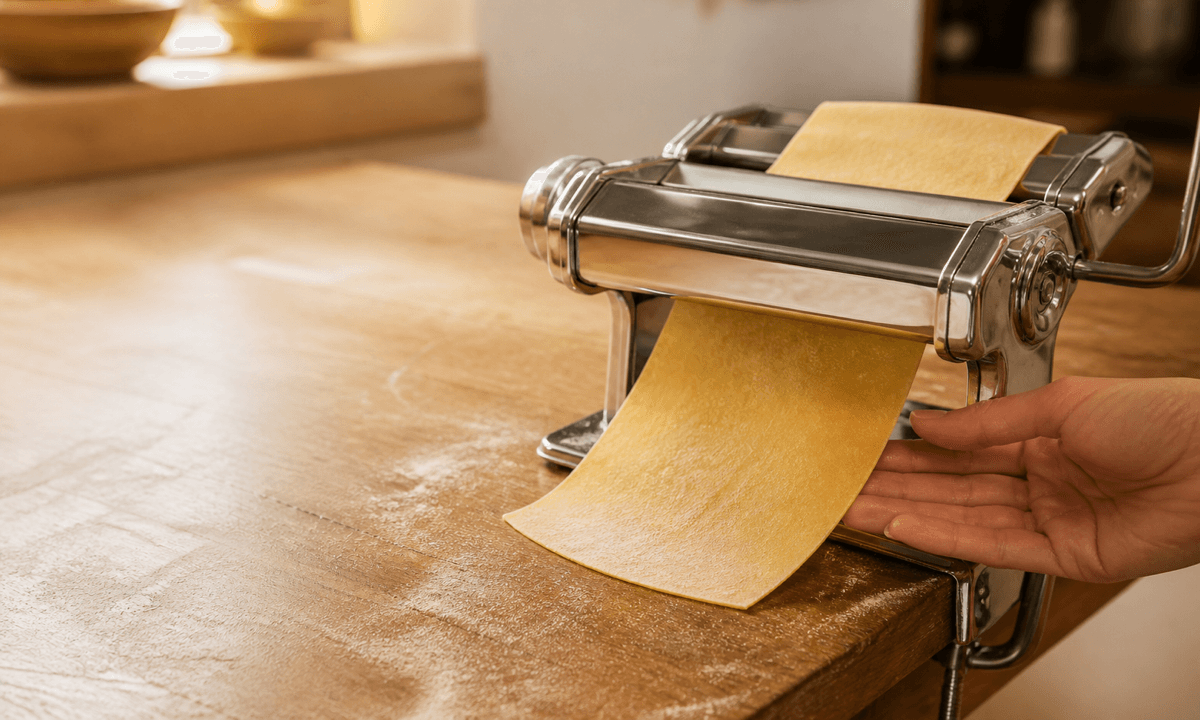
Choose an authorized frame where one pasta sheet, roller gap, crank or motor state, guiding hand and receiving surface are clearly documented. Animate only the visible sheet advancing a short distance through the real rollers, or one small verified crank rotation, then hold. Lock machine geometry, clamp, gap, handle, hand and finger position, dough width, thickness, moisture, flour, folds, bench, tools, camera and light. Do not fabricate a full recipe, unsafe hand motion, dramatic stretching, instant cutting or claims about ingredients, tradition, hygiene or doneness.
Who this guide is for
Pasta makers, restaurants, culinary schools, food studios, equipment brands and editors turning approved preparation photography into restrained process details for menus, lessons and social content.
Recommended model
| Use case | Recommended model | Why |
|---|---|---|
| This workflow | Seedance 2 image-to-video for one source-led pasta-rolling action | A sharp source frame can anchor the machine, dough and hand relationship while a short motion request limits invented stages, unsafe mechanics and changing food state. |
AIBase is an independent creative platform. Model names are shown only to identify supported underlying technologies and workflow choices.
Prompt template
Animate the uploaded authorized pasta-rolling photo as the exact first frame. Confirmed stage [pass number and roller setting]. Motion only: the existing pasta sheet advances [distance] through the visible rollers while the existing crank turns [small verified angle] over [3-5 seconds], then stops. Preserve machine body, rollers, gap, clamp, handle, fasteners, hand identity and position, fingers clear of rollers, dough width, thickness, color, moisture, flour pattern, folds, bench, tools, camera, crop, light and shadows. No new hand, finger movement toward rollers, recipe transformation, cutting, filling, cooking, steam, ingredient claim, word, logo, sound or watermark.
Step-by-step workflow
- Confirm image rights, recipe stage, dough composition record, machine model, roller setting, operator permission, kitchen safety and the qualified person who can validate the action.
- Choose a sharp source showing the roller entrance and exit, dough support, crank or drive, clamp, bench and every visible hand without hidden contact.
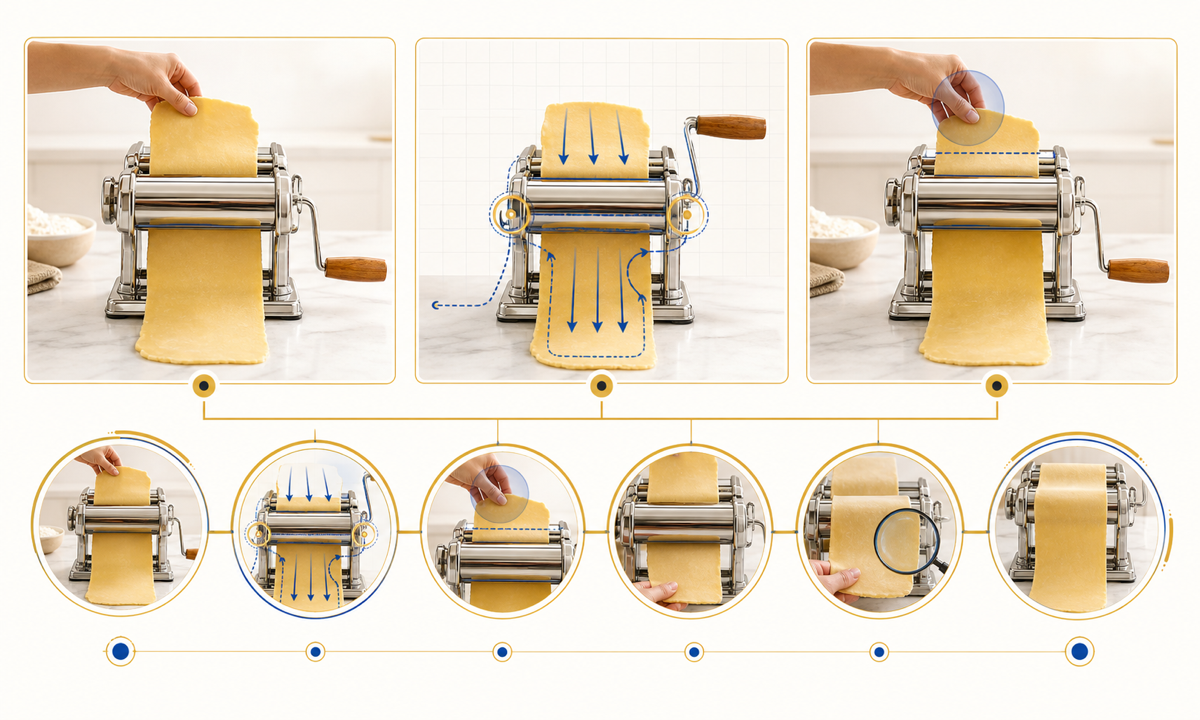
- Map the sheet path, roller axis, crank angle, travel distance, thickness, tension, flour movement, hand locks and stable endpoint; select one action only.
- Generate a locked-camera draft and reject versions that add hands, pull fingers toward the rollers, stretch the sheet, change the gap, multiply flour or transform the dough.
- Inspect frame by frame for roller continuity, crank mechanics, clamp stability, hand anatomy, clearance, dough width and thickness, edge tears, folds, flour, tools and background drift.
- Add verified pass number, roller setting, ingredients, allergen, hygiene, timing, technique and disclosure as editable captions, then archive the source and review.
Example prompt variants
- Four-second locked side view: the documented pasta sheet advances four centimeters through the existing rollers while the crank turns one quarter turn; preserve both hands, finger clearance, gap, clamp and flour.
- Three-second top-down detail: only the already-emerging sheet slides two centimeters onto the floured board and stops; machine, roller opening, dough width, edge, bench and camera remain fixed.
- Five-second motorized pass from an approved frame: the visible sheet advances slowly at constant speed while the operator’s mapped guiding hands stay still and clear; no cutting, folding or thickness change beyond the documented exit.
Quality checklist
- Recipe stage, dough batch, machine, roller setting, crank or drive, clamp, tools, operator, kitchen and permitted motion match the authorized record.
- Roller axis, sheet path, speed, thickness, width, tension, flour movement, hand clearance, contact and endpoint are mechanically plausible.
- No hand, finger, machine part, dough section, flour cloud, ingredient, preparation stage, cutting action or cooked result is invented.
- The clip does not claim handmade origin, tradition, ingredients, allergens, sanitation, freshness, texture, doneness or operator expertise without evidence.
- Source, process notes, motion map, prompt, frames, culinary and safety review, captions, approval and export remain traceable.
Mistakes to avoid
- Prompting mixing, kneading, rolling, cutting, filling and cooking as one transformation from a single still.
- Letting hands move toward rollers, changing finger anatomy or hiding the pinch-point relationship behind motion blur.
- Accepting a shrinking machine gap, impossible crank direction, growing sheet, changing dough color, multiplying flour or invented tools.
- Publishing generated process motion as documentary proof of a recipe, handmade method, hygiene standard, ingredient claim or culinary tradition.
Related AIBase pages
Practical next step
Open the most relevant AIBase generator, run one narrow prompt first, and save the best result before adding more constraints. The fastest way to improve output quality is to compare one variable at a time: subject, camera, background, lighting, then final polish.