
Seedance 2 Pasta-Making Process Video Prompts from Food Photos
Animate authorized pasta-making photos into short process clips with truthful ingredients, plausible dough physics, stable hands, kitchen hygiene, and clean edit points.
Quick answer
Turn each source photo into one short physical action: flour falls, dough rolls once, a cutter advances, strands separate, or a sheet folds. Protect the actual recipe context, dough color and hydration cues, hands, tool shape, work surface, flour distribution, kitchen, camera, and light. Do not ask one still to invent an entire recipe sequence. Generated motion cannot prove ingredients, handmade status, hygiene, allergen control, preparation time, origin, or the dish a customer will receive, so add verified facts separately.
Who this guide is for
Restaurants, pasta shops, culinary schools, food creators, farms, hospitality teams, and agencies making short behind-the-scenes reels, menu-page loops, class promotions, or editorial process visuals from owned and authorized photography.
Recommended model
| Use case | Recommended model | Why |
|---|---|---|
| This workflow | Seedance 2 for a bounded image-to-video pasta action | The source-led workflow can preserve the countertop and starting arrangement while adding one readable hand, tool, flour, or dough motion that editors can cut into a truthful process sequence. |
AIBase is an independent creative platform. Model names are shown only to identify supported underlying technologies and workflow choices.
Prompt template
Animate the uploaded authorized pasta-making photo as the exact first frame. Preserve the real dough color, thickness, hydration cues, flour, eggs or ingredients already visible, hands, fingers, sleeves, jewelry or gloves, [rolling pin/cutter/machine/knife], board, bowl, kitchen, camera, crop, light, shadows, and food styling. Motion: [one physically plausible action] over [3-5 seconds]. Keep tool contact, hand anatomy, dough elasticity, flour gravity, surface cleanliness, and scale stable. End on a clean hold. No new ingredient, raw-to-cooked transformation, extra hand, fused finger, unsafe blade contact, jewelry change, label, flame, steam, sauce, origin cue, nutrition or allergen claim, text, logo, or watermark.
Step-by-step workflow
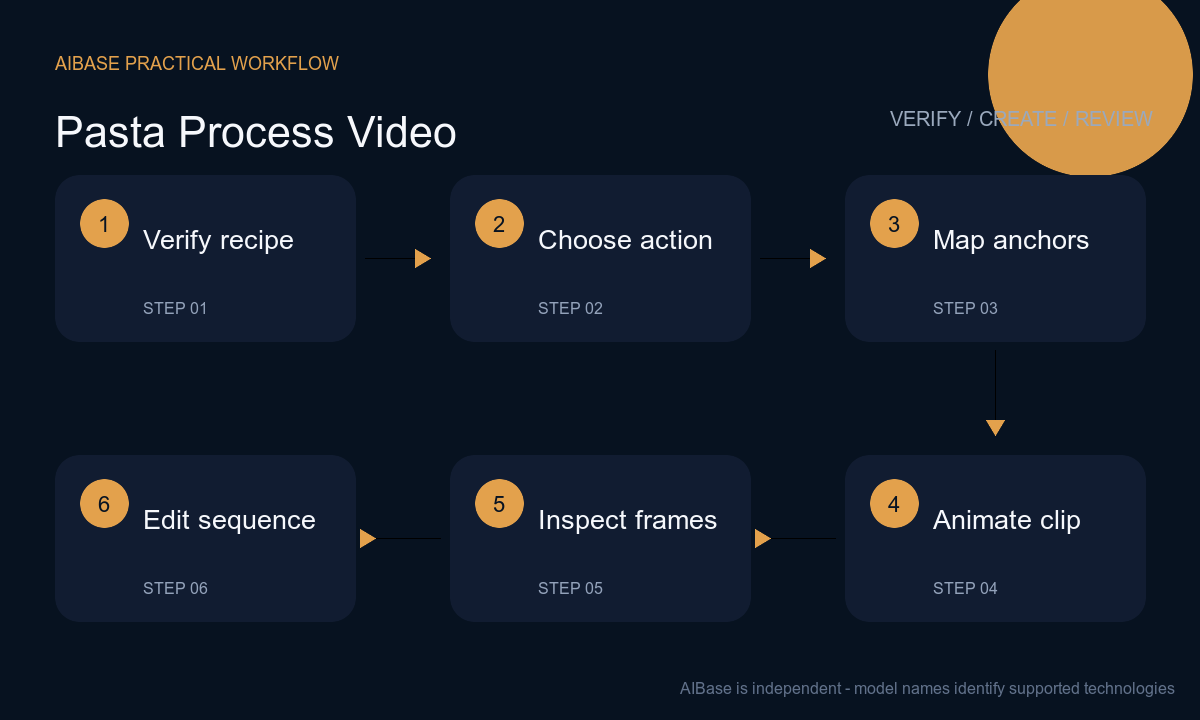
- Confirm photo and participant rights, recipe or menu version, ingredients visible, allergens, handmade or origin language, kitchen context, food-safety owner, intended channel, and whether the clip illustrates a real process or only a visual concept.
- Choose one action that the opening still supports. Map hand positions, finger count, sleeves, tools, machine openings, dough edges, flour patches, board grain, bowls, background lines, and occlusions that must remain stable.
- Describe start, contact, travel distance, material response, and end frame. For rolling, define one forward pass; for cutting, define one short advance; for flour, define a light fall rather than an unexplained cloud.
- Generate a three-to-five-second locked or gently pushed shot. Keep secondary motion minimal so reviewers can inspect dough thickness, tool path, fingers, blade clearance, crumbs, flour, shadows, and surface continuity.
- Review every frame for extra fingers, fused tools, growing dough, changing pasta count, impossible machine entry, reversed gravity, disappearing flour, dirty-to-clean transformations, unsafe contact, and ingredients that appear from nowhere.
- Edit multiple approved one-action shots into a sequence. Add exact dish name, ingredients, allergens, class details, location, disclosure, captions, licensed audio, offer, and CTA from current controlled sources.
Example prompt variants
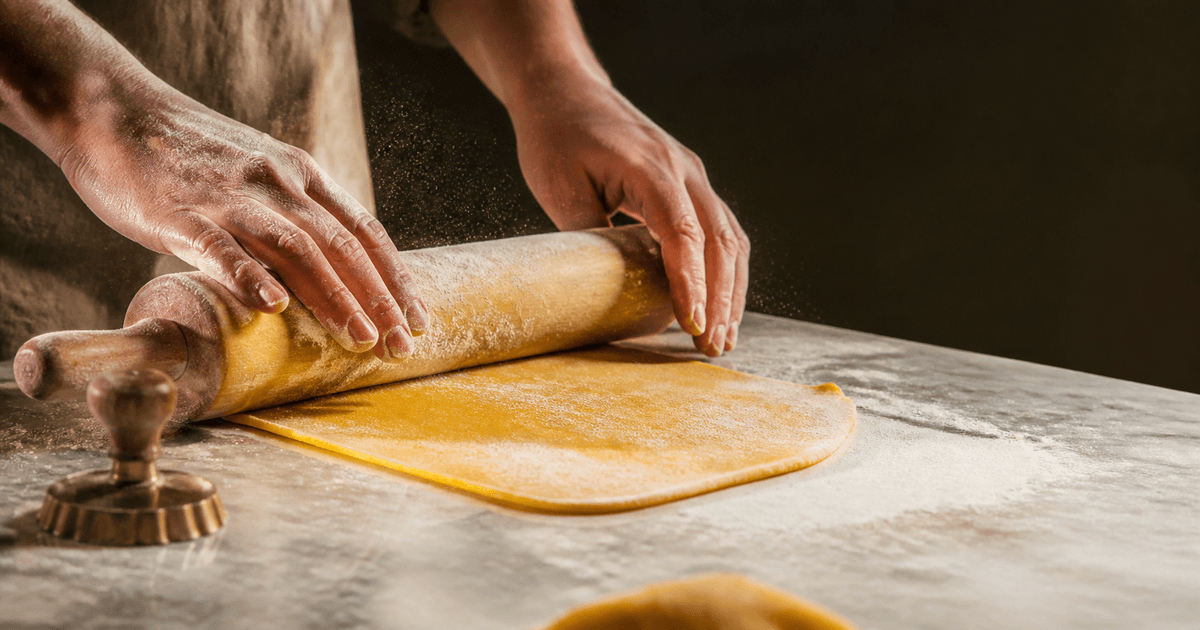
- Four-second overhead clip from this authorized tagliatelle-prep photo: both existing hands guide the floured dough sheet through one short forward rolling-pin pass, preserve finger count, sleeve cuffs, sheet width, board grain and flour patches, plausible compression only, locked camera, no cutter, egg, sauce, text or extra hand.
- Three-second macro from this pasta-machine photo: the existing dough sheet advances eight centimeters through the rollers while the visible hand supports it without changing grip, preserve machine geometry, thickness dial, sheet width, flour and shadow, no new crank hand, strand output, label, motor effect or camera move.
- Five-second side detail from this filled-pasta photo: the existing fluted wheel cuts one straight twelve-centimeter seam at steady speed, preserve two visible hands, safe finger distance, filling bumps, dough color, cutter teeth and marble surface, stable ending, no filling leak, cooked pasta, steam, garnish, word or logo.
Quality checklist
- Source rights, people, recipe context, visible ingredients, allergens, handmade and origin language, location, process stage, purpose, and disclosure are documented.
- Hands, fingers, sleeves, jewelry or gloves, tools, machine parts, dough color, thickness, flour, board, bowls, kitchen lines, camera, and light remain source-faithful.
- Dough stretches, compresses, cuts, folds, falls, or advances with plausible contact, scale, elasticity, gravity and speed; no material appears, vanishes, cooks, or multiplies.
- Blade, roller, heat, hair, clothing, jewelry, work surface, cross-contamination cues, and hand positions do not depict an unsafe or misleading preparation practice.
- Dish name, ingredients, allergens, handmade claim, origin, timing, class details, location, captions, audio, offer, disclosure, CTA, and destination are verified editable layers.
Mistakes to avoid
- Asking one still to show mixing, kneading, rolling, cutting, boiling, saucing and plating, forcing the model to invent missing hands, tools, ingredients, locations, heat, and time.
- Accepting attractive flour clouds that move against gravity, hide changing fingers, imply excessive contamination, or make the work surface and dough appear to clean themselves.
- Letting a cutter cross fingers, dough pass through a solid machine, strand count multiply, filling disappear, or raw pasta become cooked without a truthful cut and real footage.
- Using generated process motion as proof of fresh, handmade, local, organic, allergen-free, traditional, sanitary, same-day, or exact-menu preparation without independent evidence.
Related AIBase pages
Practical next step
Open the most relevant AIBase generator, run one narrow prompt first, and save the best result before adding more constraints. The fastest way to improve output quality is to compare one variable at a time: subject, camera, background, lighting, then final polish.