
Veo 3.1 Pro Cinematic Fashion Film Prompts
Plan cinematic fashion-film shots with Veo 3.1 Pro using protected garment details, controlled fabric motion, one camera path, coherent lighting, and editorial review.
Quick answer
Build each fashion shot around one garment truth, one body action, one fabric response, one camera path, and one light setup. Use an authorized reference when exact design matters, protect silhouette, construction, color, pattern, closures, and fit, then reject clips with changing hems, seams, prints, hands, or body proportions.
Who this guide is for
Fashion labels, stylists, creative directors, and agencies developing editorial campaign concepts, lookbook motion, launch films, and social cutdowns with approved talent and garment references.
Recommended model
| Use case | Recommended model | Why |
|---|---|---|
| This workflow | Veo 3.1 Pro for high-fidelity fashion shots | The higher-fidelity video route is suited to carefully specified material, lighting, camera, and performance details where a polished campaign shot matters more than rapid volume. |
AIBase is an independent creative platform. Model names are shown only to identify supported underlying technologies and workflow choices.
Prompt template
Create a [duration] [aspect ratio] cinematic fashion-film shot using the authorized garment and talent reference. Keep exact face, body proportions, garment silhouette, neckline, sleeves, hem, seams, closures, pattern scale, color, material, accessories, and fit unchanged. Performance: [one body action]. Fabric responds with [one physically plausible motion]. Location: [setting]. Lighting: [one setup]. Camera: [one lens impression and one path]. End on [edit point]. No garment redesign, changing print, extra layer, exposed area not requested, body reshaping, face drift, fused hand, floating fabric, wardrobe malfunction, logo change, text, cut, transition, or watermark.
Step-by-step workflow
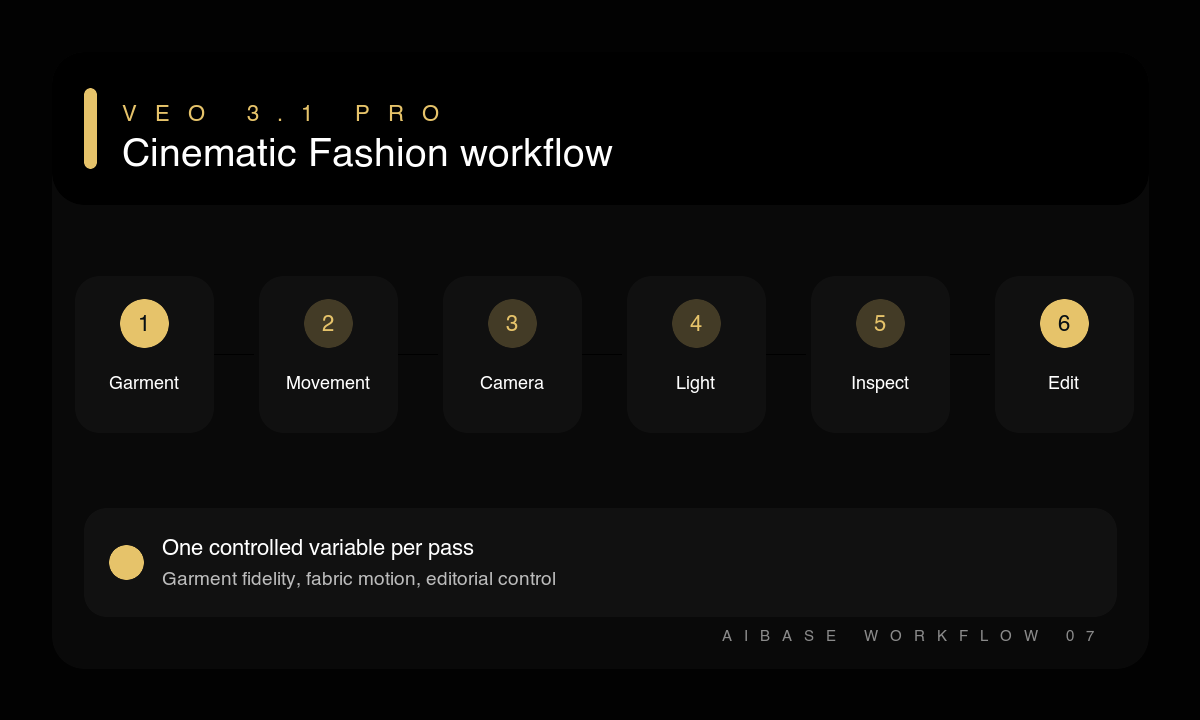
- Define the campaign message, approved talent and garment references, placement, duration, aspect ratio, and disclosure needs.
- Write garment anchors covering silhouette, construction, material, color, pattern, closures, fit, and accessories.
- Choose one performance beat and describe how the specific fabric should respond.
- Set one location, one light direction, and one camera path that reveals the garment clearly.
- Generate shots separately, then inspect faces, bodies, hands, hems, seams, prints, closures, fabric physics, and continuity.
- Edit only approved clips, add licensed sound and accurate brand copy, and review consent, representation, and crop before release.
Example prompt variants
- Eight-second 16:9 editorial shot: model in an exact ivory structured coat takes three measured steps through a concrete gallery; coat hem moves with realistic wool weight; slow lateral dolly, cool skylight, end in clean profile.
- Six-second 9:16 campaign shot: model in an exact pleated cobalt dress makes one restrained quarter turn on a dark studio floor; pleats open and settle naturally; slow push-in, single hard side light.
- Eight-second square accessories shot: model wearing the exact leather bag crosses a sunlit arcade, one hand briefly adjusts the strap; bag shape, hardware, stitching, and color remain fixed; smooth rear three-quarter tracking.
Quality checklist
- Talent identity, body proportions, garment construction, pattern, color, fit, and accessories remain stable.
- Fabric weight, folds, inertia, contact, and settling match the described material and movement.
- Hands, feet, hems, closures, straps, and garment-body intersections are anatomically plausible.
- Lighting and one camera path reveal rather than obscure the campaign’s garment truth.
- Consent, brand accuracy, disclosure, sound rights, and final-crop continuity are documented.
Mistakes to avoid
- Using vague luxury and cinematic adjectives without garment construction or material anchors.
- Combining runway walking, spinning, wind, fabric throw, crane, orbit, and zoom in one shot.
- Selecting a dramatic clip despite changing prints, hemlines, fasteners, hands, or body shape.
- Using talent, garment, logo, music, or location references without appropriate rights.
Related AIBase pages
- Create a fashion-film shot with Veo 3.1 Pro
- Read the cinematic Veo 3.1 Pro workflow
- Compare a Seedance fashion-video workflow
Practical next step
Open the most relevant AIBase generator, run one narrow prompt first, and save the best result before adding more constraints. The fastest way to improve output quality is to compare one variable at a time: subject, camera, background, lighting, then final polish.