
Wan 2.7 Camera Focus Ring Turning Product Video Prompts
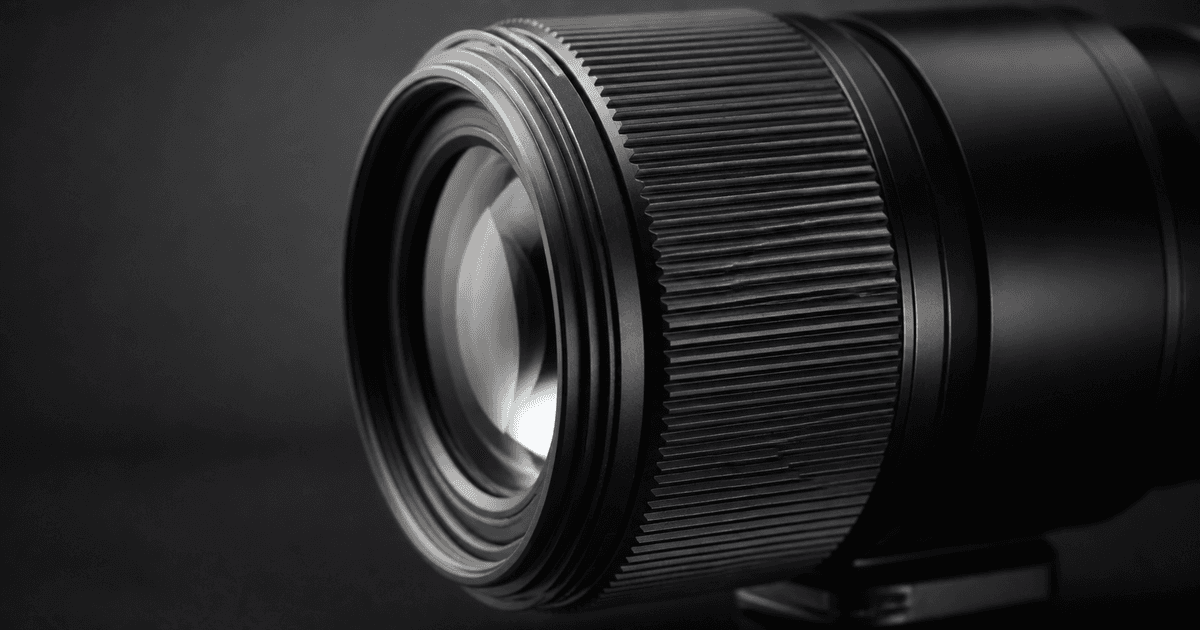
Animate one controlled camera-lens focus ring movement while preserving exact barrel geometry, markings, switches, mount, glass, rotation range, reflections, and product condition.
Quick answer
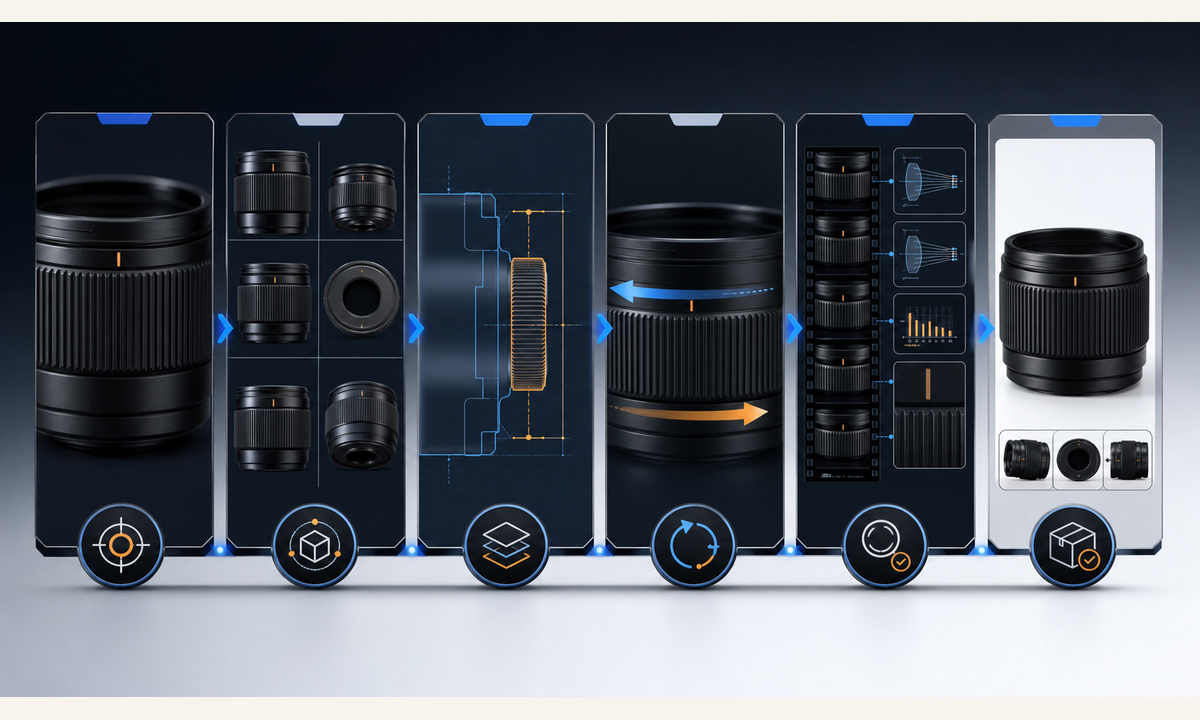
Identify the exact lens SKU and whether the named ring is focus, zoom, aperture, control, or a clutch mechanism. Capture before, partial-turn, and endpoint references showing rotation direction, travel, fixed barrel zones, moving markings, switches, mount, glass, and any telescoping behavior. Ask Wan 2.7 for one small documented focus-ring turn with a locked camera and stable end. Do not make the barrel extend, change focal length, move an aperture scale, alter the distance window, refocus a background, or imply autofocus speed, focus breathing, weather sealing, smoothness, or optical performance unless verified separately.
Who this guide is for
Camera and lens brands, rental houses, photography retailers, used-gear marketplaces, product photographers, and social editors creating tactile detail clips from exact lens references.
Recommended model
| Use case | Recommended model | Why |
|---|---|---|
| This workflow | Wan 2.7 image-to-video for one bounded lens-ring movement | A short source-led mechanical action can highlight control tactility while strict locks protect dense barrel geometry, scales, switches, glass, mount, finish, and condition. |
AIBase is an independent creative platform. Model names are shown only to identify supported underlying technologies and workflow choices.
Prompt template
Animate the uploaded authorized camera-lens photo as the exact first frame. Motion only: the existing [focus] ring rotates [verified direction and degrees] over [duration] and holds at the documented endpoint. Preserve exact lens SKU, barrel diameter and length, filter rim, front element, coatings and reflections, hood or cap state, focus ring width and rib pattern, distance scale and window, index marks, zoom and aperture rings, switches, buttons, mount, contacts if visible, tripod collar, markings and logo zones, finish, scratches, dust state, camera body if attached, support, shadow, crop, camera, and light. No hand unless present, wrong ring, barrel extension, zoom change, aperture change, moving background focus, extra marking, rewritten number, switch movement, glass mutation, scratch repair, text, sound, or watermark.
Step-by-step workflow
- Freeze the exact SKU, revision, mount, ring functions, focus mechanism, clutch state, rotation direction and range, hard-stop or fly-by-wire behavior, barrel movement, markings, switches, condition, rights, and claim limits.
- Capture approved front, sides, top, mount, glass, ring ribs, distance window, switches, markings, attached-camera, supported, before, intermediate, and endpoint references.
- Map fixed barrel zones, moving focus ring, rotation axis, rib landmarks, scale behavior, clearances, reflections, shadow, support, and stable endpoint.
- Generate a locked-camera macro with one small focus-ring turn; keep all other rings, switches, barrel sections, glass, camera, background, and lighting still.
- Inspect frame by frame for wrong-ring motion, rib drift, changing barrel length, scale mutation, rewritten markings, moving switches, glass deformation, reflection jumps, unsupported lens movement, and repaired wear.
- Composite approved markings if needed and add verified compatibility, focus type, dimensions, condition, price, availability, disclosure, captions, and CTA separately.
Example prompt variants
- Four-second macro of the exact approved manual-focus prime: focus ring rotates clockwise fifteen documented degrees and holds, preserve rib spacing, distance-window geometry, aperture ring, switches, front glass, markings zones and locked camera.
- Three-second weathered used lens: existing focus ring turns slightly toward the near mark, preserve every scratch, paint wear, rubber texture, scale window, mount state, support and no condition cleanup.
- Five-second lens attached to the approved camera body: focus ring makes one slow bounded turn while body, zoom ring, switch, tripod plate, background, shadows and camera remain completely still.
Quality checklist
- SKU, revision, mount, barrel dimensions, glass, coatings, rings, ribs, scales, windows, switches, buttons, collar, markings, finish, condition, and attached gear match approved sources.
- The correct ring moves in the verified direction and range while axis, clearances, support, reflections, shadows, and endpoint remain mechanically plausible.
- No barrel extension, zoom, aperture, clutch, switch, glass, background focus, marking, number, logo, accessory, dust, scratch, or wear state changes without evidence.
- The clip does not imply focus speed, breathing, silence, smoothness, precision, optical quality, stabilization, sealing, durability, or compatibility without proof.
- Truth sheet, source sequence, motion map, prompt, frame review, product approval, composite, disclosure, and export remain traceable.
Mistakes to avoid
- Confusing the focus ring with the zoom, aperture, control, or clutch ring on a dense lens barrel.
- Animating the background snapping into focus and accidentally making an unverified optical-performance or autofocus claim.
- Allowing scale numbers, index marks, switches, rib patterns, lens length, glass reflections, mount, or condition to mutate during the turn.
- Adding a hand while also moving the ring, barrel, camera body, reflections, background focus, and camera viewpoint.
Related AIBase pages
Practical next step
Open the most relevant AIBase generator, run one narrow prompt first, and save the best result before adding more constraints. The fastest way to improve output quality is to compare one variable at a time: subject, camera, background, lighting, then final polish.