
Wan 2.7 Magnetic Phone Stand Folding Product Video Prompts
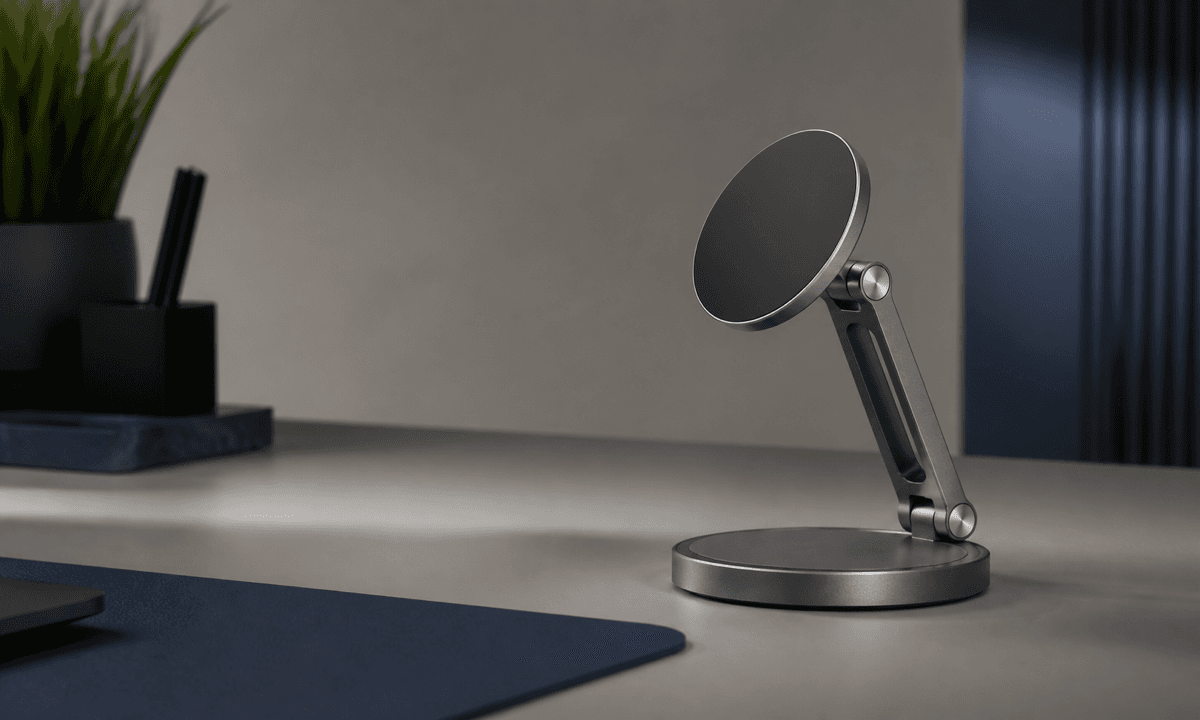
Animate one documented phone-stand hinge movement while preserving base, arm, magnet head, joints, stops, device fit, contact, shadows, and honest mechanism behavior.
Quick answer
Use an authorized frame that shows the exact stand, hinge axis, clearances, stops, base contact, moving arm, magnetic head, and any mounted device. Animate one documented movement only: unfold the lower hinge to one approved angle, tilt the head through one supported range, or fold the empty stand flat. Lock every other joint, material, fastener, pad, cable opening, reflection, shadow, and camera. Do not use animation to imply unsupported magnetic strength, compatibility, stability, one-hand operation, charging, or load capacity.
Who this guide is for
Phone-accessory brands, electronics retailers, crowdfunding teams, product studios, and social editors creating short mechanism demos from approved magnetic stand photography or render references.
Recommended model
| Use case | Recommended model | Why |
|---|---|---|
| This workflow | Wan 2.7 image-to-video for one constrained stand-hinge movement | Short source-led motion can communicate a simple mechanical transition, but joint geometry, stops, device compatibility, magnetic attachment, charging, stability, load, and hand interaction require exact references and engineering review. |
AIBase is an independent creative platform. Model names are shown only to identify supported underlying technologies and workflow choices.
Prompt template
Animate the uploaded authorized [exact magnetic phone stand SKU and state] as the exact first frame. Motion only [one documented lower hinge unfolds from angle A to B / head tilts through approved range / empty stand folds flat] over [3-5 seconds]. Preserve exact base footprint and contact, arm length, hinge axis, joint count, stops, magnetic head size and marking, pads, fasteners, cable opening, material, finish, color, mounted device position if approved, reflections, shadows, camera, crop and light. Lock every unmentioned joint. No extra hinge, telescoping, floating base, device morph, magnetic snap claim, wobble, charging cue, hand, logo change, word, sound or watermark.
Step-by-step workflow
- Verify SKU, revision, dimensions, joint axes, supported ranges and stops, magnetic system, device and case compatibility, charging status, load limits, base behavior, included parts, claims, rights, and review owner.
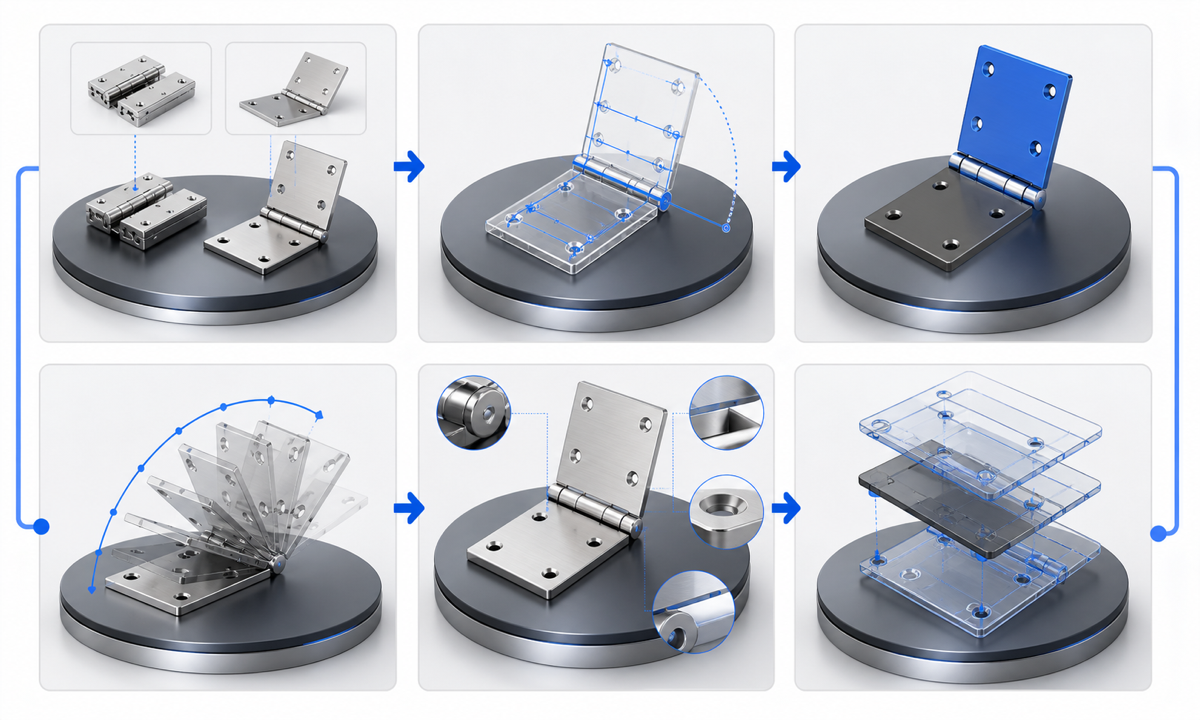
- Capture authorized folded, intermediate, open, side, rear, underside, joint, head, base, pad, cable, device-mounted, and scale references with angle measurements where relevant.
- Choose one movement and map fixed versus moving parts, pivot center, start and end angles, collision clearances, contact points, occlusions, duration, camera, and stable endpoint.
- Generate the empty-stand locked-camera version first; reject added joints, stretched arms, drifting base, impossible collision, rotating pads, changed fasteners, magnetic jumps, or multiple motions.
- Inspect frames for pivot consistency, rigid lengths, stop behavior, base contact, device contact if shown, pad geometry, reflections, shadows, wobble, clipping, and return to a stable final state.
- Add verified compatibility, charging, angle range, load, materials, dimensions, safety, disclosure, captions, sound, price, availability, and CTA outside generated pixels after product review.
Example prompt variants
- Four-second empty-stand demo: the documented lower arm unfolds once from flat to the approved sixty-degree stop, preserve base contact, upper joint lock, magnetic head, pads, fasteners and locked camera.
- Three-second head adjustment: the approved magnetic head tilts once downward through the documented small range while base and both arm hinges remain fixed, no phone, snap, bounce, charging cue or text.
- Five-second fold-flat return with the exact empty stand: upper arm rotates around its visible hinge and nests within documented clearance, preserve materials, joint axes, stop, shadow and top-down camera; no telescoping or extra joint.
Quality checklist
- SKU, revision, dimensions, base, arm, joints, axes, stops, head, pads, fasteners, cable path, materials, finish, compatibility, load, and included parts match approved evidence.
- One documented joint moves through a plausible supported range while all other joints, rigid lengths, contacts, clearances, camera, and lighting remain locked.
- No magnetic strength, universal fit, charging, stability, one-hand operation, drop protection, load, durability, angle, price, or availability claim is invented.
- Device fit if shown, hinge contact, base friction, collision clearance, reflections, shadows, crop, captions, disclosure, claims, and CTA pass product review.
- References, measurements, motion map, prompts, frames, engineering approval, edit, publication, corrections, and rollback remain traceable.
Mistakes to avoid
- Animating all joints, the magnetic attachment, device rotation, cable connection, and camera move in one unstable clip.
- Letting the base float, slide, shrink, or remain upright despite a center-of-mass change that the real product cannot support.
- Inventing a telescoping arm, hidden hinge, stronger magnet, charging indicator, universal device fit, impossible clearance, or undocumented stop angle.
- Showing a phone detach, snap on, charge, or survive movement without an approved device, case, magnetic system, setup, and claim basis.
Related AIBase pages
Practical next step
Open the most relevant AIBase generator, run one narrow prompt first, and save the best result before adding more constraints. The fastest way to improve output quality is to compare one variable at a time: subject, camera, background, lighting, then final polish.