
Veo 3.1 Fast Veterinary Clinic Social Reel Prompts
Plan short veterinary social reels with generic, non-clinical atmosphere while keeping real staff, animals, services, credentials, medical guidance, outcomes, prices, and consent verified.
Quick answer
Use Veo 3.1 Fast only for generic, clearly illustrative atmosphere—soft exterior light, abstract paw-shaped shadows, clean color transitions, or an empty welcoming reception concept. Film real clinicians, animal patients, procedures, facilities, equipment, and interactions with documented permission and welfare controls. Never generate a diagnosis, treatment, examination, surgery, medication, species-specific behavior, credential, testimonial, before-and-after result, emergency response, or claim of fear-free outcomes. Add real services, hours, location, qualifications, prices, disclaimers, and booking CTA from clinic-approved sources.
Who this guide is for
Veterinary practices, animal hospitals, mobile vets, pet-care marketing teams, and local agencies creating awareness, seasonal reminders, hiring, event, or booking reels.
Recommended model
| Use case | Recommended model | Why |
|---|---|---|
| This workflow | Veo 3.1 Fast for generic non-clinical hooks and transitions | Fast short-form generation suits atmosphere and edit glue, but real animals, clinical care, staff identity, medical advice, welfare, and service claims require authentic footage and veterinary approval. |
AIBase is an independent creative platform. Model names are shown only to identify supported underlying technologies and workflow choices.
Prompt template
Create one [3-5 second] vertical, clearly illustrative atmosphere clip for a veterinary clinic social reel. Shot job: [welcoming opener / gentle seasonal transition / empty reception end-card plate]. Scene: [clean abstract reception-inspired shapes / morning light crossing an unmarked exterior wall / soft shadows from generic pet-safe objects]. Camera: [locked / one slow push], palette [specific], protected zones [headline and CTA], stable edit handles. No identifiable clinic, veterinarian, staff member, client, animal patient, exam, procedure, medicine, syringe, surgery, diagnostic image, symptom, injury, fear, restraint, outcome, certificate, review, price, appointment slot, medical symbol misuse, word, logo, sound, or watermark.
Step-by-step workflow
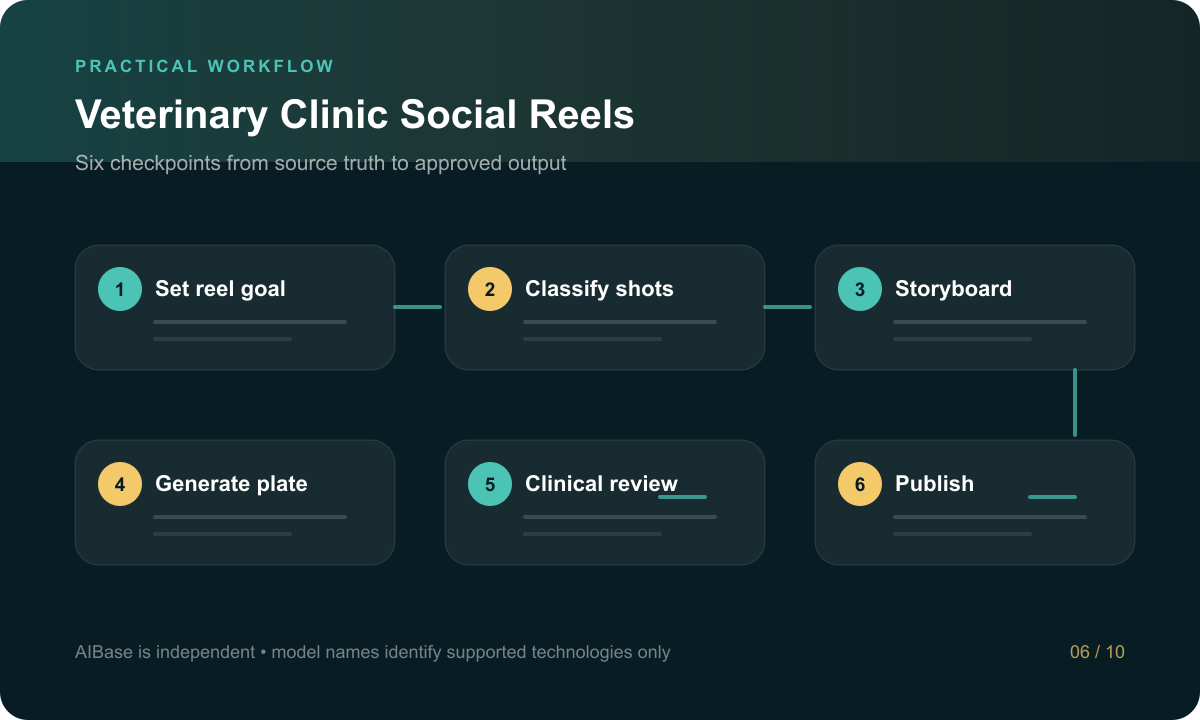
- Define one reel goal, audience, platform, duration, season, real service facts, booking destination, medical review owner, consent requirements, and crisis or emergency exclusions.
- Classify each planned shot as real clinic footage, licensed factual footage, or generic generated atmosphere; use real footage for every person, animal, facility, procedure, and clinical representation.
- Write a six-to-fifteen-second storyboard with one generic opener, one or two authentic clips, a verified service message, clear limitation or emergency direction when needed, and a real CTA.
- Generate only the generic plate with one camera move and no animals, staff, clinical action, equipment, credentials, reviews, medical facts, or destination details.
- Edit in approved footage, current services, staff names and qualifications, hours, location, booking details, captions, disclosure, licensed audio, and accessible contrast.
- Have a veterinarian or designated clinical reviewer check wording, welfare, context, urgency, medicine, outcomes, testimonial use, consent, and local advertising rules before scheduling.
Example prompt variants
- Four-second vertical welcoming opener with warm morning light moving across an abstract cream-and-sage reception wall, one slow push, quiet upper copy zone, no animal, person, clinic logo, medical tool or text.
- Three-second seasonal reminder transition with soft blue paper shapes and one generic rounded paw-like shadow passing outside frame, no species, symptom, medicine, snow hazard, claim, word or sound.
- Five-second empty end-card plate inspired by a calm reception desk using unbranded wood and pale green panels, locked camera, protected center booking zone, no appointment screen, phone, credential, animal or logo.
Quality checklist
- Goal, audience, services, hours, location, booking route, staff credentials, medical wording, emergency boundaries, consent, and review owner are current.
- Generated clips contain no real-seeming patient, staff, clinic, examination, treatment, medicine, equipment, symptom, diagnosis, result, review, credential, price, or appointment claim.
- Every animal and person shown comes from authorized real or licensed footage with welfare, privacy, owner consent, and accurate context documented.
- Captions, disclosure, contrast, sound mix, service copy, qualification, price, hours, emergency direction, CTA, link, crop, and platform overlays pass review.
- Storyboard, sources, releases, prompts, outputs, clinical approval, schedule, corrections, and expiry remain traceable.
Mistakes to avoid
- Generating a cute animal being examined and accidentally inventing patient consent, symptoms, restraint, clinician technique, diagnosis, or a guaranteed calm response.
- Using synthetic staff, facilities, certificates, reviews, before-and-after recovery, emergency scenes, medications, or equipment as evidence about the real clinic.
- Publishing general health advice without species, age, condition, jurisdiction, clinical caveats, emergency direction, and veterinarian approval.
- Adding a booking CTA without current hours, service availability, location, pricing basis, urgent-care limitations, working link, captions, consent, and disclosure.
Related AIBase pages
Practical next step
Open the most relevant AIBase generator, run one narrow prompt first, and save the best result before adding more constraints. The fastest way to improve output quality is to compare one variable at a time: subject, camera, background, lighting, then final polish.