
Wan 2.7 Carbonated Can Opening Video Prompts from Product Photos
Animate one plausible pull-tab opening action while preserving can geometry, tab and scored-panel mechanics, label, condensation, foam, pressure cues, hand contact, and product claims.
Quick answer
Start from an authorized close product photo where the real pull tab, rivet, scored panel, rim, opening direction, label, hand contact, and top reflections are visible. Animate only the tab lifting and the scored panel depressing through a short plausible arc; keep the can body and camera stable. A tiny verified pressure release may be shown, but avoid explosive foam, impossible liquid jets, self-moving hardware, detached tabs, or opening a top whose hidden geometry was never photographed. Sound, carbonation level, taste, freshness, coldness, safety, and ease-of-opening are separate claims and should not be inferred from generated motion.
Who this guide is for
Beverage brands, packaging teams, studios, ecommerce sellers, and social editors turning approved can packshots or process stills into short product-detail loops.
Recommended model
| Use case | Recommended model | Why |
|---|---|---|
| This workflow | Wan 2.7 image-to-video for one bounded pull-tab mechanism action | A source-led motion can communicate a tactile moment when the hardware path is visible and short, but package mechanics, liquid behavior, pressure, hand anatomy, and claims need frame-level review. |
AIBase is an independent creative platform. Model names are shown only to identify supported underlying technologies and workflow choices.
Prompt template
Animate the uploaded authorized [beverage SKU, can size, and market] image as the exact first frame. Motion only: the visible finger lifts the existing pull tab through a short realistic arc around the rivet, the scored panel depresses inward at the correct hinge, then all motion stops over [3-5 seconds]. Preserve exact can diameter and height, rim, lid, rivet, tab shape, opening panel, score line, seam, top reflections, label boundaries, every existing word and mark, colorway, condensation, hand anatomy and contact, surface, shadow, background, camera, crop, and light. Optional: one tiny pressure wisp only if approved. No detached tab, extra opening, bent rim, dent, exploding foam, liquid jet, new hand, drinking, sound, carbonation, freshness, coldness, easy-open, safety, taste, word, or watermark claim.
Step-by-step workflow
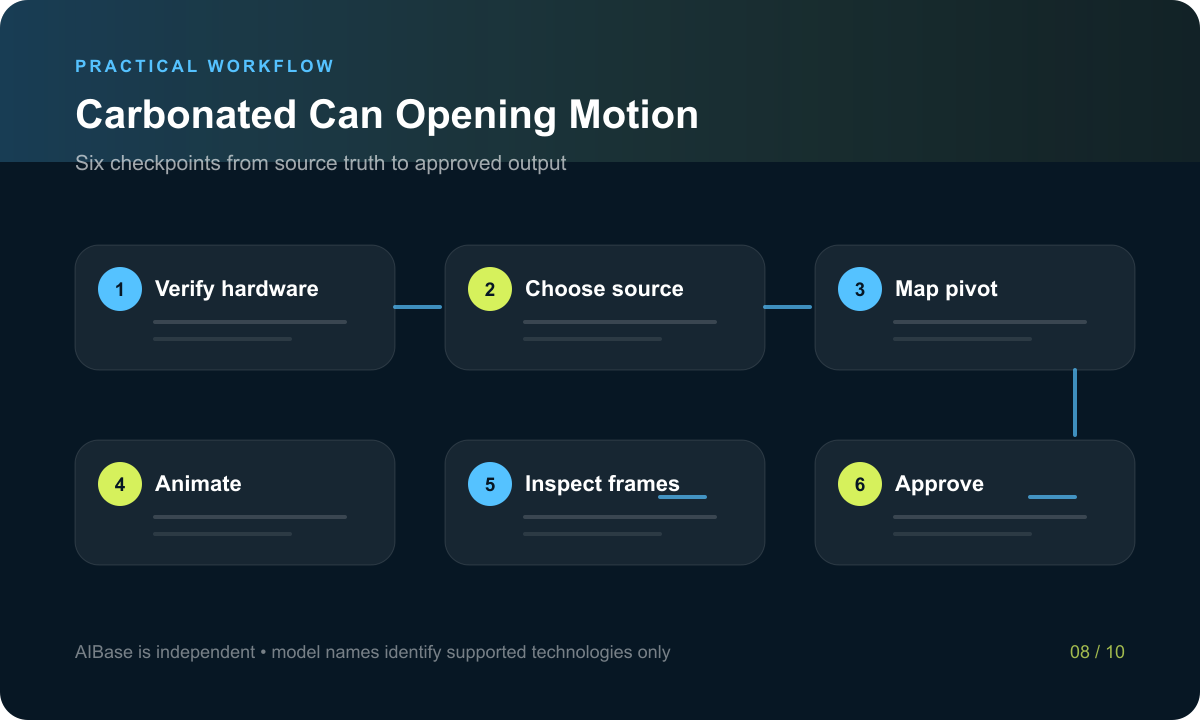
- Confirm SKU, can size, lid supplier or opening geometry, tab direction, rivet and score design, liquid type, carbonation context, label artwork, usage rights, performer consent, and approved claims.
- Choose a sharp source where the full top assembly and intended hand contact are visible; obtain a real open-can reference if the final depressed panel will be shown.
- Map the tab pivot, finger contact, force direction, panel hinge, rim clearance, condensation, reflections, liquid visibility, and a short stable endpoint.
- Generate a locked-camera action first with no can rotation, pickup, pour, splash, drinking, camera orbit, label change, or audio implication.
- Inspect every frame for finger anatomy, nail and tab contact, rivet stability, tab arc, panel depression, rim, can silhouette, label, condensation, foam, reflections, shadow, and hidden geometry.
- Add real opening sound only when licensed and representative, keep product and packaging claims in editable copy, and archive hardware references, frame review, and final approval.
Example prompt variants
- Four-second macro of the authorized silver can top: the visible fingertip lifts the black tab and depresses the scored panel, preserve rivet, rim, condensation, label edge, reflections and locked camera; one tiny pressure wisp, no foam jet.
- Three-second side-high angle of the approved slim can: existing tab rises halfway and stops before the panel opens, preserve can shape, matte color, printed band, hand contact, shadow and background; no liquid or sound.
- Five-second full opening using supplied closed and open-top references, one controlled tab arc and panel depression, preserve all hardware, hand anatomy, can body, condensation and label; no pickup, pour, drinking or claim.
Quality checklist
- SKU, can size, lid, rim, rivet, tab, score, panel hinge, label, liquid, carbonation context, hand consent, rights, and claims are verified.
- Tab pivot, finger contact, force direction, panel depression, material deformation, timing, occlusion, and endpoint are mechanically plausible.
- Can silhouette, lid hardware, rim, label, print, condensation, reflections, surface, shadow, camera, and light remain stable.
- No extra tab, missing rivet, torn lid, bent rim, dent, impossible foam, liquid source, mutated hand, drinking, sound, ease, freshness, coldness, safety, taste, or carbonation claim appears.
- Source, closed and open references, motion map, prompt, frame review, sound rights, package approval, and export remain traceable.
Mistakes to avoid
- Animating a top that is too small or hidden to establish the real tab, rivet, score line, panel hinge, and open-state geometry.
- Combining opening, foam eruption, pour, ice splash, condensation race, can spin, handoff, drinking, and camera orbit in one clip.
- Accepting detached or duplicated tabs, drifting rivets, bending rims, denting bodies, changing labels, multiplying fingers, or liquid emerging through metal.
- Treating a clean generated opening as evidence for carbonation, freshness, coldness, taste, sound, safety, package quality, or easy-open performance.
Related AIBase pages
Practical next step
Open the most relevant AIBase generator, run one narrow prompt first, and save the best result before adding more constraints. The fastest way to improve output quality is to compare one variable at a time: subject, camera, background, lighting, then final polish.