
Veo 3.1 Pro Artisan Chocolate Brand Film Prompts
Plan cinematic artisan chocolate brand film shots with Veo 3.1 Pro while preserving product truth and avoiding invented origin, ingredient, craft, award, or sustainability claims.
Quick answer
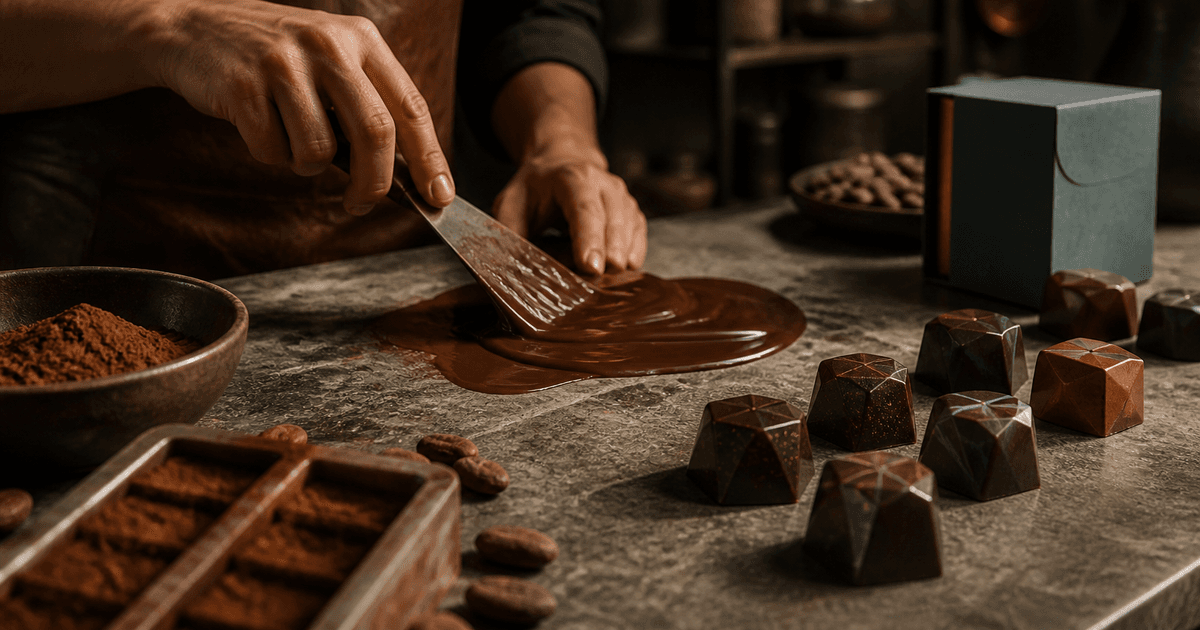
Use Veo 3.1 Pro for a few cinematic non-evidentiary shots—abstract cocoa atmosphere, light across an empty worktop, or a packaging-safe reveal plate—then combine them with verified footage of the real product, ingredients, maker, workshop, and process. Do not use generated farms, hands, recipes, origin scenes, awards, sustainability cues, or melting behavior as proof. Keep exact package, ingredient language, weight, claims, marks, and captions in controlled post-production layers.
Who this guide is for
Chocolatiers, confectionery brands, food filmmakers, hospitality teams, and agencies developing 15- to 30-second brand films from an approved product and provenance brief.
Recommended model
| Use case | Recommended model | Why |
|---|---|---|
| This workflow | Veo 3.1 Pro for selected cinematic atmosphere and transition shots | Longer-form brand storytelling benefits from controlled camera and lighting language, but evidentiary craft, sourcing, ingredients, people, and products still require real verified sources. |
AIBase is an independent creative platform. Model names are shown only to identify supported underlying technologies and workflow choices.
Prompt template
Cinematic chocolate brand-film shot job: [abstract cocoa atmosphere / empty atelier transition / generic material macro / protected packaging plate]. Duration [specific], camera [one move], lens and focus [specific], light [specific], start and end handles [specific], product-composite zone [specific]. Mood [approved]. This is illustrative atmosphere only. Do not depict or imply a real farm, origin, harvest, worker, chocolatier, recipe, bean variety, ingredient, percentage, certification, award, sustainability practice, handmade process, product performance, package, logo, word, number, sound, or watermark.
Step-by-step workflow
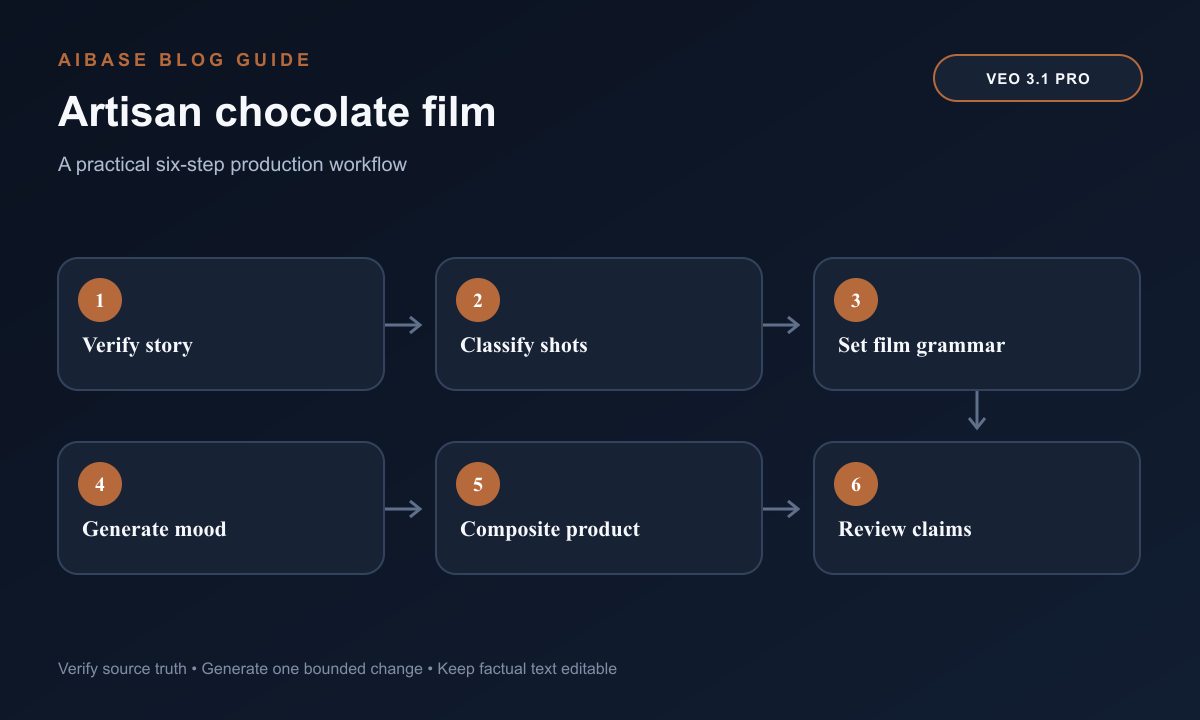
- Verify product version, ingredients, allergens, weight, cocoa percentage, origin, maker and worker releases, workshop rights, process, certifications, awards, sustainability language, package artwork, and claims owner.
- Separate the storyboard into verified product evidence, verified craft or people footage, illustrative atmosphere, editable factual overlays, and licensed audio.
- Define a restrained visual grammar for camera speed, macro scale, light, color, texture, transitions, and sound mood, with stable start and end handles for every generated shot.
- Generate only non-evidentiary atmosphere and transition options; capture the real product, maker, workshop, ingredients, molding, finishing, package, and serving behavior when the film makes those claims.
- Composite exact pack, logo, product name, ingredients, percentage, weight, certification, award, captions, disclosure, CTA, and licensed sound from controlled sources.
- Review frame by frame with food, legal, brand, accessibility, and production owners, then archive claims, sources, prompts, outputs, edit decisions, approvals, channels, and expiration.
Example prompt variants
- Five-second illustrative macro: warm light travels slowly across a generic tempered dark-chocolate surface and stone worktop, one shallow focus pull, no package, mark, ingredient, hand, origin cue, word, percentage, or claim.
- Four-second empty atelier transition: restrained cocoa-toned dust is already settled on a clean worktop while window light changes subtly, camera locked, no airborne cloud, tool motion, worker, product, process, logo, or sound.
- Six-second protected product plate: slow lateral camera move past abstract copper and cocoa-colored forms with a clear center zone for exact package compositing, no generated chocolate bar, wrapper, ingredient, award, text, or provenance cue.
Quality checklist
- Real product, package, maker, workshop, ingredients, process, origin, certifications, awards, and serving behavior come only from verified authorized sources when presented as fact.
- Generated atmosphere cannot be mistaken for a real farm, workshop, worker, recipe, ingredient, handmade step, sourcing practice, certification, award, or product result.
- Chocolate texture, cocoa dust, tools, surfaces, camera, light, focus, reflections, shadows, edit handles, and compositing zones remain physically plausible and stable.
- Logo, product name, percentage, ingredients, allergens, weight, marks, captions, disclosure, CTA, and audio are exact editable elements reviewed in final context.
- Claim sheet, sources, prompts, outputs, composites, food and legal review, channel exports, publication window, and retirement remain traceable.
Mistakes to avoid
- Generating an exotic cacao farm, smiling workers, hand-tempering process, or ingredient close-up and presenting it as the brand’s real provenance.
- Using visual cues such as leaves, maps, medals, craft tools, or rustic hands to imply organic, ethical, local, award-winning, or handmade status.
- Combining bean harvest, roasting, grinding, tempering, molding, packaging, tasting, and cinematic camera motion in one fabricated sequence.
- Allowing generated wrappers, cocoa percentages, allergen text, awards, certifications, or ingredient claims to appear inside pixels.
Related AIBase pages
- Open Veo 3.1 Pro
- Create chocolate melt effects with Wan 2.7
- Create cinematic food commercials
- Plan a restaurant launch workflow
Practical next step
Open the most relevant AIBase generator, run one narrow prompt first, and save the best result before adding more constraints. The fastest way to improve output quality is to compare one variable at a time: subject, camera, background, lighting, then final polish.