
Wan 2.7 Candle Flame Product Video Prompts for Stable Packaging
Animate a restrained candle flame while preserving the exact vessel, wax, wick, label, reflections, surface contact, fire safety, and approved product claims.
Quick answer
Start with an authorized photo showing the exact safe candle state you intend to animate. Lock the vessel, wax level, wick count and positions, label, lid state, reflections, surface, clearances, and background. Animate only a small flame flicker and corresponding local light for three to five seconds. Use real controlled footage when the flame, burn behavior, smoke, or safety setup is itself a product claim.
Who this guide is for
Candle brands, home-fragrance retailers, ecommerce studios, social teams, and agencies creating short ambient product loops from approved still photography.
Recommended model
| Use case | Recommended model | Why |
|---|---|---|
| This workflow | Wan 2.7 image-to-video | A restrained image-to-video pass can add localized flame and light motion while the approved packshot remains the visual anchor and safety-sensitive behavior receives separate review. |
AIBase is an independent creative platform. Model names are shown only to identify supported underlying technologies and workflow choices.
Prompt template
Animate the uploaded authorized [single/multi-wick] candle photo as the exact first frame. Preserve vessel silhouette and dimensions, rim, base, lid state, wax color and level, melt-pool state, wick count, wick positions and lengths, label size and artwork layout, logo position, glass or ceramic material, color, reflections, highlights, contact shadow, heat-safe surface, clearance, background, camera, crop, and exposure. Animate only the existing lit flame or flames: [small natural flicker direction and pace] for [3-5 seconds], with restrained local light response and a stable ending. No new wick, moving label, changing wax level, expanding melt pool, soot, smoke cloud, sparks, flare, relighting event, hand, match, floating vessel, blocked clearance, unattended hazard, invented scent ingredient, burn-time claim, air-quality or wellness claim, readable text mutation, transition, sound, or watermark.
Step-by-step workflow
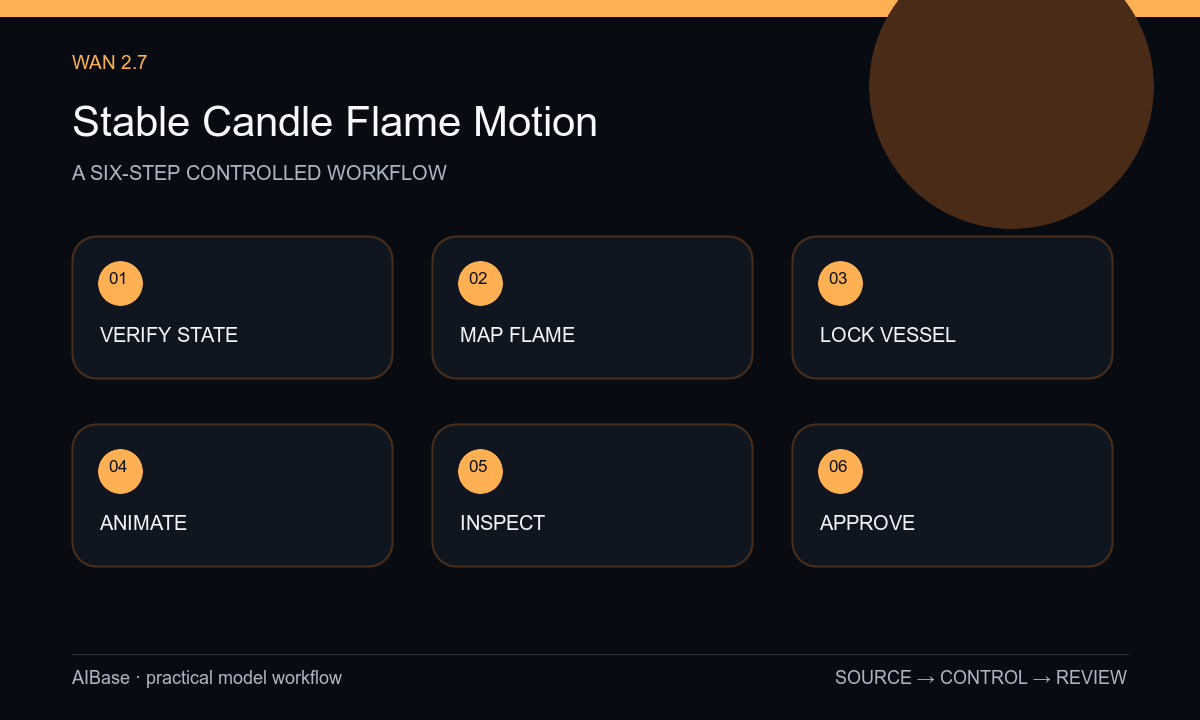
- Confirm the exact SKU, image rights, wick and burn state, safe surface, clearances, label artwork, permitted claims, intended loop, and whether real flame footage is required.
- Map vessel edges, rim, wax line, melt pool, each wick, label boundary, reflections, local flame light, shadows, nearby materials, and the region allowed to move.
- Prepare a stable high-resolution source with the full vessel and safe surroundings visible; correct packaging text in the still before animation, not during it.
- Prompt one small flicker event with a locked camera or minimal push, generate short variants, and reject dramatic fire or scene-wide light changes.
- Inspect frame by frame for wick count, flame attachment, vessel shape, wax level, label letters, reflections, contact, background warping, flicker, and loop seam.
- Composite the exact label or real flame plate when needed, then add approved copy, captions, audio, safety messaging, logo, and CTA in post before review.
Example prompt variants
- Four-second locked hero loop of the exact approved single-wick candle, one small flame leans slightly right and returns upright, preserve wick attachment, wax level, amber glass, label artwork, reflection, stone surface, clearance, and background.
- Five-second close shot of the exact approved three-wick candle, flames flicker independently at low amplitude with restrained warm reflection on the rim, preserve three wick positions, even wax state, vessel, label, shadow, and no smoke.
- Three-second subtle push toward the exact approved unbranded ceramic candle, existing flame stays small and stable while a faint wall highlight shifts, preserve ceramic shape, wax, wick, table contact, safe open space, and final loop frame.
Quality checklist
- Vessel geometry, rim, base, lid, wax color and level, melt-pool state, wick count, wick positions, label, logo zone, and finish remain exact.
- Each flame stays attached to its wick with plausible scale, color, flicker, light response, and no sparks, flare, smoke cloud, or abrupt loop seam.
- Surface contact, clearance, nearby materials, reflections, shadows, exposure, camera, and background remain stable and visibly safe.
- No generated motion implies scent ingredients, burn time, clean-burning status, sustainability, air quality, therapeutic benefit, or safety certification without evidence.
- Source, prompt, output, composite, flame-safety review, claim evidence, soundtrack, captions, approvals, and exports remain traceable.
Mistakes to avoid
- Asking for a dramatic luxurious flame and accepting a flare, extra wick, changing wax level, soot, or unsafe nearby material.
- Animating the full candle so the vessel breathes, label crawls, reflections swim, or the product loses surface contact.
- Using generated burn behavior as proof of burn time, scent throw, clean combustion, air quality, or therapeutic benefit.
- Reviewing only normal playback instead of checking flame attachment, label fidelity, wax continuity, safety, and the loop seam frame by frame.
Related AIBase pages
Practical next step
Open the most relevant AIBase generator, run one narrow prompt first, and save the best result before adding more constraints. The fastest way to improve output quality is to compare one variable at a time: subject, camera, background, lighting, then final polish.