
Wan 2.7 Steam and Aroma Food Video Prompts from a Hero Photo
Animate subtle steam and heat cues from food photos with Wan 2.7 prompts that preserve the dish, control vapor physics, lock the camera, and avoid false freshness claims.
Quick answer
Steam is a small environmental effect, not a cloud pasted over the plate. Map the real hot surfaces, choose one vapor behavior, lock the food and camera, and keep the motion faint: wisps should emerge at plausible points, thin as they rise, react gently to air, and never obscure or reshape the dish.
Who this guide is for
Restaurants, food brands, delivery teams, menu designers, content studios, and editors turning an approved hero photo into a short ambient loop or establishing shot.
Recommended model
| Use case | Recommended model | Why |
|---|---|---|
| This workflow | Wan 2.7 image-to-video | A reference-led video workflow suits subtle atmosphere where the approved dish composition should remain fixed and only heat vapor, a small garnish movement, or a light shift is introduced. |
AIBase is an independent creative platform. Model names are shown only to identify supported underlying technologies and workflow choices.
Prompt template
Use the uploaded authorized food hero photo as the exact first-frame and dish reference. Preserve every ingredient, portion, garnish, container, utensil, crumb, sauce shape, surface texture, color, plating, camera, crop, background, and light. Animate only subtle heat vapor from [specific hot surfaces or openings]: [number/density] thin semi-transparent wisps rise [direction], curl slowly with gentle room air, expand and fade before [height]. Camera [locked or one minimal move]; all food remains still. No smoke plume, fog layer, boiling, bubbling, melting, dripping, swelling, fresh garnish growth, extra ingredient, hand, flame, condensation, logo, text, freshness claim, aroma visualization, or watermark.
Step-by-step workflow
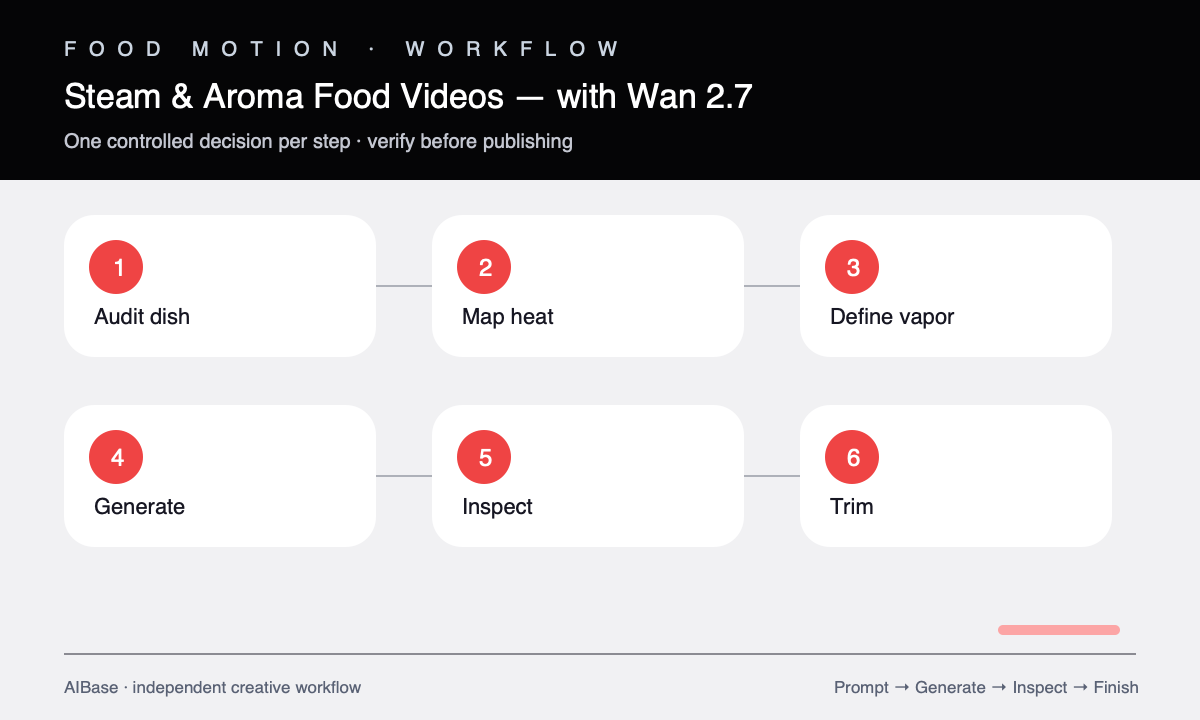
- Confirm the source represents the real dish and inspect where heat could physically escape: liquid surface, cut edge, vent, gap, or broad hot plate area.
- Draw a simple vapor map with origin points, density, rise direction, curl, fade height, and areas that must stay clear.
- Choose one restrained behavior for the shot, such as two intermittent wisps, a thin continuous rise, or a brief reveal after a lid movement filmed separately.
- Generate first with a locked camera and no other food motion; add a minimal push-in only after vapor origins and dish geometry remain stable.
- Review frame by frame for vapor appearing from cold areas, opaque smoke, looping seams, ingredient drift, color shifts, melting, bubbling, and background warping.
- Edit the shortest clean section, add real copy and sound in post, and avoid using steam as evidence of preparation time, temperature, freshness, or delivery condition.
Example prompt variants
- Five-second square ramen hero, two thin steam wisps rise from separate broth areas and drift slightly left before fading, locked camera, noodles, egg, garnish, bowl, reflections, and background completely still.
- Six-second vertical baked-potato shot, faint vapor escapes only from the verified split center in intermittent curls, subtle push-in, preserve skin texture, toppings, plate, color, and portion.
- Five-second landscape coffee-and-pastry scene, one delicate wisp rises from the cup opening and thins below the top third, pastry and cup remain fixed, morning side light unchanged, no aroma icon or freshness cue.
Quality checklist
- Vapor begins only at plausible hot surfaces or openings and thins, curls, expands, and fades like light steam rather than smoke or fog.
- Dish ingredients, portion, garnish, vessel, utensils, crumbs, sauces, textures, color, plating, camera, light, and background match the source.
- Steam never passes behind and in front of objects inconsistently, clips through solid surfaces, or forms a visible repeating loop.
- The effect remains subtle enough to reveal the food and does not imply boiling, cooking, freshness, temperature, or aroma performance.
- The selected clip starts and ends cleanly and fits the intended crop, caption area, edit rhythm, and disclosure practice.
Mistakes to avoid
- Writing add steam without specifying origin points, density, direction, fade height, and protected food details.
- Making vapor opaque, fast, or voluminous until a hot dish looks burned or the scene looks foggy.
- Adding steam together with bubbling sauce, moving garnish, camera orbit, hand action, and lighting changes in one pass.
- Presenting a generated heat cue as proof that a delivered or photographed item was freshly prepared.
Related AIBase pages
Practical next step
Open the most relevant AIBase generator, run one narrow prompt first, and save the best result before adding more constraints. The fastest way to improve output quality is to compare one variable at a time: subject, camera, background, lighting, then final polish.